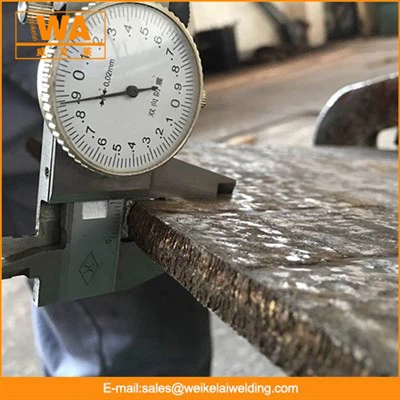
Hey there, fellow welders! As a supplier in the Flux Cored Arc welding game, I've seen firsthand the importance of getting that perfect weld bead. A high - quality weld bead isn't just about looks; it's crucial for the structural integrity and longevity of the welded joint. So, let's dive into how you can improve the quality of the weld bead in Flux Cored Arc welding.
1. Select the Right Wire
The first step in getting a top - notch weld bead is choosing the appropriate flux - cored wire. There are different types out there, each designed for specific applications. For instance, Seamless Flux Cored Wire offers consistent performance and is great for a variety of welding tasks. It has a uniform composition, which means fewer defects in the weld bead.
When selecting the wire, consider the base metal you're working with. Different base metals require different wire chemistries to ensure good fusion and a strong bond. For example, if you're welding mild steel, a wire with a suitable carbon and alloy content will give you better results. Also, pay attention to the wire diameter. A smaller diameter wire is better for thin materials, while a larger one is more suitable for thicker sections.
2. Set the Correct Parameters
Getting the welding parameters right is like finding the sweet spot. The three main parameters you need to focus on are voltage, wire feed speed, and travel speed.
- Voltage: This determines the heat input into the weld. If the voltage is too high, the arc will be too hot, and you might end up with excessive spatter, a wide and shallow weld bead, and even burn - through. On the other hand, if the voltage is too low, the arc will be unstable, and the weld bead may be narrow and have poor fusion. You need to adjust the voltage according to the wire diameter and the thickness of the base metal.
- Wire Feed Speed: It's directly related to the amount of filler metal being deposited. A higher wire feed speed means more filler metal, which can result in a larger and more convex weld bead. But if it's too high, it can cause the arc to become erratic. A lower wire feed speed may lead to insufficient filler metal and a weak weld.
- Travel Speed: How fast you move the welding gun is crucial. If you travel too fast, the weld bead will be narrow and may not have proper penetration. Traveling too slowly can cause the weld to be overly wide, with excessive heat input and possible distortion.
3. Prepare the Base Metal
Proper base metal preparation is often overlooked but is essential for a good weld bead. First, clean the base metal thoroughly. Remove any rust, paint, oil, or dirt from the surface. These contaminants can cause porosity in the weld bead, which weakens the joint. You can use a wire brush, grinder, or chemical cleaners to clean the metal.
Next, bevel the edges if necessary. For thicker materials, beveling helps to ensure complete penetration and a stronger weld. The bevel angle and root face should be appropriate for the welding process and the thickness of the metal.
4. Maintain the Right Arc Length
The arc length is the distance between the tip of the welding wire and the base metal. It's important to keep this distance consistent. A long arc length can lead to a lot of spatter, a wide and irregular weld bead, and poor fusion. A short arc length, on the other hand, can cause the wire to stick to the base metal and result in a narrow and uneven weld.
You can control the arc length by adjusting the position of the welding gun. As a general rule, try to keep the arc length about equal to the diameter of the welding wire. Practice makes perfect here, and with time, you'll get a feel for the right arc length.
5. Use the Correct Welding Technique
The way you hold and move the welding gun can have a big impact on the weld bead quality. There are different welding techniques, such as the drag (back - hand) and push (fore - hand) techniques.
- Drag Technique: In this method, you angle the welding gun backward, towards the completed weld. It's good for getting deeper penetration and is often used for thicker materials. The drag technique also helps to shield the molten weld pool better, reducing the chance of porosity.
- Push Technique: Here, you angle the welding gun forward, towards the direction of travel. It gives a flatter and wider weld bead, which is great for thin materials. The push technique also provides better visibility of the weld pool.
Whichever technique you choose, make sure to keep a steady hand and a consistent angle. Also, use a weaving motion if needed. Weaving can help to distribute the heat evenly and fill wider joints.
6. Protect the Weld from Contamination
Flux - cored arc welding can be done with or without external shielding gas. If you're using a self - shielding flux - cored wire, the flux inside the wire provides the shielding. However, if you're using a gas - shielded flux - cored wire, make sure the shielding gas is flowing correctly.
The shielding gas protects the molten weld pool from the atmosphere. Oxygen, nitrogen, and moisture in the air can react with the molten metal and cause porosity, oxidation, and other defects in the weld bead. Check the gas flow rate regularly and make sure there are no leaks in the gas delivery system.
7. Post - Weld Treatment
After you've completed the weld, some post - weld treatments can improve the quality of the weld bead. One important treatment is stress relieving. Welding can introduce residual stresses in the joint, which can lead to cracking over time. Stress relieving involves heating the welded part to a specific temperature and then cooling it slowly.
You can also perform a visual inspection of the weld bead. Look for any signs of porosity, cracks, or unevenness. If you find any defects, you may need to repair them by grinding and rewelding.
8. Training and Practice
No matter how good the equipment and materials are, the skill of the welder plays a huge role in getting a high - quality weld bead. Training is essential. Attend welding courses to learn the proper techniques, safety procedures, and how to set the right parameters.
Practice makes perfect. Set up some test pieces and try different techniques, parameters, and wire types. Analyze the results of your practice welds to understand what works and what doesn't.
9. Consider the Welding Environment
The environment where you're welding can also affect the weld bead quality. Wind can disrupt the shielding gas and cause porosity. Try to weld in a sheltered area or use windbreaks. High humidity can introduce moisture into the weld, which can lead to defects. If possible, control the humidity in the welding area.
Temperature can also have an impact. Welding in very cold conditions may require pre - heating the base metal to prevent cracking.
10. Use Quality Equipment
Investing in good quality welding equipment is worth it. A reliable welding machine with accurate parameter control is essential. The welding gun should be comfortable to hold and easy to operate. The wire feeder should be able to feed the wire smoothly and consistently.
Also, make sure to use the right accessories, such as nozzles and contact tips. A worn - out contact tip can cause the arc to be unstable and affect the quality of the weld bead.


In conclusion, improving the quality of the weld bead in Flux Cored Arc welding requires a combination of the right wire selection, proper parameter setting, base metal preparation, and good welding techniques. As a Flux Cored Arc supplier, I can provide you with high - quality Seamless Flux Cored Wire, Solid Wire Welding products, and Open Arc Welding Wire to meet your welding needs. If you're interested in our products or have any questions about Flux Cored Arc welding, don't hesitate to get in touch for a procurement discussion. We're here to help you achieve the best weld bead quality possible.
References
- AWS Welding Handbook, American Welding Society
- Welding: Principles and Applications, Larry Jeffus