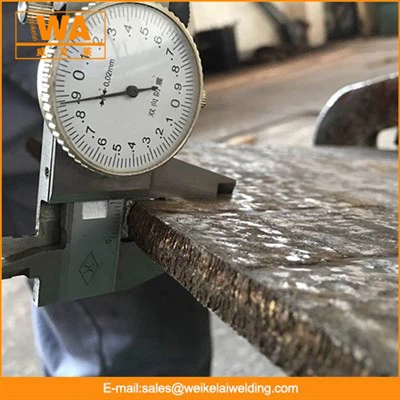
In the industrial landscape, the demand for high - performance pipes that can withstand harsh conditions is ever - increasing. As a Cco Abrasion Pipe supplier, I've witnessed firsthand the critical role that these pipes play in various industries, especially those dealing with abrasive materials. One of the most important factors influencing the performance of Cco Abrasion Pipe is its hardness, and in this blog, I'll delve into how hardness affects the abrasion resistance of Cco Abrasion Pipe.
Understanding Cco Abrasion Pipe
Before we explore the relationship between hardness and abrasion resistance, let's first understand what Cco Abrasion Pipe is. Cco Abrasion Pipe is a specialized type of pipe designed to resist wear and tear caused by the flow of abrasive materials such as minerals, coal, and sand. These pipes are commonly used in industries like mining, power generation, and cement production, where the transportation of abrasive substances is a daily operation.
The unique design and composition of Cco Abrasion Pipe make it stand out from conventional pipes. It typically consists of a base pipe and a hardfacing layer. The base pipe provides the structural integrity, while the hardfacing layer is responsible for the pipe's abrasion resistance. Different manufacturing processes can be used to apply the hardfacing layer, each with its own impact on the pipe's hardness and, consequently, its abrasion resistance.


The Concept of Hardness in Materials
Hardness is a fundamental property of materials that measures their resistance to permanent deformation, such as indentation, scratching, or cutting. In the context of Cco Abrasion Pipe, hardness is a key characteristic that determines how well the pipe can withstand the abrasive forces exerted by the materials flowing through it.
There are several methods to measure hardness, with the most common ones being the Rockwell, Brinell, and Vickers hardness tests. Each test has its own scale and application, but they all aim to quantify the material's ability to resist penetration. A higher hardness value generally indicates that the material is more resistant to abrasion, as it can better withstand the forces that cause wear.
How Hardness Affects Abrasion Resistance
The relationship between hardness and abrasion resistance in Cco Abrasion Pipe is quite straightforward: generally, the higher the hardness of the pipe's hardfacing layer, the better its abrasion resistance. When abrasive particles flow through the pipe, they exert forces on the inner surface of the pipe. A harder surface can resist these forces more effectively, reducing the amount of material removed from the pipe's surface.
For example, in a mining operation where coal or ore is being transported through the pipes, the abrasive particles can cause significant wear on the pipe walls. A Cco Abrasion Pipe with a high - hardness hardfacing layer will be able to withstand the impact and scratching of these particles for a longer period compared to a pipe with a lower - hardness layer. This means less frequent pipe replacements, reduced downtime, and lower overall costs for the operation.
However, it's important to note that hardness is not the only factor affecting abrasion resistance. Other factors, such as the type of abrasive particles, the flow rate of the material, and the chemical composition of the hardfacing layer, also play important roles. For instance, if the abrasive particles are very angular and sharp, they can cause more damage to the pipe surface even if the pipe has a high hardness. Similarly, a high flow rate can increase the impact force of the abrasive particles, leading to more rapid wear.
The Impact of Different Hardness Levels in Cco Abrasion Pipe
Let's take a closer look at how different hardness levels in Cco Abrasion Pipe can affect its performance in real - world applications.
Low - Hardness Cco Abrasion Pipe
Pipes with a relatively low hardness in the hardfacing layer are more prone to abrasion. They may be suitable for applications where the abrasive materials are relatively soft or the flow rate is low. For example, in some small - scale sand - handling operations where the sand particles are not very coarse, a low - hardness Cco Abrasion Pipe might be sufficient. However, in more demanding applications, such as large - scale coal mining or high - velocity mineral transportation, these pipes will wear out quickly, leading to frequent replacements and increased costs.
Medium - Hardness Cco Abrasion Pipe
Medium - hardness Cco Abrasion Pipe offers a balance between cost and performance. They can handle a wider range of abrasive materials and flow rates compared to low - hardness pipes. In many industrial settings, medium - hardness pipes are a popular choice as they provide a good compromise between durability and affordability. For instance, in some power plants where coal is transported at moderate speeds, medium - hardness Cco Abrasion Pipe can offer a reasonable service life without breaking the bank.
High - Hardness Cco Abrasion Pipe
High - hardness Cco Abrasion Pipe is designed for the most demanding applications. They are capable of withstanding the harshest abrasive conditions, such as high - velocity flow of extremely hard minerals. These pipes have a longer service life and can significantly reduce the frequency of pipe replacements. However, they also come at a higher cost due to the more advanced manufacturing processes and materials required to achieve the high hardness.
Other Factors Influencing Abrasion Resistance
As mentioned earlier, while hardness is a crucial factor, it's not the only one affecting the abrasion resistance of Cco Abrasion Pipe.
Microstructure of the Hardfacing Layer
The microstructure of the hardfacing layer can have a significant impact on abrasion resistance. A fine - grained microstructure generally provides better abrasion resistance than a coarse - grained one. This is because fine - grained structures have more grain boundaries, which can impede the movement of dislocations and prevent the propagation of cracks caused by abrasive forces.
Chemical Composition
The chemical composition of the hardfacing layer also plays an important role. Elements such as chromium, nickel, and tungsten can enhance the hardness and abrasion resistance of the pipe. For example, chromium can form hard carbides in the hardfacing layer, which increase its resistance to wear.
Surface Finish
The surface finish of the pipe can affect how abrasive particles interact with the pipe wall. A smooth surface can reduce the friction between the abrasive particles and the pipe, minimizing the wear. On the other hand, a rough surface can trap abrasive particles, increasing the likelihood of abrasion.
Choosing the Right Cco Abrasion Pipe Based on Hardness
When selecting Cco Abrasion Pipe for a specific application, it's essential to consider the hardness of the pipe in relation to the abrasive conditions it will face. Here are some guidelines to help you make the right choice:
- Assess the Abrasive Environment: Determine the type of abrasive materials, their hardness, and the flow rate. This will give you an idea of the level of abrasion resistance required.
- Evaluate the Cost - Benefit Ratio: High - hardness pipes offer better abrasion resistance but come at a higher cost. Consider the long - term costs, including replacement and downtime, when making your decision.
- Consult with Experts: As a Cco Abrasion Pipe supplier, I can provide valuable advice based on my experience and knowledge of different applications. I can help you select the pipe with the appropriate hardness for your specific needs.
Conclusion
In conclusion, hardness is a critical factor that significantly affects the abrasion resistance of Cco Abrasion Pipe. While a higher hardness generally leads to better abrasion resistance, it's important to consider other factors such as the type of abrasive particles, flow rate, microstructure, chemical composition, and surface finish. By understanding these factors and choosing the right Cco Abrasion Pipe based on the specific application, industries can optimize their operations, reduce costs, and improve efficiency.
If you're in need of high - quality Cco Abrasion Pipe, Abrasion Resistant Elbows or Wear Resistant Straight Pipe, I'm here to assist you. Contact me to discuss your requirements and find the perfect solution for your abrasion - resistant pipe needs.
References
- ASTM International. (20XX). Standard test methods for hardness testing of metallic materials.
2.ASM Handbook Committee. (20XX). ASM Handbook Volume 8: Mechanical Testing and Evaluation. ASM International. - Zhang, Y., & Chen, X. (20XX). Study on the abrasion resistance of hardfacing materials for pipes. Journal of Materials Science and Technology.