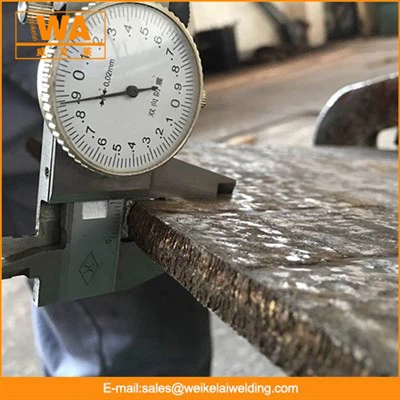
Controlling the hardness of welds made by flux cored wire is a critical aspect in the welding industry. As a flux cored wire supplier, I understand the importance of achieving the right hardness in welds for various applications. In this blog, I will share some key factors and techniques that can help you control the hardness of welds when using flux cored wire.
Understanding the Basics of Flux Cored Wire Welding
Flux cored wire is a popular choice for welding due to its high deposition rate, good weld quality, and versatility. It consists of a tubular wire filled with flux, which provides shielding gas and other alloying elements during the welding process. The flux can also help to improve the weld's mechanical properties, including hardness.
There are different types of flux cored wires available, each designed for specific applications. For example, Stainless Steel Mig Flux Cored Wire is suitable for welding stainless steel materials, while Mild Steel Mig Welding Wire is commonly used for mild steel welding. Self Shielded Flux Cored Wire is ideal for outdoor welding where shielding gas may not be practical.
Factors Affecting Weld Hardness
Several factors can influence the hardness of welds made by flux cored wire. Understanding these factors is crucial for achieving the desired hardness in your welds.
Chemical Composition of the Flux Cored Wire
The chemical composition of the flux cored wire plays a significant role in determining the weld's hardness. Different alloying elements in the wire can affect the microstructure and mechanical properties of the weld. For example, elements such as carbon, manganese, chromium, and nickel can increase the hardness of the weld.
When selecting a flux cored wire, it is important to consider the chemical composition based on the base material and the desired hardness of the weld. For high - hardness applications, wires with higher carbon and alloying element content may be required. However, it is also necessary to balance the hardness with other properties such as toughness and ductility.
Welding Parameters
Welding parameters, including welding current, voltage, travel speed, and wire feed speed, can have a substantial impact on weld hardness.
- Welding Current: Increasing the welding current generally results in a higher heat input, which can lead to a coarser grain structure in the weld. A coarser grain structure may reduce the hardness of the weld. On the other hand, a lower welding current can produce a finer grain structure and potentially increase the hardness.
- Voltage: The voltage affects the arc length and the shape of the weld pool. Higher voltage can lead to a wider and shallower weld pool, which may influence the cooling rate and the resulting hardness. A proper voltage setting is necessary to ensure a stable arc and good weld quality.
- Travel Speed: A faster travel speed reduces the heat input per unit length of the weld. This can result in a faster cooling rate, which may increase the hardness of the weld. However, if the travel speed is too fast, it can cause incomplete fusion and other welding defects.
- Wire Feed Speed: The wire feed speed is related to the amount of filler metal being deposited. A higher wire feed speed can increase the deposition rate but may also affect the heat input and the cooling rate of the weld.
Pre - heating and Post - heating
Pre - heating the base material before welding can help to reduce the cooling rate of the weld, which can prevent the formation of hard and brittle microstructures. Pre - heating is particularly important when welding high - carbon or alloy steels.
Post - heating, or stress - relieving heat treatment after welding, can also be used to control the hardness of the weld. Post - heating can help to relieve residual stresses in the weld and improve the toughness and ductility of the welded joint.
Base Material Properties
The properties of the base material, such as its carbon content, alloying elements, and heat treatment history, can affect the hardness of the weld. For example, welding a high - carbon steel base material may require special considerations to control the hardness of the weld to avoid cracking and other defects.
Techniques for Controlling Weld Hardness
Based on the above factors, here are some techniques that can be used to control the hardness of welds made by flux cored wire.

Select the Right Flux Cored Wire
As mentioned earlier, choosing the appropriate flux cored wire based on the base material and the desired hardness is essential. Consult the wire manufacturer's technical data sheets to ensure that the wire's chemical composition is suitable for your application.
Optimize Welding Parameters
Experiment with different welding parameters to find the optimal combination for achieving the desired hardness. Conduct test welds on sample materials and measure the hardness of the welds using appropriate hardness testing methods, such as the Rockwell or Brinell hardness tests.
Implement Pre - heating and Post - heating
If necessary, pre - heat the base material to a suitable temperature before welding. The pre - heating temperature should be determined based on the base material and the welding process. After welding, consider post - heating the welded joint to relieve residual stresses and improve the overall properties of the weld.
Control the Cooling Rate
The cooling rate of the weld can be controlled by adjusting the welding parameters and using techniques such as back - chipping or insulating the weld area. A slower cooling rate can result in a more ductile and less hard weld, while a faster cooling rate can increase the hardness.
Quality Control and Testing
To ensure that the welds meet the desired hardness requirements, it is important to implement a quality control program. This includes regular hardness testing of the welds using reliable testing equipment.
Hardness testing should be carried out at multiple locations on the weld to obtain an accurate representation of the hardness distribution. If the hardness of the weld does not meet the specifications, adjustments can be made to the welding process or the wire selection.
Conclusion
Controlling the hardness of welds made by flux cored wire requires a comprehensive understanding of the factors that affect hardness and the implementation of appropriate techniques. As a flux cored wire supplier, I am committed to providing high - quality products and technical support to help you achieve the best welding results.
If you are looking for reliable flux cored wire solutions for your welding projects and need further assistance in controlling weld hardness, please feel free to contact us for procurement and in - depth discussions. We have a team of experts who can provide you with professional advice and guidance based on your specific requirements.
References
- American Welding Society. (Year). Welding Handbook.
- Flux Cored Wire Manufacturer's Technical Manuals.