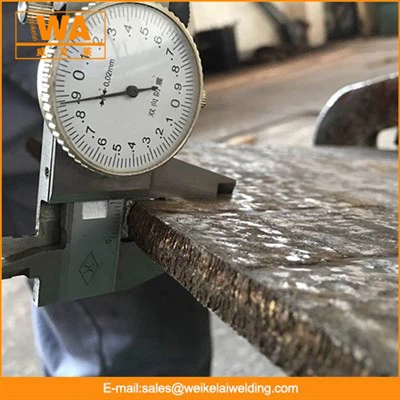
Hey there! As a supplier in the Roller Welding Repair business, I know how crucial it is to pick the right welding method for roller repair. There's no one - size - fits - all solution, and getting it wrong can lead to all sorts of headaches, like poor repair quality and short - lived results. So, let's dig into the factors you need to consider when making this important decision.
Understanding the Roller Material
First off, you've got to know what your roller is made of. Different materials react differently to various welding methods. For instance, if you're dealing with a carbon steel roller, it's relatively forgiving. You can use methods like Shielded Metal Arc Welding (SMAW), Gas Metal Arc Welding (GMAW), or Flux - Cored Arc Welding (FCAW). SMAW is a classic choice. It's simple, doesn't require a lot of fancy equipment, and can handle a wide range of thicknesses. GMAW, on the other hand, is faster and gives a cleaner weld. It's great for high - volume repair jobs. And FCAW is ideal when you're working outdoors or in dirty environments as it's more tolerant of contaminants.
But when you're looking at alloy steel rollers, things get a bit more complicated. Alloy steels often have specific heat - treatment requirements to maintain their strength and hardness. In these cases, you might want to go for Tungsten Inert Gas (TIG) welding. TIG allows for precise control of the heat input, which is essential to avoid overheating the alloy and changing its properties. You can check out Welding Rebuild On Roller for more detailed examples of how different materials are handled.
Assessing the Damage
The extent and type of damage on the roller also play a huge role in choosing the welding method. If it's just a small surface crack or a minor chip, you can probably get away with a quick fix using a method like GMAW or FCAW. These methods deposit filler metal quickly, so you can patch up the damage in no time.
However, if the roller has suffered significant wear or has large areas of material loss, you'll need a more robust approach. Submerged Arc Welding (SAW) might be the way to go. SAW can deposit a large amount of filler metal in a single pass, making it perfect for rebuilding thick sections of the roller. It also provides excellent weld quality and high productivity. And if the damage is in a hard - to - reach area, TIG welding could be your best bet. Its precision allows you to access tight spots and make accurate repairs.
Considering the Operating Conditions
Think about where the roller will be used after the repair. If it's going to be in a high - stress environment, like a heavy - duty industrial conveyor system, you need a welding method that can produce a strong and durable weld. For these applications, methods that offer high - strength welds, such as SAW or some advanced GMAW processes, are preferable.
On the other hand, if the roller is going to be used in a less demanding setting, like a small - scale manufacturing line, you might be able to get away with a more cost - effective method like SMAW. The key is to balance the strength requirements with the cost of the repair.
Cost - Benefit Analysis
Let's face it, cost is always a factor. Some welding methods are more expensive than others. For example, TIG welding typically has a higher equipment cost and slower deposition rate compared to GMAW or SMAW. So, if you're on a tight budget and the repair doesn't require the high precision of TIG, you might want to choose a more economical option.
But don't just focus on the upfront cost. Consider the long - term benefits as well. A more expensive welding method might result in a longer - lasting repair, which could save you money in the long run by reducing the frequency of future repairs. You need to weigh the cost of the welding method against the expected lifespan of the repaired roller.
Welding Skill and Equipment Availability
Your team's welding skills and the equipment you have on hand are also important. If your welders are more experienced with SMAW, it might be easier and more efficient to stick with that method, at least for simpler repairs. Training your welders on a new welding process can be time - consuming and costly.
Similarly, if you don't have the necessary equipment for a particular welding method, it might not be practical to invest in it for a single repair job. You can always outsource the repair to a specialized shop that has the right equipment and skilled welders. But if you plan to do a lot of roller repairs in the future, it might be worth considering investing in more advanced equipment.


Examples from Real - World Repairs
Let's take a look at some real - world scenarios. We once had a client who needed to repair a coal mill table liner. The liner was made of a special alloy steel and had suffered significant wear due to the abrasive nature of the coal. We used TIG welding to carefully rebuild the worn areas, ensuring that the alloy's properties were maintained. You can read more about this kind of repair on Repair Coal Mill Table Liners.
Another time, we repaired a large conveyor roller that had multiple surface cracks. Since the roller was made of carbon steel and the cracks were relatively small, we used GMAW to quickly patch up the damage. This allowed the client to get the conveyor back up and running in a short time.
Conclusion
Choosing the right welding method for roller repair is a complex decision that involves considering multiple factors. From the material of the roller and the type of damage to the operating conditions and cost - benefit analysis, every aspect plays a role. By taking the time to evaluate these factors, you can ensure that you get a high - quality repair that meets your needs.
If you're in the market for roller welding repair services or have questions about which welding method is best for your specific situation, don't hesitate to reach out. We're here to help you make the right choice and get your rollers back in top shape.
References
- Welding Handbook, American Welding Society
- Industrial Roller Maintenance and Repair Guide, Industry - specific Publications