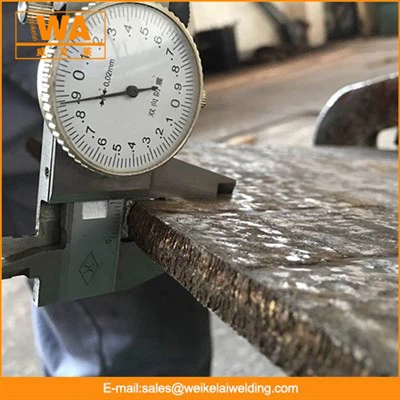
As a supplier of wear resistant pipes, I've witnessed firsthand the critical role that flow rate plays in the wear and tear of these essential components. Wear resistant pipes are designed to withstand the harsh conditions of abrasive and erosive environments, but the flow rate of the conveyed materials can significantly impact their performance and lifespan. In this blog post, I'll explore how flow rate affects the wear of wear resistant pipes and discuss strategies to optimize their performance.
Understanding the Basics of Wear in Pipes
Before delving into the impact of flow rate, it's important to understand the different types of wear that can occur in pipes. The two primary types of wear in wear resistant pipes are abrasion and erosion. Abrasion is the mechanical wear caused by the friction between the pipe wall and the solid particles in the flowing material. Erosion, on the other hand, is the removal of material from the pipe wall due to the impact of high - velocity fluid or solid particles.
Both abrasion and erosion can lead to a reduction in the pipe's wall thickness over time, eventually resulting in leaks, failures, and costly downtime. Wear resistant pipes are engineered to minimize these effects through the use of specialized materials and manufacturing processes.
The Impact of Flow Rate on Abrasion
Increased Abrasive Contact
One of the most direct ways that flow rate affects wear is by increasing the frequency of contact between the solid particles and the pipe wall. As the flow rate rises, more particles pass through the pipe per unit of time. This means that there are more opportunities for the particles to scrape against the inner surface of the pipe, causing abrasion.
For example, in a mining operation where ore slurry is transported through wear resistant pipes, a higher flow rate will result in a greater number of ore particles rubbing against the pipe wall. Over time, this can lead to a more rapid loss of material from the pipe surface.
Particle Velocity and Impact
Higher flow rates also increase the velocity of the solid particles within the pipe. When these high - velocity particles hit the pipe wall, they can cause more severe abrasion. The kinetic energy of the particles is proportional to the square of their velocity. So, even a small increase in flow rate can lead to a significant increase in the energy of the particle impacts.
This is particularly relevant in applications where the particles are large and hard. For instance, in a cement manufacturing plant, the transportation of clinker through pipes at a high flow rate can cause substantial abrasion due to the large, angular clinker particles moving at high speeds.
The Impact of Flow Rate on Erosion
Fluid - Induced Erosion
In addition to abrasion, flow rate can also affect erosion. At higher flow rates, the fluid itself can become more erosive. The high - velocity fluid can carry away the material from the pipe wall, especially in areas where the flow is turbulent.
Turbulence is more likely to occur at higher flow rates, and it can cause the fluid to impinge on the pipe wall with greater force. This can lead to the removal of material from the pipe surface, even in the absence of solid particles. For example, in a water - based hydraulic system, a high flow rate can cause erosion of the wear resistant pipes, particularly at bends and fittings where the flow is disrupted.
Erosion at Pipe Bends and Fittings
Flow rate has a particularly significant impact on erosion at pipe bends and fittings. As the fluid and particles change direction at these points, they are forced to collide with the pipe wall. At higher flow rates, these collisions are more forceful, leading to accelerated erosion.
In applications where wear resistant pipes are used, such as in power plants for the transportation of fly ash, the bends in the pipes are often the most vulnerable areas. A higher flow rate can exacerbate the erosion at these bends, reducing the lifespan of the pipes.
Optimizing Flow Rate for Wear Resistance
Selecting the Right Flow Rate
As a wear resistant pipe supplier, I often work with customers to determine the optimal flow rate for their specific applications. This involves considering factors such as the type of material being transported, the pipe diameter, and the length of the pipeline.
In general, it's important to find a balance between achieving the desired throughput and minimizing wear. A flow rate that is too low may result in sedimentation of the solid particles, which can also cause problems such as blockages. On the other hand, a flow rate that is too high will lead to excessive wear.
Using Appropriate Pipe Materials
The choice of pipe material also plays a crucial role in managing the impact of flow rate on wear. Different wear resistant materials have different levels of resistance to abrasion and erosion. For example, Cco Abrasion Pipe is designed to provide excellent abrasion resistance, making it suitable for applications with high - flow rates and abrasive materials.
Similarly, Abrasion Resistant Elbows are specifically engineered to withstand the increased wear at pipe bends and fittings. These elbows are often made from materials that can better withstand the high - velocity impacts and turbulent flow associated with higher flow rates.


Implementing Flow Control Measures
Flow control devices such as valves and flow regulators can be used to manage the flow rate within the pipes. By adjusting the flow rate based on the specific requirements of the application, it's possible to minimize wear while maintaining efficient operation.
For example, in a chemical processing plant, flow control valves can be used to ensure that the flow rate of corrosive and abrasive chemicals through the wear resistant pipes is kept within an acceptable range. This helps to extend the lifespan of the pipes and reduce maintenance costs.
Case Studies
Mining Industry
In a large - scale copper mining operation, the company was experiencing rapid wear of their wear resistant pipes due to the high flow rate of the copper ore slurry. By reducing the flow rate and installing Hardfacing Abrasion Pipe, they were able to significantly extend the lifespan of the pipes. The lower flow rate reduced the frequency of particle - wall contact and the energy of the particle impacts, while the hardfacing on the pipes provided an extra layer of protection against abrasion.
Power Generation
A coal - fired power plant was facing issues with erosion in the pipes used to transport fly ash. By using flow control valves to optimize the flow rate and replacing the standard elbows with Abrasion Resistant Elbows, the plant was able to reduce the rate of erosion at the pipe bends. This led to a decrease in maintenance costs and an increase in the overall reliability of the fly ash handling system.
Conclusion
Flow rate is a critical factor in determining the wear of wear resistant pipes. Higher flow rates can lead to increased abrasion and erosion, which can shorten the lifespan of the pipes and increase maintenance costs. However, by understanding the relationship between flow rate and wear, and by implementing appropriate strategies such as selecting the right pipe materials, using flow control devices, and optimizing the design of the piping system, it's possible to minimize these effects.
As a supplier of wear resistant pipes, I'm committed to helping our customers find the best solutions for their specific applications. If you're facing challenges with pipe wear in your operation, or if you're looking to optimize the performance of your piping system, I encourage you to contact us for a consultation. We have a wide range of wear resistant pipes and related products, including Cco Abrasion Pipe, Abrasion Resistant Elbows, and Hardfacing Abrasion Pipe, to meet your needs.
References
- Finnie, I. (1972). A review of erosion by solid particles. Wear, 20(1), 1 - 48.
- Hutchings, I. M. (1992). Tribology: friction and wear of engineering materials. CRC Press.
- Oka, Y., & Yoshida, S. (1994). Erosion - corrosion of metals in solid - liquid two - phase flow. Wear, 175(1 - 2), 109 - 116.