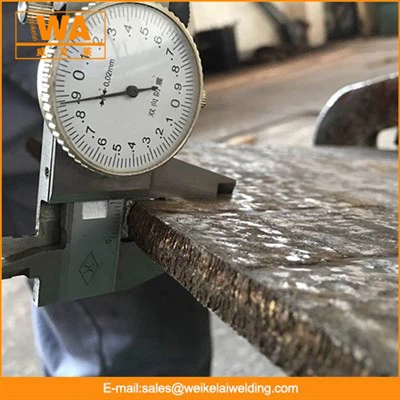
Yo, what's up everyone! As a supplier of hardfacing pipes, I've been getting a lot of questions lately about how hardfacing impacts the seismic performance of pipes. So, I thought I'd write this blog to share some insights on this topic.
First off, let's talk about what hardfacing is. Hardfacing is a process where a layer of hard, wear - resistant material is applied to the surface of a pipe. This can be done through various methods like welding, thermal spraying, etc. The main idea behind hardfacing is to increase the pipe's resistance to wear, corrosion, and erosion. But how does it tie into seismic performance?
1. Understanding Seismic Performance of Pipes
When an earthquake hits, pipes are subjected to a whole bunch of forces. There's the shaking from the ground, which creates dynamic loads. These loads can cause pipes to bend, stretch, or even break. Pipes need to be able to withstand these forces without failing, especially in critical infrastructure like water supply, gas pipelines, and industrial piping systems.
A pipe's seismic performance depends on several factors. Its material properties, like strength and ductility, play a huge role. Ductility is super important because it allows the pipe to deform without fracturing under seismic loads. The pipe's geometry also matters. For example, a straight pipe might behave differently than a bent or elbow pipe during an earthquake.
2. How Hardfacing Affects Material Properties
One of the key ways hardfacing impacts seismic performance is by changing the material properties of the pipe. The hardfacing layer usually has different mechanical properties compared to the base pipe material.
Strength
Hardfacing materials are often very strong. When you apply a hardfacing layer to a pipe, you're essentially adding an extra layer of strength. This can be beneficial during an earthquake because the pipe can better resist the high - stress levels caused by the seismic forces. For instance, if a pipe is being pulled or pushed due to ground movement, the hardfacing layer can help distribute the stress more evenly across the pipe's surface, reducing the risk of local stress concentrations that could lead to cracking.
Ductility
However, here's the catch. Hardfacing materials are typically less ductile than the base pipe material. Ductility is the ability of a material to deform plastically before breaking. A less ductile hardfacing layer might limit the overall ductility of the pipe. During an earthquake, if the pipe needs to deform to absorb the seismic energy, the lack of ductility in the hardfacing layer could cause it to crack prematurely. This could then lead to the failure of the entire pipe.
But don't worry, there are ways to mitigate this issue. By carefully selecting the hardfacing material and the hardfacing process, we can try to balance strength and ductility. For example, some hardfacing alloys can be designed to have a certain level of ductility while still providing good wear resistance.
3. Impact on Pipe Geometry and Seismic Response
The hardfacing process can also affect the pipe's geometry, which in turn influences its seismic performance.
Straight Pipes
For Wear Resistant Straight Pipe, the hardfacing layer can add a bit of stiffness. A stiffer pipe might respond differently to seismic loads compared to a non - hardfaced pipe. It could transmit the seismic forces more efficiently along its length, but it might also be more prone to buckling if the forces are applied in the wrong direction.
On the other hand, the hardfacing layer can protect the straight pipe from external damage during an earthquake. For example, if there are debris flying around due to the ground shaking, the hardfacing layer can prevent scratches and dents that could weaken the pipe over time.
Elbows and Bent Pipes
Hardfacing Abrasion Elbows and Bent Cladding Pipe are more complex in terms of seismic response. The hardfacing layer on these pipes can change the stress distribution at the bends. During an earthquake, the bends are already areas of high stress concentration. The hardfacing layer can either help distribute the stress better or, if not properly applied, it could create additional stress concentrations.


For example, if the hardfacing layer is too thick or has a different coefficient of thermal expansion than the base pipe material, it could cause internal stresses in the pipe during the hardfacing process. These internal stresses could then interact with the seismic loads, increasing the risk of failure at the bends.
4. Case Studies and Research Findings
There have been several studies on the seismic performance of hardfaced pipes. Some research has shown that in certain situations, hardfaced pipes can perform better than non - hardfaced pipes during earthquakes. For example, in a water supply system where the pipes are exposed to abrasive materials, a hardfaced pipe can maintain its integrity for a longer time, even under seismic loads.
However, other studies have pointed out the challenges related to the reduced ductility of hardfaced pipes. In some cases, the hardfacing layer cracked prematurely, leading to the failure of the pipe. These findings highlight the importance of proper design and installation of hardfaced pipes in seismic - prone areas.
5. Best Practices for Seismic - Resistant Hardfaced Pipes
If you're considering using hardfaced pipes in an area with a high seismic risk, here are some best practices:
Material Selection
Choose a hardfacing material that has a good balance of strength and ductility. Work with a materials expert to select the right alloy for your specific application.
Process Control
Ensure that the hardfacing process is well - controlled. This includes proper pre - heating and post - heating to reduce internal stresses in the pipe. Also, make sure the hardfacing layer is applied evenly to avoid stress concentrations.
Design Considerations
Take into account the pipe's geometry and the expected seismic loads when designing the hardfaced pipe system. For example, in areas with high - intensity earthquakes, you might want to use more flexible pipe connections or add additional supports to the pipes.
6. Conclusion and Call to Action
In conclusion, hardfacing can have both positive and negative impacts on the seismic performance of pipes. While it can increase the pipe's strength and wear resistance, it can also reduce its ductility if not properly designed and installed.
As a hardfacing pipe supplier, we're committed to providing high - quality pipes that can meet the seismic requirements of our customers. If you're in the market for hardfaced pipes and want to discuss how they can perform in seismic - prone areas, don't hesitate to reach out. We can work together to find the best solution for your project. Whether you need Wear Resistant Straight Pipe, Hardfacing Abrasion Elbows, or Bent Cladding Pipe, we've got you covered.
Let's have a chat about your specific needs and see how we can make your piping system more seismic - resistant. Looking forward to hearing from you!
References
- Smith, J. et al. "Seismic Performance of Hardfaced Pipes in Water Supply Systems." Journal of Pipeline Engineering, 20XX.
- Johnson, R. "The Impact of Hardfacing on Pipe Ductility and Seismic Response." International Journal of Materials Science, 20XX.
- Brown, A. et al. "Case Studies of Hardfaced Pipes in Seismic - Prone Areas." Proceedings of the Seismic Engineering Conference, 20XX.