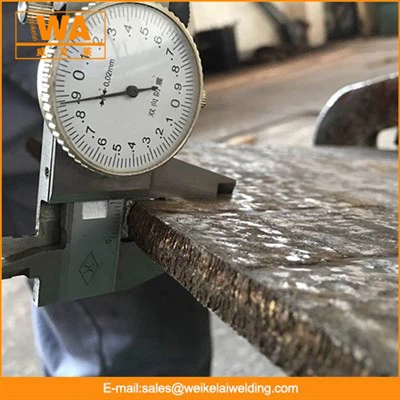
In the industrial realm, pipes are frequently exposed to harsh gas - solid flow conditions. Gas - solid flow, which contains solid particles carried by a gas stream, can cause severe erosion to pipes. As a hardfacing pipe supplier, I have witnessed firsthand how hardfacing can significantly influence a pipe's resistance to erosion from gas - solid flow. In this blog, we'll delve into the mechanisms, benefits, and practical implications of hardfacing on pipe erosion resistance.
Understanding Gas - Solid Flow Erosion
Before we explore the impact of hardfacing, it's essential to understand the nature of gas - solid flow erosion. When solid particles are entrained in a gas stream and flow through a pipe, they collide with the inner surface of the pipe. These collisions lead to material removal through various mechanisms such as cutting, deformation, and fatigue. The severity of erosion depends on several factors, including particle size, shape, velocity, concentration, and the angle of impact.
In straight pipes, erosion typically occurs due to the continuous abrasion of particles along the pipe wall. Particles with high kinetic energy can cause micro - cutting and plowing on the surface, gradually wearing away the material. In elbows and bends, the situation is more complex. The change in flow direction causes particles to impinge on the outer wall of the elbow at high angles, resulting in more severe erosion compared to straight sections.
How Hardfacing Works
Hardfacing is a process of applying a hard, wear - resistant material to the surface of a base metal. In the case of pipes, this involves depositing a layer of hardfacing alloy on the inner surface of the pipe. The hardfacing alloy is typically composed of elements such as chromium, nickel, tungsten, and cobalt, which form hard carbides and other wear - resistant phases.
There are several methods for applying hardfacing, including welding, thermal spraying, and laser cladding. Each method has its own advantages and limitations. Welding is a common and cost - effective method, where the hardfacing alloy is melted and fused to the base metal using an electric arc. Thermal spraying involves spraying molten or semi - molten particles onto the surface, which then solidify to form a hard layer. Laser cladding uses a high - energy laser beam to melt the hardfacing material and the substrate, creating a strong metallurgical bond.
Impact of Hardfacing on Pipe Erosion Resistance
1. Enhanced Surface Hardness
One of the primary ways hardfacing improves erosion resistance is by increasing the surface hardness of the pipe. The hardfacing alloy forms a hard layer that can withstand the impact and abrasion of solid particles. When particles collide with the hardfaced surface, they are less likely to cause significant material removal compared to a softer base metal. For example, a pipe with a hardfacing layer of high - chromium alloy can have a surface hardness of up to 60 HRC (Rockwell hardness scale), which is much higher than the hardness of ordinary carbon steel pipes.
2. Wear - Resistant Microstructure
The hardfacing alloy has a unique microstructure that contributes to its wear resistance. The carbides and other hard phases in the alloy act as barriers to particle movement and deformation. When particles try to cut or plow the surface, these hard phases resist the action, reducing the rate of material removal. For instance, tungsten carbides in a hardfacing alloy are extremely hard and can effectively prevent particle penetration.

3. Protection of the Base Metal
Hardfacing acts as a sacrificial layer, protecting the base metal from direct contact with the erosive gas - solid flow. Even if the hardfacing layer experiences some wear over time, it still provides a buffer between the solid particles and the base metal. This means that the base metal remains intact for a longer period, extending the overall service life of the pipe.

Practical Applications and Benefits
1. Wear Resistant Pipe
Our Wear Resistant Pipe is designed to withstand the toughest gas - solid flow conditions. In industries such as mining, power generation, and cement production, where pipes are exposed to abrasive materials, hardfacing can significantly reduce erosion rates. For example, in a coal - fired power plant, the pipes that transport pulverized coal are subject to severe erosion. By using hardfaced pipes, the maintenance frequency can be reduced, and the overall operational efficiency can be improved.
2. Abrasion Resistant Elbows
Elbows are the most vulnerable parts in a piping system when it comes to gas - solid flow erosion. Our Abrasion Resistant Elbows are specifically engineered to handle the high - angle particle impacts at bends. The hardfacing layer on the outer wall of the elbow provides enhanced protection, reducing the risk of premature failure. This not only saves on replacement costs but also minimizes downtime due to pipe failures.

3. Wear Resistant Straight Pipe
Straight pipes also benefit from hardfacing. Our Wear Resistant Straight Pipe offers consistent erosion resistance along the entire length of the pipe. The hardfacing layer ensures that the pipe can withstand the continuous abrasion of solid particles, even in long - distance transportation applications.
Case Studies
Let's take a look at some real - world examples of how hardfacing has improved pipe erosion resistance. In a mining operation, a company was using ordinary carbon steel pipes to transport ore slurry. The pipes were experiencing rapid erosion, with a service life of only a few months. After switching to our hardfaced pipes, the erosion rate was significantly reduced, and the pipes lasted more than a year. This not only saved the company on pipe replacement costs but also reduced the downtime associated with maintenance.

In a cement plant, the pipes used for transporting cement powder were prone to erosion at the elbows. By installing our abrasion - resistant elbows, the plant was able to reduce the frequency of elbow replacements from once every three months to once a year. This led to substantial cost savings and improved the overall reliability of the piping system.
Considerations for Hardfacing
While hardfacing offers significant benefits in terms of erosion resistance, there are some considerations to keep in mind. The choice of hardfacing alloy depends on the specific application, including the type of solid particles, their size and concentration, and the operating temperature. Different alloys have different properties, and selecting the right one is crucial for optimal performance.
The thickness of the hardfacing layer also plays a role. A thicker layer generally provides better wear resistance but may increase the cost and weight of the pipe. It's important to strike a balance between performance and cost.
Conclusion
In conclusion, hardfacing has a profound impact on a pipe's resistance to erosion by gas - solid flow. By enhancing surface hardness, providing a wear - resistant microstructure, and protecting the base metal, hardfacing can significantly extend the service life of pipes in harsh industrial environments. Our range of Wear Resistant Pipe, Abrasion Resistant Elbows, and Wear Resistant Straight Pipe are testament to the effectiveness of hardfacing in improving pipe performance.
If you're looking for high - quality hardfacing pipes to enhance the erosion resistance of your piping system, we invite you to contact us for more information and to discuss your specific requirements. Our team of experts is ready to assist you in finding the best solutions for your applications.
References
- Hutchings, I. M. (1992). Tribology: Friction and Wear of Engineering Materials. CRC Press.
- Finnie, I. (1960). Erosion of surfaces by solid particles. Wear, 3(1), 87 - 103.
- Bhushan, B. (2013). Handbook of Tribology: Materials, Coatings, and Surface Treatments. Wiley.