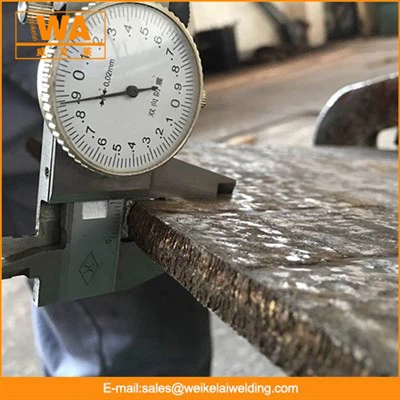
In abrasive environments, the performance of wear - resistant alloys is of great significance across various industries. As a supplier of wear - resistant alloys, I have witnessed firsthand how these materials can make a substantial difference in the efficiency and longevity of equipment.
1. Understanding Abrasive Environments
Abrasive environments are characterized by the presence of hard particles that can cause wear on surfaces. These particles can be natural, such as sand, gravel, or ore, or man - made, like metal chips in machining operations. Industries such as mining, construction, agriculture, and manufacturing often encounter such harsh conditions. In mining, for example, equipment like crushers, conveyors, and grinding mills are constantly exposed to abrasive rocks and minerals. In construction, earth - moving machinery and concrete mixers face abrasion from soil and aggregate materials.
The wear mechanisms in these environments can be classified into different types. Abrasive wear occurs when hard particles plow or cut into the surface of a material, removing material in the process. Erosive wear is caused by the impact of solid particles carried by a fluid, such as sand in a high - velocity air stream or water with suspended sediment. Corrosive - abrasive wear combines the effects of corrosion and abrasion, where the corrosive environment weakens the surface of the material, making it more susceptible to abrasion.
2. Key Properties of Wear - Resistant Alloys
Wear - resistant alloys are designed to withstand the challenges of abrasive environments by possessing several key properties.
Hardness
Hardness is one of the most important properties of wear - resistant alloys. A harder material is more resistant to abrasive wear because it can better withstand the cutting and plowing action of hard particles. For example, some high - chromium white cast irons have extremely high hardness values, which make them suitable for applications in the mining industry, such as in the liners of ball mills. The hardness of an alloy can be enhanced through heat treatment processes like quenching and tempering, which change the microstructure of the material to increase its resistance to deformation.
Toughness
While hardness is crucial, toughness is also essential. A material that is too hard may be brittle and prone to cracking under impact loads. In abrasive environments where there are often sudden impacts, a wear - resistant alloy needs to have sufficient toughness to absorb energy without fracturing. For instance, in a rock - crushing application, the crusher jaws need to be made of an alloy that can withstand the high - impact forces generated when rocks are broken. Some low - alloy steels are known for their good combination of hardness and toughness, making them suitable for such applications.
Corrosion Resistance
In many abrasive environments, there is also the presence of corrosive substances. For example, in the chemical processing industry or in marine applications, wear - resistant alloys need to resist both abrasion and corrosion. Stainless steels are often used in these situations because they contain chromium, which forms a passive oxide layer on the surface of the material, protecting it from corrosion. Additionally, some nickel - based alloys offer excellent corrosion resistance along with good wear resistance, making them ideal for use in harsh chemical and abrasive environments.
3. Performance of Wear - Resistant Alloys in Different Abrasive Environments
Mining
In the mining industry, wear - resistant alloys play a vital role in extending the service life of equipment. For example, in ore - grinding mills, the liners are constantly exposed to the abrasive action of the ore particles. High - chromium white cast iron liners are commonly used due to their high hardness and good wear resistance. These liners can significantly reduce the frequency of replacement, resulting in lower maintenance costs and increased productivity.
Conveyor belts in mines also require wear - resistant components. The idlers and pulleys that support the conveyor belts are often made of wear - resistant steels. High Wear Resistant Steel is a popular choice for these applications as it can withstand the abrasion caused by the movement of the belt and the ore on it.
Construction
In the construction industry, equipment such as bulldozers, excavators, and concrete mixers face abrasive wear from soil, gravel, and concrete. The blades of bulldozers and the buckets of excavators are typically made of wear - resistant alloys. Wear Resistant Steel Plate is used to fabricate these components because it offers a good balance of hardness and toughness. It can resist the abrasion caused by the scraping and digging actions, ensuring that the equipment can operate efficiently for longer periods.
Concrete mixers also require wear - resistant parts. The mixing blades and the interior of the mixing drum are subject to abrasion from the concrete. Bimetallic materials can be used in these applications. Bimetallic Wear Resistant Material combines the advantages of two different metals, with one layer providing high wear resistance and the other layer offering good toughness or corrosion resistance.
Manufacturing
In manufacturing processes, such as machining and metal forming, wear - resistant alloys are used in tools and dies. Cutting tools, for example, need to be made of materials that can withstand the high - speed cutting action and the abrasion from the workpiece. Carbide alloys are widely used in cutting tools because of their high hardness and wear resistance. Dies used in metal - forming operations also require wear - resistant materials to maintain their shape and dimensional accuracy over multiple cycles.
4. Factors Affecting the Performance of Wear - Resistant Alloys
Several factors can affect the performance of wear - resistant alloys in abrasive environments.
Particle Size and Shape
The size and shape of the abrasive particles play a significant role in wear. Larger particles generally cause more severe wear because they can exert greater forces on the surface of the material. Angular particles are also more abrasive than rounded particles because they have sharp edges that can cut into the material more easily. For example, in a sand - blasting operation, the use of angular sand particles will cause more wear on the target surface compared to rounded sand particles.
Load and Speed
The load applied to the wear - resistant alloy and the relative speed between the material and the abrasive particles also affect wear. Higher loads increase the pressure on the surface, leading to more severe wear. Similarly, higher speeds can increase the rate of wear because they increase the frequency of particle - surface interactions. In a conveyor system, if the load on the conveyor belt is too high or the belt moves at a very high speed, the wear - resistant components will experience more rapid wear.
Temperature
Temperature can have a significant impact on the performance of wear - resistant alloys. In some high - temperature abrasive environments, such as in the exhaust systems of engines or in metal - smelting processes, the properties of the alloy can change. High temperatures can cause softening of the material, reducing its hardness and wear resistance. On the other hand, in some cases, a certain amount of heat can be beneficial, as it can help in the formation of a protective oxide layer on the surface of the alloy.
5. Selecting the Right Wear - Resistant Alloy
Selecting the right wear - resistant alloy for a specific abrasive environment is crucial. It requires a comprehensive understanding of the application requirements, including the type of abrasive particles, the load and speed conditions, and the temperature range.
When choosing an alloy, it is important to consider the cost - effectiveness. While some high - performance alloys may offer excellent wear resistance, they may also be more expensive. Therefore, a balance needs to be struck between the performance requirements and the cost.
As a wear - resistant alloys supplier, we have a team of experts who can provide technical support and guidance on alloy selection. We can analyze the specific needs of your application and recommend the most suitable wear - resistant alloy to ensure optimal performance and cost - efficiency.
6. Conclusion and Call to Action
In conclusion, wear - resistant alloys play a vital role in abrasive environments across various industries. Their performance is determined by a combination of properties such as hardness, toughness, and corrosion resistance, as well as factors like particle size, load, speed, and temperature. By selecting the right wear - resistant alloy, companies can significantly improve the efficiency and longevity of their equipment, reduce maintenance costs, and increase productivity.
If you are facing challenges with wear in your equipment or are looking for high - quality wear - resistant alloys for your applications, we invite you to contact us for a detailed discussion. Our team is ready to provide you with the best solutions tailored to your specific needs.


References
1.ASM Handbook Volume 18: Friction, Lubrication, and Wear Technology. ASM International.
2.Schey, P. J. (1987). Tribology in Metalworking: Friction, Lubrication, and Wear. American Society for Metals.
3.Suh, N. P. (1973). Wear of Materials. Elsevier.