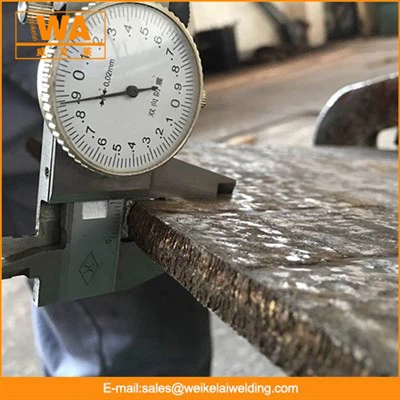
When it comes to materials used in applications where wear resistance is crucial, two main categories often come into consideration: wear resistant alloys and metals with high hardness. As a supplier of wear resistant alloys, I've had extensive experience in understanding the nuances between these two types of materials. In this blog, I'll delve into a detailed comparison of their wear resistance, exploring their properties, advantages, and limitations.
Understanding Wear Resistance
Wear resistance refers to a material's ability to withstand the removal of material from its surface due to mechanical action, such as friction, abrasion, or erosion. It is a critical property in many industries, including mining, construction, agriculture, and manufacturing, where components are subjected to harsh operating conditions.
Metals with High Hardness
Metals with high hardness are often the first choice for applications requiring wear resistance. Hardness is a measure of a material's resistance to local deformation, such as indentation or scratching. High - hardness metals, such as some tool steels and carbide - based materials, can effectively resist abrasive wear.
One of the key advantages of high - hardness metals is their ability to maintain their shape and integrity under high - pressure and high - stress conditions. For example, in cutting tools, high - hardness metals can retain their sharp edges for longer periods, reducing the need for frequent re - sharpening. This leads to increased productivity and cost savings in manufacturing processes.
However, high - hardness metals also have some limitations. They tend to be brittle, which means they are more prone to cracking and chipping under impact loading. In applications where components are subjected to sudden shocks or vibrations, such as in mining equipment, the brittleness of high - hardness metals can lead to premature failure. Additionally, high - hardness metals can be difficult to machine, which can increase the manufacturing cost and lead time.
Wear Resistant Alloys
Wear resistant alloys, on the other hand, are specifically designed to provide excellent wear resistance in a variety of environments. These alloys are typically composed of a base metal, such as iron, nickel, or cobalt, with the addition of alloying elements like chromium, molybdenum, and tungsten.
One of the main advantages of wear resistant alloys is their combination of hardness and toughness. Unlike high - hardness metals, wear resistant alloys can absorb energy without cracking or chipping, making them suitable for applications where impact resistance is also required. For example, in the construction of bulldozer blades, wear resistant alloys can withstand the impact of rocks and debris while maintaining their wear - resistant properties.
Wear resistant alloys also offer better corrosion resistance compared to many high - hardness metals. In environments where components are exposed to moisture, chemicals, or saltwater, the corrosion resistance of wear resistant alloys can significantly extend their service life. This is particularly important in marine and offshore applications.
Another benefit of wear resistant alloys is their versatility. They can be tailored to meet specific application requirements by adjusting the composition and heat treatment process. This allows for the optimization of wear resistance, hardness, toughness, and other properties according to the needs of the end - user.
Comparison of Wear Resistance
In terms of pure abrasion resistance, high - hardness metals may initially seem to have an edge. Their high hardness allows them to resist the scratching and cutting action of abrasive particles more effectively. However, in real - world applications, the performance of wear resistant alloys often surpasses that of high - hardness metals.
The ability of wear resistant alloys to combine hardness with toughness means that they can better withstand the complex wear mechanisms that occur in most industrial environments. For example, in a mining operation, the wear on equipment is not just due to abrasion but also includes impact and corrosion. Wear resistant alloys can handle these multiple types of wear simultaneously, while high - hardness metals may fail prematurely due to their brittleness or lack of corrosion resistance.
Applications
The choice between wear resistant alloys and high - hardness metals depends largely on the specific application. For applications where pure abrasion is the main concern and there is little to no impact loading, high - hardness metals may be a suitable choice. For example, in sandblasting nozzles, high - hardness carbide materials are commonly used due to their excellent abrasion resistance.
However, for applications where impact, corrosion, and a combination of wear mechanisms are present, wear resistant alloys are often the better option. In the mining industry, wear resistant alloys are widely used in conveyor systems, crushers, and buckets. In the construction industry, they are used in excavator buckets, grader blades, and asphalt paver screeds.


If you are looking for high - quality wear resistant materials, you can explore our Wear Steel Plate, Wear Resistant Plate, and High Wear Resistant Steel. These products are designed to provide superior wear resistance in a variety of applications.
Conclusion
In conclusion, while high - hardness metals have their place in applications requiring pure abrasion resistance, wear resistant alloys offer a more comprehensive solution for most industrial applications. Their combination of hardness, toughness, corrosion resistance, and versatility makes them a preferred choice in environments where multiple wear mechanisms are present.
If you are in need of wear resistant materials for your business, I encourage you to reach out for a consultation. We can help you select the most suitable wear resistant alloy for your specific application, ensuring optimal performance and cost - effectiveness. Contact us today to start the conversation about your wear - resistant material needs.
References
- Callister, W. D., & Rethwisch, D. G. (2016). Materials Science and Engineering: An Introduction. Wiley.
2.ASM Handbook Volume 3: Alloy Phase Diagrams. ASM International. - Totemeier, T. C., & Baker, I. (2007). Handbook of Fatigue Crack Propagation in Metals. Elsevier.