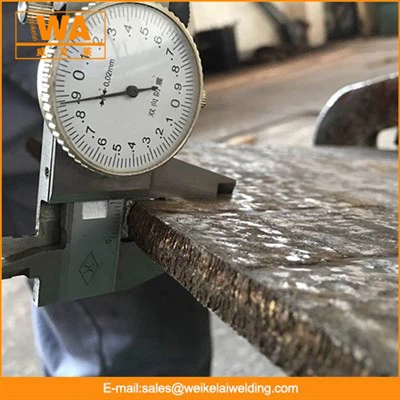
Overlay wear plates are a game - changer in the world of industrial equipment. As a supplier of overlay wear plates, I've witnessed firsthand how these innovative products can significantly enhance the reliability of equipment across various industries. In this blog, I'll delve into the ways overlay wear plates contribute to equipment reliability and why they are a smart investment for businesses.
Understanding Overlay Wear Plates
Before we explore how overlay wear plates improve equipment reliability, let's first understand what they are. Overlay wear plates are composite materials made by depositing a wear - resistant alloy onto a base plate. This process creates a plate with a tough, wear - resistant surface layer and a strong, ductile base. The wear - resistant layer can be customized to suit different applications, providing protection against abrasion, impact, corrosion, and other forms of wear.
Resistance to Abrasion
One of the primary ways overlay wear plates improve equipment reliability is by offering excellent resistance to abrasion. In many industrial processes, equipment is constantly exposed to abrasive materials such as sand, gravel, ore, and coal. These materials can cause significant wear on the surfaces of equipment, leading to premature failure and costly downtime.
Overlay wear plates are designed with a wear - resistant alloy layer that can withstand the constant rubbing and scraping of abrasive materials. For example, in mining operations, conveyor belts and chutes are often lined with overlay wear plates. The wear - resistant surface of the plates reduces the rate of abrasion, ensuring that the conveyor belts and chutes can operate for longer periods without replacement. This not only improves the reliability of the equipment but also reduces maintenance costs and downtime.
The Wear Resistant Alloys used in overlay wear plates are carefully selected for their high hardness and abrasion - resistant properties. These alloys can be tailored to specific applications, depending on the type of abrasive material and the operating conditions. For instance, in applications where the abrasive material is particularly hard, such as in the quarrying industry, a high - chromium alloy overlay wear plate may be used.
Impact Resistance
In addition to abrasion resistance, overlay wear plates also offer excellent impact resistance. In industries such as construction, mining, and steelmaking, equipment is often subjected to high - energy impacts from falling objects, heavy machinery, and other sources. These impacts can cause cracks, dents, and other forms of damage to the equipment, leading to reduced reliability and performance.
Overlay wear plates are designed to absorb and distribute the energy of impacts, protecting the underlying equipment from damage. The wear - resistant alloy layer of the plates acts as a buffer, reducing the force of the impact and preventing it from reaching the base plate. This helps to prevent cracks and other forms of damage, ensuring that the equipment can continue to operate reliably even under high - impact conditions.
For example, in a steelmaking plant, ladles and transfer cars are often lined with overlay wear plates. These plates protect the ladles and transfer cars from the impact of molten steel and slag, reducing the risk of damage and extending the service life of the equipment.
Corrosion Resistance
Corrosion is another major factor that can affect the reliability of equipment, especially in industries such as chemical processing, marine, and food processing. In these industries, equipment is often exposed to corrosive substances such as acids, alkalis, and salts, which can cause the metal surfaces of the equipment to rust and deteriorate over time.
Overlay wear plates can provide excellent corrosion resistance, depending on the type of alloy used in the overlay. For example, some overlay wear plates are made with stainless steel alloys, which are highly resistant to corrosion. These plates can be used in applications where the equipment is exposed to corrosive environments, such as in chemical storage tanks and marine vessels.
The CCO Wear Plate is an example of an overlay wear plate that offers both wear and corrosion resistance. This type of plate is suitable for applications where the equipment is exposed to both abrasive and corrosive substances, such as in the pulp and paper industry.
Customization and Flexibility
One of the key advantages of overlay wear plates is their customization and flexibility. As a supplier, we can tailor the overlay wear plates to meet the specific needs of our customers. This includes customizing the thickness of the wear - resistant layer, the type of alloy used, and the size and shape of the plates.


Customization allows us to provide solutions that are optimized for different applications. For example, in a cement plant, the equipment may have different wear requirements depending on the location and function. We can provide overlay wear plates with different wear - resistant properties for different parts of the equipment, such as the kiln inlet, the conveyor belts, and the crushers.
This flexibility ensures that the equipment is protected in the most effective way possible, improving its reliability and performance. By using overlay wear plates that are specifically designed for the application, businesses can reduce the risk of equipment failure and extend the service life of their equipment.
Extended Service Life
By providing excellent abrasion, impact, and corrosion resistance, overlay wear plates can significantly extend the service life of equipment. Instead of having to replace equipment components frequently due to wear and damage, businesses can use overlay wear plates to protect the equipment and make it last longer.
For example, in a quarry, the crusher liners can be lined with overlay wear plates. Without the wear plates, the liners may need to be replaced every few weeks or months due to abrasion. However, with the use of overlay wear plates, the liners can last for several months or even years, depending on the operating conditions. This not only reduces the cost of replacement parts but also minimizes downtime and improves the overall productivity of the quarry.
Reduced Maintenance Costs
In addition to extending the service life of equipment, overlay wear plates can also reduce maintenance costs. Since the wear plates protect the equipment from wear and damage, there is less need for frequent maintenance and repairs. This includes tasks such as grinding, welding, and replacing worn - out parts.
For example, in a power plant, the coal handling equipment can be protected with overlay wear plates. Without the wear plates, the equipment may require regular maintenance to repair the damage caused by abrasion and impact. However, with the use of overlay wear plates, the maintenance frequency can be significantly reduced, saving both time and money.
Improved Operational Efficiency
Overlay wear plates can also contribute to improved operational efficiency. When equipment is reliable and has a long service life, it can operate more consistently and efficiently. This means that businesses can produce more output with less downtime, resulting in increased productivity and profitability.
For example, in a manufacturing plant, the production line can be equipped with overlay wear plates on the conveyor belts and other equipment. The reduced wear and damage to the equipment ensure that the production line can run smoothly, without frequent interruptions. This leads to a more efficient production process and higher overall output.
Conclusion
In conclusion, overlay wear plates are a valuable solution for improving the reliability of equipment. Their ability to resist abrasion, impact, and corrosion, combined with their customization and flexibility, make them an ideal choice for a wide range of industries. By using overlay wear plates, businesses can extend the service life of their equipment, reduce maintenance costs, and improve operational efficiency.
If you're interested in learning more about how overlay wear plates can benefit your equipment or if you're looking to purchase overlay wear plates for your business, I encourage you to contact us for a consultation. Our team of experts can help you select the right overlay wear plates for your specific application and provide you with all the information you need to make an informed decision.
References
- ASM Handbook, Volume 13A: Corrosion: Fundamentals, Testing, and Protection. ASM International.
- Wear Control Handbook. ASM International.
- Industrial Equipment Maintenance and Reliability: Best Practices. CRC Press.