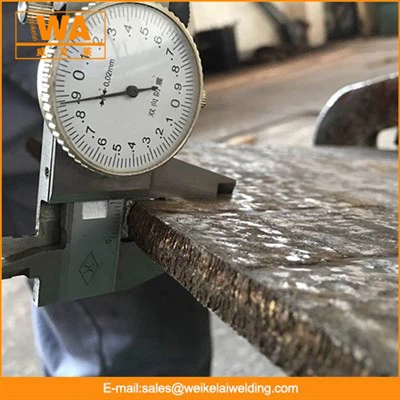
Metallic wear liners are widely recognized for their durability and performance in various industrial applications, particularly those involving high levels of abrasion, impact, and corrosion. However, when it comes to optical applications, the suitability of metallic wear liners is a topic that warrants in - depth exploration. As a supplier of metallic wear liners, I am often asked about the potential use of these products in optical setups. In this blog, we will delve into the characteristics of metallic wear liners, the requirements of optical applications, and whether the two can be a good match.
Characteristics of Metallic Wear Liners
Metallic wear liners are typically made from high - strength alloys such as [specific alloys commonly used in your products]. These materials are chosen for their excellent mechanical properties. For instance, they offer high hardness, which enables them to resist the wear caused by continuous contact with abrasive materials. This hardness is achieved through processes like heat treatment and alloying, which enhance the material's crystalline structure.
In addition to hardness, metallic wear liners also have good toughness. Toughness is crucial as it allows the liner to withstand impact forces without fracturing. In industrial settings where heavy objects may collide with the liners, this property ensures the longevity of the product. Moreover, many metallic wear liners are resistant to corrosion. Corrosion can degrade the surface of the liner over time, reducing its effectiveness. By using corrosion - resistant alloys, the liners can maintain their integrity even in harsh environments with high humidity or exposure to corrosive chemicals.
There are different types of metallic wear liners available for various industrial needs. For example, Conveyor Wear Liners are designed to protect conveyor systems from the abrasive action of the conveyed materials. They are often installed on the inner surfaces of conveyor chutes and troughs. Chromium Alloy Steel Mill Liners are used in grinding mills to protect the mill walls from the impact and abrasion of the grinding media and the material being ground. Chute Wear Liners are installed in chutes to prevent the rapid wear of the chute walls due to the flow of abrasive materials.
Requirements of Optical Applications
Optical applications have very specific requirements. One of the most fundamental requirements is transparency. In applications such as lenses, windows, and optical fibers, the material must allow light to pass through with minimal absorption and scattering. The refractive index of the material is also a critical factor. The refractive index determines how light bends when it passes from one medium to another. Precise control of the refractive index is necessary for applications like lens design to achieve the desired focusing and imaging properties.
Another important aspect is surface quality. In optical systems, even the slightest surface irregularities can cause light to scatter, leading to a loss of image quality. Therefore, optical materials need to have extremely smooth surfaces, often with roughness values in the nanometer range. Additionally, optical materials should be stable over time and under different environmental conditions. Temperature changes, humidity, and exposure to light can all affect the optical properties of the material. For example, thermal expansion can cause the shape of an optical component to change, which in turn can affect its optical performance.
Can Metallic Wear Liners Be Used in Optical Applications?
On the surface, the properties of metallic wear liners seem to be at odds with the requirements of optical applications. Metallic materials are generally opaque, which means they do not allow light to pass through. Their high density and complex atomic structure cause light to be absorbed or reflected rather than transmitted. This lack of transparency makes them unsuitable for most traditional optical applications that rely on the transmission of light, such as in cameras, microscopes, and telescopes.
However, there are some niche optical applications where the properties of metallic wear liners could potentially be useful. One such area is in optical shielding. In certain environments, there is a need to protect optical components from mechanical damage, abrasion, and corrosion. Metallic wear liners can provide a physical barrier to protect the more delicate optical elements. For example, in industrial inspection systems where the optical sensors are exposed to a harsh environment with flying debris or abrasive particles, a metallic wear liner could be used as an outer protective layer.
Another potential application is in the field of optical metrology. In some cases, metallic wear liners with well - defined surface patterns or structures could be used as calibration standards. The high hardness and wear resistance of the metallic liners would ensure that the surface patterns remain stable over time, providing a reliable reference for optical measurement systems.
In addition, some advanced research is exploring the use of metallic nanostructures for optical applications. By fabricating metallic wear liners with nanoscale features, it may be possible to achieve unique optical properties such as plasmonic effects. Plasmons are collective oscillations of electrons in a metal, and they can interact strongly with light at specific wavelengths. These plasmonic effects could potentially be used for applications such as enhanced light absorption, sensing, and imaging. However, this is still a very experimental area, and significant research and development are required before it can be translated into practical applications.
Challenges and Considerations
If metallic wear liners are to be used in optical applications, there are several challenges that need to be addressed. One of the main challenges is surface finishing. To meet the strict surface quality requirements of optical applications, the metallic wear liners would need to be polished to an extremely high degree. This is a difficult and costly process, as the hardness of the metallic materials makes it challenging to achieve the required smoothness.
Another consideration is the thermal and chemical stability of the metallic wear liners in the optical environment. The optical performance of a system can be affected by changes in the properties of the materials due to temperature and chemical reactions. Metallic wear liners may need to be specially treated or coated to ensure their stability under the specific environmental conditions of the optical application.
Cost is also a significant factor. The development and production of metallic wear liners for optical applications would likely involve additional processes and materials, which would increase the overall cost. This could make them less competitive compared to traditional optical materials in some cases.
Conclusion
In conclusion, while metallic wear liners are not suitable for most mainstream optical applications due to their lack of transparency, there are some niche areas where they could potentially find use. Their excellent mechanical properties such as hardness, toughness, and corrosion resistance make them attractive for protective and calibration applications in the optical field. With ongoing research and technological advancements, there may be more opportunities to utilize metallic wear liners in innovative optical applications in the future.

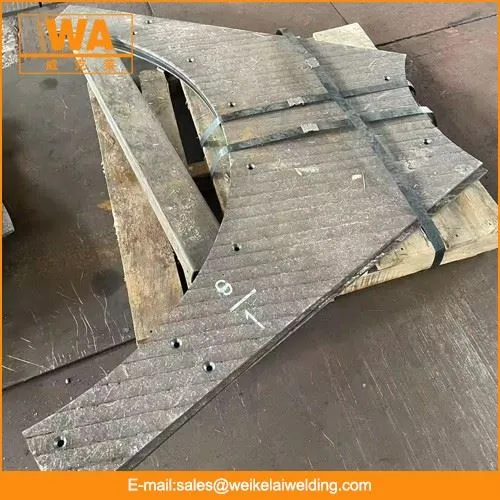
If you are interested in exploring the potential use of metallic wear liners in your optical applications or have any questions about our products, we encourage you to contact us for a detailed discussion. Our team of experts is ready to assist you in finding the best solutions for your specific needs.
References
- "Introduction to Optics" by Frank L. Pedrotti, Leno M. Pedrotti, and Leno S. Pedrotti
- "Materials Science and Engineering: An Introduction" by William D. Callister, Jr. and David G. Rethwisch
- Research papers on metallic nanostructures and their optical properties from academic journals such as "Nature Photonics" and "Optics Express"