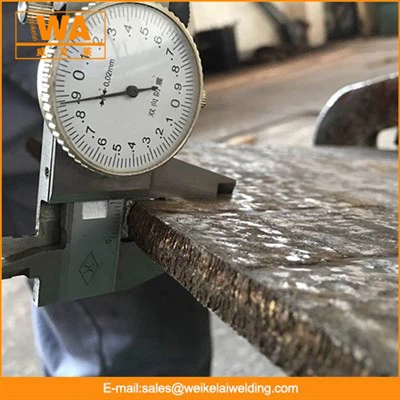
Hey there, fellow welders! As a supplier of Mig Welding Wire, I get asked a ton of questions every day. One that pops up quite often is, "Can I use Mig Welding Wire on galvanized steel?" Well, let's dive right into this topic and find out.
First off, let's understand what galvanized steel is. Galvanized steel is regular steel that has been coated with a layer of zinc. This zinc coating acts as a protective shield, preventing the steel from rusting and corroding. It's commonly used in a variety of applications, from construction to automotive parts.
Now, when it comes to welding galvanized steel with Mig Welding Wire, there are a few things you need to keep in mind. The zinc coating on galvanized steel can cause some issues during the welding process. When the zinc is heated during welding, it vaporizes. This zinc vapor can create some pretty unpleasant fumes. These fumes are not only bad for your health but can also cause some problems with the weld itself.
Inhalation of zinc fumes can lead to a condition known as "metal fume fever." Symptoms include flu - like symptoms such as chills, fever, headache, and nausea. So, proper ventilation is an absolute must when welding galvanized steel. You should always weld in a well - ventilated area or use a fume extraction system to keep those fumes away from you.
Another issue with welding galvanized steel is that the zinc vapor can also cause porosity in the weld. Porosity means there are tiny holes or voids in the weld, which can weaken the joint. This is because the zinc vapor tries to escape from the molten weld pool, and if it can't get out quickly enough, it gets trapped, creating those unwanted holes.


But hey, don't worry! It's still possible to use Mig Welding Wire on galvanized steel. You just need to take a few precautions.
One option is to use a wire that is specifically designed to handle the challenges of welding galvanized steel. For example, our Resistant Flux Core Wire is a great choice. This wire has been formulated to better deal with the zinc coating. The flux in the wire helps to reduce the formation of porosity and can also help to clean the weld area as you're welding.
The flux in the wire contains certain chemicals that react with the zinc and other impurities. These reactions can help to capture the zinc vapor and prevent it from causing problems in the weld pool. This results in a cleaner, stronger weld.
Another option is to use Mild Steel Mig Welding Wire. Mild steel wire can work well on galvanized steel, but you need to be extra careful with your welding technique. You should use a lower welding current and a faster travel speed. A lower current means less heat input, which reduces the amount of zinc that vaporizes. A faster travel speed helps to move the weld along quickly, so the zinc doesn't have as much time to cause problems.
When using Mild Steel Mig Welding Wire on galvanized steel, it's also a good idea to pre - clean the area to be welded. You can use a wire brush or a grinder to remove some of the zinc coating in the immediate area where you'll be welding. This can make the welding process a bit easier and reduce the amount of zinc that gets into the weld pool.
If you're looking for a wire that can handle more heavy - duty applications on galvanized steel, our Hardfacing Flux Cored Wire might be the way to go. This wire is designed to create a hard, wear - resistant surface on the weld. It can be great for applications where the welded joint is going to be subjected to a lot of stress or wear.
The hardfacing properties of this wire can also help to compensate for any potential weaknesses in the weld caused by the zinc coating. It can add an extra layer of protection and strength to the joint.
Now, let's talk a bit about the welding process itself. When you're welding galvanized steel with Mig Welding Wire, you should start with a tack weld. A tack weld is a small, temporary weld that holds the pieces of steel together. This gives you a chance to position the pieces correctly before you do the full weld.
Once you've tacked the pieces together, you can start the main welding process. Keep your welding gun at the correct angle. A good rule of thumb is to keep the gun at a 10 - 15 - degree angle from vertical, depending on the thickness of the steel and the type of wire you're using.
Also, make sure to maintain a consistent travel speed. If you go too slow, you'll generate more heat, which can lead to more zinc vaporization and porosity. If you go too fast, the weld might not penetrate properly.
In addition to the type of wire and the welding technique, the shielding gas you use also matters. For welding galvanized steel with Mig Welding Wire, a gas mixture of argon and carbon dioxide is commonly used. The argon helps to protect the weld pool from the atmosphere, while the carbon dioxide provides some additional energy to the arc, making the welding process more efficient.
So, to sum it all up, yes, you can use Mig Welding Wire on galvanized steel. But you need to be aware of the potential problems and take the necessary precautions. Whether it's choosing the right wire, like our Resistant Flux Core Wire, Mild Steel Mig Welding Wire, or Hardfacing Flux Cored Wire, or using the correct welding technique and shielding gas, every step counts.
If you're interested in learning more about our Mig Welding Wires or have any questions about welding galvanized steel, don't hesitate to reach out. We're here to help you get the best results in your welding projects. Whether you're a professional welder working on large - scale projects or a DIY enthusiast tackling a home improvement job, we've got the right wire for you. Contact us to start a discussion about your specific needs and let's find the perfect solution together.
References
- American Welding Society. "Welding Handbook, Volume 2: Welding Processes."
- ASM Handbook Committee. "ASM Handbook, Volume 6: Welding, Brazing, and Soldering."