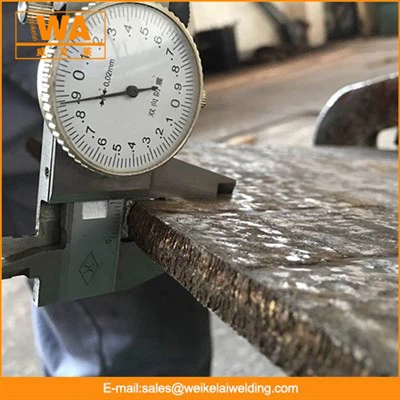
Hey there! As a supplier of Bimetal Wear Plate, I often get asked if these plates can be used in the food - processing industries. Well, let's dig into this topic and find out.
First off, what exactly is a bimetal wear plate? A bimetal wear plate is a composite material made up of two different metals. Usually, one layer is a hard - wearing alloy that's great at resisting abrasion, and the other layer is a more ductile base metal that provides strength and support.


In the food - processing industries, there are some unique requirements. Hygiene is obviously a top priority. The equipment used has to be easy to clean to prevent the growth of bacteria and other harmful microorganisms. Also, the materials used shouldn't contaminate the food. They need to be non - toxic and comply with food safety regulations.
Let's talk about the advantages of using bimetal wear plates in food - processing. One of the big perks is their excellent wear resistance. In food - processing, there are a lot of moving parts and processes that involve abrasion. For example, conveyor belts that transport raw ingredients or finished products can cause wear and tear on the equipment. Bimetal wear plates can withstand this abrasion for a long time, which means less frequent replacement of parts. This not only saves money but also reduces downtime for the processing plant.
Another advantage is the strength and durability of bimetal wear plates. Food - processing often involves heavy loads and high - pressure operations. The bimetal design combines the strength of the base metal with the wear - resistant properties of the alloy layer. This allows the plates to handle these tough conditions without deforming or breaking easily.
Now, let's address the concerns. One of the main worries is about food safety. Some people might think that the metals in bimetal wear plates could leach into the food. However, if the right materials are used, this isn't a problem. For food - processing applications, bimetal wear plates are often made from stainless steel or other food - grade metals. These materials are non - toxic and have been approved for use in contact with food.
Cleaning is also a crucial aspect. Bimetal wear plates can be designed with smooth surfaces that are easy to clean. This helps in maintaining the high - level of hygiene required in the food - processing industries. Additionally, they can be treated with special coatings to further enhance their cleanability and resistance to corrosion.
When it comes to different types of bimetal wear plates, there are a few options. You might want to check out Hardfacing Wear Plate. These plates are created by depositing a hard - facing material onto a base metal. The hard - facing layer provides excellent wear resistance, making them suitable for applications where there's a lot of abrasion.
High Wear Resistant Steel is another great option. This type of bimetal wear plate is known for its high strength and outstanding wear - resistant properties. It can handle heavy loads and high - speed operations, which are common in large - scale food - processing plants.
If you're looking for a specific type of wear plate, Chromium Carbide Wear Plate is worth considering. Chromium carbide is extremely hard and offers excellent resistance to abrasion, erosion, and corrosion. It's a popular choice for applications where the equipment is exposed to harsh conditions.
In conclusion, bimetal wear plates can definitely be used in the food - processing industries. They offer a great combination of wear resistance, strength, and durability, while also meeting the strict food - safety and hygiene requirements. If you're in the food - processing business and looking for reliable wear - resistant solutions, bimetal wear plates could be the answer.
If you're interested in learning more about our bimetal wear plates or want to discuss your specific needs, don't hesitate to reach out. We're here to help you find the best solution for your food - processing operations. Let's have a chat and see how we can work together to improve the efficiency and longevity of your equipment.
References
- "Materials for Food - Processing Equipment" - Journal of Food Science
- "Wear Resistance in Industrial Applications" - Industrial Materials Research Institute