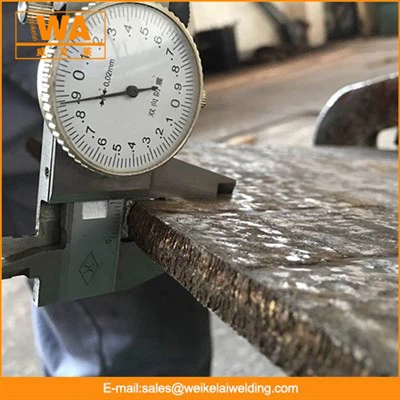
Can alloy steel plates be welded? That's a question I get asked a lot as an alloy steel plate supplier. And the short answer is yes, they can. But as with most things in the world of metalworking, there's a bit more to it than that.
Let's start with the basics. Alloy steel plates are made by adding various alloying elements to carbon steel. These elements can include things like chromium, nickel, molybdenum, and vanadium, among others. The addition of these elements gives alloy steel plates enhanced properties such as increased strength, hardness, and corrosion resistance compared to regular carbon steel.
Now, when it comes to welding alloy steel plates, the process is similar to welding other types of steel, but there are some important considerations. One of the main factors is the composition of the alloy steel. Different alloying elements can affect the weldability of the steel in different ways. For example, some elements can increase the risk of cracking in the weld area, while others can improve the strength and toughness of the weld.
Another important consideration is the pre - heating and post - heating requirements. Pre - heating the alloy steel plate before welding can help to reduce the cooling rate of the weld, which in turn can prevent cracking. The pre - heating temperature depends on the type and thickness of the alloy steel. Post - heating, on the other hand, can help to relieve the residual stresses in the weld and heat - affected zone.
The welding process itself also matters. There are several welding processes that can be used for alloy steel plates, such as shielded metal arc welding (SMAW), gas metal arc welding (GMAW), and flux - cored arc welding (FCAW). Each process has its own advantages and disadvantages. For instance, SMAW is a versatile process that can be used in various positions and is suitable for field welding. GMAW, on the other hand, is a faster process and can produce high - quality welds, but it requires a shielding gas.
Let's talk about the quality of the weld. To ensure a good quality weld on alloy steel plates, it's crucial to use the right welding consumables. The filler metal should have a similar composition to the base metal to ensure compatibility. This helps to achieve the desired mechanical properties in the weld.
In addition, proper joint preparation is essential. The edges of the alloy steel plates should be clean and free of any contaminants such as rust, oil, or paint. A proper joint design, like a V - groove or U - groove, can also improve the quality of the weld.


Now, I want to mention some of the applications where welded alloy steel plates are commonly used. One of the major applications is in the construction industry. Alloy steel plates are used to build bridges, high - rise buildings, and other large - scale structures. Welding these plates together allows for the creation of strong and durable structures that can withstand heavy loads.
Another important application is in the manufacturing of heavy machinery. Equipment such as excavators, bulldozers, and cranes often use welded alloy steel plates in their construction. The high strength and wear resistance of these plates make them ideal for withstanding the harsh working conditions in the construction and mining industries.
If you're interested in Wear Resistant Steel, Wear Steel Plate, or Anti Wear Steel, we've got you covered. These types of alloy steel plates are especially important in applications where wear and abrasion are major concerns.
As an alloy steel plate supplier, I've seen firsthand the importance of proper welding techniques. I've worked with many customers who needed to weld alloy steel plates for their projects. Some of them faced challenges, but with the right guidance and the right materials, we were able to overcome those challenges and achieve successful welds.
So, if you're planning a project that involves welding alloy steel plates, don't be intimidated. With a good understanding of the factors involved, the right welding equipment and consumables, and proper techniques, you can achieve high - quality welds.
If you're in the market for alloy steel plates or have any questions about welding them, I'd love to hear from you. Whether you're a small - scale fabricator or a large - scale construction company, I'm here to help you find the right alloy steel plates for your needs and provide you with the support you need for your welding projects. Reach out to me, and let's start a conversation about how we can work together to make your project a success.
References
- "Welding Metallurgy and Weldability of Stainless Steels" by John C. Lippold and David J. Kotecki
- "The Welding of Aluminium and its Alloys" by John Campbell
- "Modern Welding Technology" by Richard L. Petrie