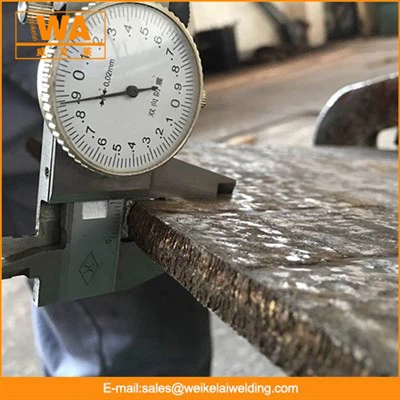
Vibration is an omnipresent challenge in industrial settings, often leading to equipment wear, reduced efficiency, and increased maintenance costs. As a leading supplier of Metallic Wear Liners, we understand the critical role these liners play in damping vibrations and enhancing the performance of various industrial equipment. In this blog, we will delve into the vibration damping effect of metallic wear liners, exploring the underlying mechanisms, benefits, and real - world applications.
Mechanisms of Vibration Damping in Metallic Wear Liners
Vibration damping is the process of reducing the amplitude of vibrations in a system. Metallic wear liners achieve this through several key mechanisms:
Material Properties
Metallic wear liners are typically made from alloys with specific material properties that contribute to vibration damping. For example, the internal friction within the metal structure dissipates the energy of vibrations. When a vibration occurs, the atoms in the metal lattice are displaced from their equilibrium positions. As the atoms move back and forth, the internal friction between them converts the vibrational energy into heat energy. This energy conversion reduces the amplitude of the vibrations over time.
Some metals, such as cast iron and certain steel alloys, have a relatively high damping capacity due to their microstructure. The presence of graphite flakes in cast iron, for instance, can act as internal dampers. These flakes absorb and dissipate vibrational energy as they deform under stress.

Structural Design
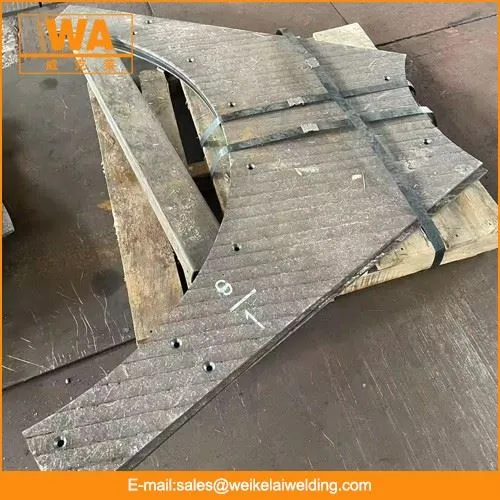
The design of metallic wear liners also plays a crucial role in vibration damping. Liners can be designed with specific geometries that enhance their ability to absorb and distribute vibrational energy. For example, corrugated or ribbed liners can increase the surface area and stiffness, which in turn affects the way vibrations propagate through the liner.
In addition, the way the liner is installed and attached to the base structure can influence its damping performance. A proper installation ensures that the liner is in good contact with the surface, allowing for efficient transfer of vibrational energy from the structure to the liner.
Interaction with the Surrounding Environment
Metallic wear liners interact with the surrounding environment, such as the material flowing over them or the fluid in which they are immersed. This interaction can also contribute to vibration damping. For example, when a granular material flows over a wear liner, the friction between the material and the liner surface can dissipate some of the vibrational energy.
Benefits of Vibration Damping in Metallic Wear Liners
The vibration damping effect of metallic wear liners offers several significant benefits in industrial applications:
Reduced Equipment Wear
Vibrations can cause excessive wear on industrial equipment by increasing the friction and impact forces between moving parts. By damping vibrations, metallic wear liners can reduce the wear rate of the equipment, extending its service life. This is particularly important in applications where equipment is subjected to high - speed or high - impact conditions, such as in mining, cement production, and power generation.
Improved Equipment Performance
Vibrations can also affect the performance of equipment by causing misalignments, reducing the accuracy of measurements, and increasing the noise level. By reducing vibrations, metallic wear liners can improve the stability and accuracy of equipment, leading to better overall performance. For example, in a conveyor system, reduced vibrations can ensure a smoother flow of materials, improving the efficiency of the conveyor.
Enhanced Safety
Excessive vibrations can pose a safety risk to workers and the surrounding environment. They can cause equipment failures, which may lead to accidents and injuries. By damping vibrations, metallic wear liners can help to prevent equipment failures and ensure a safer working environment.
Cost Savings
The reduction in equipment wear and improved performance can result in significant cost savings for industrial operators. By extending the service life of equipment, operators can reduce the frequency of equipment replacements and maintenance costs. In addition, the improved efficiency of equipment can lead to lower energy consumption, further reducing operating costs.
Real - World Applications of Metallic Wear Liners for Vibration Damping
Metallic wear liners are used in a wide range of industrial applications to dampen vibrations:
Chute Systems
In chute systems, Chute Wear Liners are used to protect the chute walls from wear and to dampen the vibrations caused by the flow of materials. The liners absorb the impact energy of the falling materials and reduce the vibrations transmitted to the chute structure. This helps to prevent chute damage and ensures a smooth flow of materials.
Conveyor Systems
Conveyor Wear Liners are installed on conveyor belts and troughs to reduce the vibrations caused by the movement of materials. The liners help to distribute the load evenly and dampen the vibrations, which can improve the stability and efficiency of the conveyor system.
Grinding Mills
In grinding mills, Chromium Alloy Steel Mill Liners are used to protect the mill walls from wear and to dampen the vibrations generated during the grinding process. The liners absorb the impact energy of the grinding media and the material being ground, reducing the vibrations transmitted to the mill structure. This helps to prevent mill damage and improve the grinding efficiency.
How to Choose the Right Metallic Wear Liners for Vibration Damping
When choosing metallic wear liners for vibration damping, several factors need to be considered:
Application Requirements
The specific requirements of the application, such as the type of material being handled, the operating conditions (temperature, pressure, etc.), and the level of vibrations, should be taken into account. For example, in high - temperature applications, a liner with good heat resistance and damping properties should be selected.
Material Properties
The material properties of the liner, such as its hardness, toughness, and damping capacity, are also important. Different materials have different properties, and the choice of material should be based on the specific requirements of the application.
Design and Installation
The design and installation of the liner can also affect its vibration damping performance. A liner with a proper design and installation can ensure efficient transfer of vibrational energy and optimal damping performance.
Conclusion
The vibration damping effect of metallic wear liners is a critical factor in enhancing the performance and longevity of industrial equipment. Through their material properties, structural design, and interaction with the surrounding environment, metallic wear liners can effectively dampen vibrations, reducing equipment wear, improving performance, enhancing safety, and saving costs.
If you are looking for high - quality metallic wear liners to address your vibration damping needs, we are here to help. Our team of experts can provide you with customized solutions based on your specific application requirements. Contact us today to start a discussion about your procurement needs and let us work together to find the best wear liner solutions for your industrial operations.
References
- Campbell, C. S. (2006). "Granular Flow". Cambridge University Press.
- Harris, C. M., & Crede, C. E. (1976). "Shock and Vibration Handbook". McGraw - Hill.
- Kalpakjian, S., & Schmid, S. R. (2009). "Manufacturing Engineering and Technology". Pearson Prentice Hall.