As a trusted supplier of wear resistant alloys, I've often been asked about the thermal conductivity of these remarkable materials. Understanding thermal conductivity is crucial, as it plays a significant role in various industrial applications where wear resistant alloys are employed. In this blog, I'll delve into the concept of thermal conductivity in wear resistant alloys, explore its influencing factors, and discuss its implications for practical use.
What is Thermal Conductivity?
Thermal conductivity is a fundamental property of materials that describes their ability to conduct heat. It is defined as the quantity of heat that passes through a unit area of a material in a unit time, under a unit temperature gradient. The SI unit of thermal conductivity is watts per meter - kelvin (W/(m·K)). A high thermal conductivity means that the material can transfer heat quickly, while a low thermal conductivity indicates that the material is a poor conductor of heat and may act as an insulator.
In the context of wear resistant alloys, thermal conductivity affects how these materials respond to heat generated during their use. For example, in high - speed machining or in applications where there is significant frictional heating, the ability of the wear resistant alloy to dissipate heat can impact its performance and longevity.
Thermal Conductivity of Wear Resistant Alloys
Wear resistant alloys are a diverse group of materials, and their thermal conductivity can vary widely depending on their composition and microstructure. Generally, alloys with high metal content tend to have relatively high thermal conductivity because metals are good conductors of heat. However, the addition of alloying elements and the formation of different phases can significantly affect this property.
For instance, some common wear resistant alloys contain elements like chromium, nickel, and molybdenum. Chromium can improve the wear resistance of the alloy but may also reduce its thermal conductivity to some extent. Nickel, on the other hand, can enhance both the corrosion resistance and, in some cases, the thermal conductivity of the alloy. Molybdenum is often added to increase the strength and hardness of the alloy, and its effect on thermal conductivity depends on its concentration and the overall alloy system.
Let's take a closer look at some specific types of wear resistant alloys and their thermal conductivity characteristics:
Bimetallic Wear Resistant Material
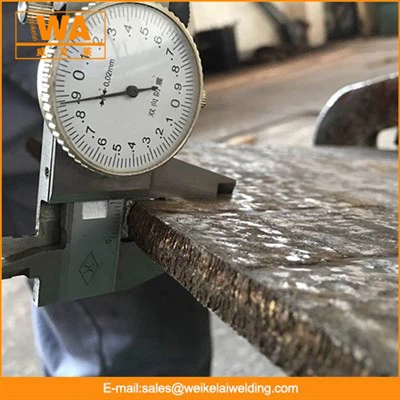
Bimetallic wear resistant materials combine two different metals or alloys to achieve a balance between wear resistance and other properties. These materials typically consist of a wear - resistant layer bonded to a substrate. The thermal conductivity of bimetallic wear resistant materials can be complex to predict because it depends on the thermal conductivities of both the wear - resistant layer and the substrate, as well as the interface between them. Bimetallic Wear Resistant Material
The wear - resistant layer, which is often made of a hard alloy, may have a relatively low thermal conductivity due to its high hardness and complex microstructure. The substrate, which is usually a more ductile metal, may have a higher thermal conductivity. The interface between the two layers can act as a barrier to heat transfer, further influencing the overall thermal conductivity of the bimetallic material.
High Hardness Steel Plate
High hardness steel plates are widely used in applications where wear resistance is critical, such as mining, construction, and manufacturing. The thermal conductivity of high hardness steel plates is influenced by their carbon content, alloying elements, and heat treatment.
Carbon is a key element in steel that affects its hardness and wear resistance. As the carbon content increases, the hardness of the steel plate also increases, but the thermal conductivity may decrease. This is because carbon atoms can disrupt the regular lattice structure of the steel, making it more difficult for heat to be conducted through the material.
Alloying elements like manganese, silicon, and vanadium are often added to high hardness steel plates to improve their mechanical properties. These elements can also have an impact on thermal conductivity. For example, manganese can increase the strength of the steel but may slightly reduce its thermal conductivity. High Hardness Steel Plate
Bimetal Wear Plate
Bimetal wear plates are similar to bimetallic wear resistant materials but are specifically designed for wear - prone applications. They typically have a hard, wear - resistant surface layer and a tough, ductile backing layer.
The thermal conductivity of bimetal wear plates is determined by the properties of the two layers and the bonding between them. The wear - resistant surface layer, which may be made of a carbide - rich alloy, may have a lower thermal conductivity compared to the backing layer. The quality of the bond between the two layers is also important, as a poor bond can create thermal resistance and reduce the overall thermal conductivity of the bimetal wear plate. Bimetal Wear Plate
Factors Affecting Thermal Conductivity in Wear Resistant Alloys
In addition to composition, several other factors can affect the thermal conductivity of wear resistant alloys:
Microstructure
The microstructure of a wear resistant alloy, including the grain size, phase distribution, and presence of defects, can have a significant impact on its thermal conductivity. A fine - grained microstructure may have a lower thermal conductivity compared to a coarse - grained one because the grain boundaries can scatter heat - carrying phonons (lattice vibrations) and electrons.
The presence of different phases in the alloy, such as carbides, intermetallics, and solid solutions, can also affect thermal conductivity. Carbides, which are often present in wear resistant alloys to improve hardness and wear resistance, can act as barriers to heat transfer and reduce the thermal conductivity of the material.
Temperature
Thermal conductivity is also temperature - dependent. In general, the thermal conductivity of most metals and alloys decreases with increasing temperature. This is because at higher temperatures, the lattice vibrations become more intense, leading to more scattering of phonons and electrons, which reduces the efficiency of heat transfer.


However, the relationship between temperature and thermal conductivity can be more complex in wear resistant alloys due to phase transformations and other temperature - induced changes in the microstructure. For example, some alloys may undergo a phase change at a certain temperature, which can significantly alter their thermal conductivity.
Manufacturing Process
The manufacturing process used to produce wear resistant alloys can also influence their thermal conductivity. Processes such as casting, forging, and heat treatment can affect the microstructure and density of the alloy, which in turn affect its thermal conductivity.
For example, a casting process may introduce porosity or inhomogeneities in the alloy, which can reduce its thermal conductivity. Heat treatment can change the phase composition and grain size of the alloy, thereby altering its thermal conductivity.
Implications of Thermal Conductivity in Practical Applications
The thermal conductivity of wear resistant alloys has several important implications in practical applications:
Heat Dissipation
In applications where wear resistant alloys are subjected to high temperatures, such as in cutting tools or high - speed machinery, the ability of the alloy to dissipate heat is crucial. A high thermal conductivity allows the alloy to transfer heat away from the wear surface, reducing the temperature and preventing thermal damage to the material. This can improve the performance and lifespan of the wear resistant component.
Thermal Stress
Differences in thermal conductivity between different parts of a wear resistant component or between the wear resistant alloy and its surrounding materials can lead to thermal stress. Thermal stress can cause cracking, deformation, and other forms of damage to the component. Understanding the thermal conductivity of wear resistant alloys is essential for designing components that can withstand thermal stress and operate reliably.
Energy Efficiency
In some industrial processes, the thermal conductivity of wear resistant alloys can affect energy efficiency. For example, in a heat - treating furnace, using wear resistant alloys with high thermal conductivity can reduce the energy required to heat the components, leading to cost savings and improved environmental performance.
Conclusion
In conclusion, the thermal conductivity of wear resistant alloys is a complex property that is influenced by composition, microstructure, temperature, and manufacturing process. As a supplier of wear resistant alloys, I understand the importance of providing materials with the right thermal conductivity for various applications.
Whether you need a bimetallic wear resistant material with specific thermal properties for a mining application or a high hardness steel plate for a manufacturing process, we can offer a wide range of wear resistant alloys to meet your needs. Our team of experts can help you select the most suitable alloy based on your requirements and provide technical support throughout the procurement process.
If you are interested in learning more about our wear resistant alloys or would like to discuss your specific application, please feel free to contact us for a detailed consultation. We look forward to working with you to find the best wear resistant solutions for your business.
References
- Callister, W. D., & Rethwisch, D. G. (2016). Materials Science and Engineering: An Introduction. Wiley.
- ASM Handbook, Volume 1: Properties and Selection: Irons, Steels, and High - Performance Alloys. ASM International.
- Reed - Hill, R. E., & Abbaschian, R. (1992). Physical Metallurgy Principles. PWS Publishing Company.