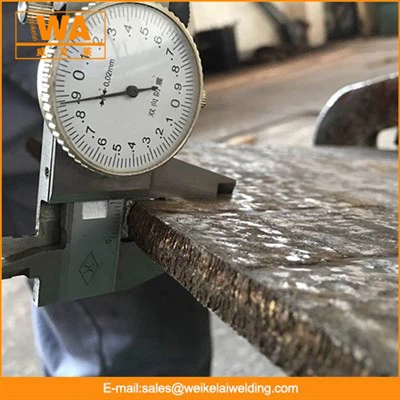
As a supplier of Hardox steel plates, I often get asked about the shear strength of this remarkable material. Hardox steel is renowned for its high wear resistance, but its shear strength is also a critical factor that determines its performance in various applications. In this blog post, I'll delve into the concept of shear strength, explain how it applies to Hardox steel plates, and discuss why it matters in real - world scenarios.
Understanding Shear Strength
Shear strength refers to the maximum amount of shear stress that a material can withstand before it fails. Shear stress occurs when two parts of a material are forced to slide past each other in opposite directions. Imagine cutting a piece of paper with scissors; the force applied by the scissors creates shear stress on the paper. In engineering and manufacturing, shear strength is a vital property as many components are subjected to shear forces during their operation.
The shear strength of a material is typically measured in units of force per unit area, such as megapascals (MPa) or pounds per square inch (psi). To determine the shear strength of a material like Hardox steel, specialized testing equipment is used. A sample of the steel is placed in a testing machine, and a shear force is gradually applied until the sample fails. The shear strength is then calculated based on the maximum force applied and the cross - sectional area of the sample.
Shear Strength of Hardox Steel Plates
Hardox steel plates are made from a unique alloy that gives them exceptional mechanical properties. The shear strength of Hardox steel plates depends on several factors, including the grade of Hardox steel, the thickness of the plate, and the manufacturing process.
Hardox comes in different grades, such as Hardox 400, Hardox 450, Hardox 500, and Hardox 550. Each grade has a different chemical composition and heat treatment, which results in varying levels of hardness and strength. Generally, as the grade number increases, the hardness and shear strength of the steel also increase. For example, Hardox 550 has a higher shear strength compared to Hardox 400 because it is harder and more resistant to deformation.
The thickness of the Hardox steel plate also plays a role in its shear strength. Thicker plates tend to have higher shear strength because they have a larger cross - sectional area to resist the shear forces. However, it's important to note that the relationship between thickness and shear strength is not always linear. Other factors, such as the distribution of internal stresses and the presence of any defects in the plate, can also affect the shear strength.


The manufacturing process of Hardox steel plates is carefully controlled to ensure consistent quality and high shear strength. The steel is melted in electric arc furnaces, refined to remove impurities, and then cast into slabs. These slabs are then hot - rolled into plates of the desired thickness. The hot - rolling process aligns the grain structure of the steel, which enhances its mechanical properties, including shear strength.
Importance of Shear Strength in Applications
The high shear strength of Hardox steel plates makes them suitable for a wide range of applications where components are subjected to shear forces. Here are some examples:
Mining and Quarrying
In the mining and quarrying industry, Hardox steel plates are used in equipment such as crushers, screens, and conveyor systems. These machines are constantly exposed to high - impact and abrasive forces, as well as shear forces. The high shear strength of Hardox steel plates allows them to withstand the forces generated during the crushing and screening processes without failing. This results in longer service life and reduced maintenance costs for the equipment.
Construction
In construction, Hardox steel plates are used in the fabrication of structural components, such as beams and columns. These components are often subjected to shear forces due to the weight of the building and external loads, such as wind and seismic forces. The high shear strength of Hardox steel plates ensures the structural integrity of the building and provides a safe working environment.
Recycling
Recycling equipment, such as shredders and balers, also benefit from the high shear strength of Hardox steel plates. These machines need to cut and compress various materials, including metals, plastics, and paper. The shear strength of Hardox steel plates allows them to effectively cut through these materials without dulling or breaking, improving the efficiency of the recycling process.
Comparing with Other Wear - Resistant Plates
When considering wear - resistant plates, it's important to compare Hardox steel plates with other options available in the market, such as Alloy Steel Plate, Chromium Carbide Plate, and Overlay Wear Plate.
Alloy steel plates are a common alternative to Hardox steel plates. While alloy steel plates can offer good wear resistance, their shear strength may not be as high as that of Hardox steel plates. Hardox steel's unique alloy composition and heat treatment give it an edge in terms of shear strength, making it more suitable for applications where high shear forces are involved.
Chromium carbide plates are known for their excellent wear resistance, especially in highly abrasive environments. However, they can be brittle, and their shear strength may be lower compared to Hardox steel plates. In applications where both wear resistance and high shear strength are required, Hardox steel plates are often a better choice.
Overlay wear plates consist of a base metal with a wear - resistant overlay. These plates can provide good wear protection, but their shear strength depends on the bond between the base metal and the overlay. Hardox steel plates, on the other hand, have a homogeneous structure, which gives them consistent shear strength throughout the plate.
Factors Affecting Shear Strength in Real - World Use
In real - world applications, several factors can affect the shear strength of Hardox steel plates. One of the main factors is the presence of stress concentrations. Stress concentrations can occur at holes, notches, or corners in the plate. These areas experience higher stress levels compared to the rest of the plate, which can reduce the overall shear strength. To minimize stress concentrations, proper design techniques, such as using rounded corners and smooth transitions, should be employed.
Another factor is the operating environment. Exposure to high temperatures, corrosive substances, or fatigue loading can degrade the mechanical properties of Hardox steel plates over time. High temperatures can cause the steel to lose its hardness and strength, while corrosion can weaken the plate by reducing its cross - sectional area. Fatigue loading, which occurs when the plate is subjected to repeated cyclic loading, can also lead to the initiation and propagation of cracks, reducing the shear strength.
Why Choose Our Hardox Steel Plates
As a supplier of Hardox steel plates, we offer high - quality products that meet the strictest industry standards. Our plates are manufactured using the latest technology and undergo rigorous quality control checks to ensure consistent shear strength and other mechanical properties.
We have a wide range of Hardox steel plate grades and thicknesses available, allowing you to choose the right product for your specific application. Whether you need a plate for a mining machine, a construction project, or a recycling facility, we can provide you with the optimal solution.
In addition, our team of experts is always ready to assist you with technical advice and support. We can help you select the appropriate grade and thickness of Hardox steel plate based on your shear strength requirements and other application - specific factors.
Contact Us for Your Hardox Steel Plate Needs
If you're in the market for Hardox steel plates and are interested in their shear strength and other properties, we'd love to hear from you. Whether you're a small - scale manufacturer or a large - scale industrial company, we can supply you with the right Hardox steel plates for your project. Contact us to discuss your requirements, and our team will be happy to provide you with a quote and further information.
References
- "Materials Science and Engineering: An Introduction" by William D. Callister Jr. and David G. Rethwisch
- "Mechanical Behavior of Materials" by Norman E. Dowling
- Technical documentation provided by SSAB, the manufacturer of Hardox steel plates.