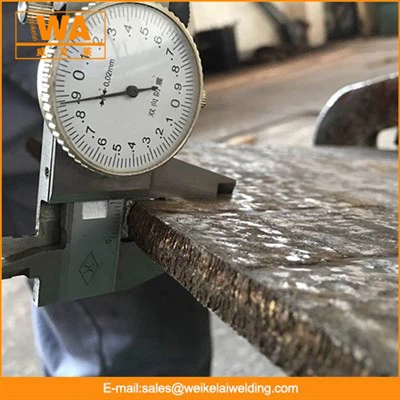
As a supplier of Alloy Steel Plates, I've witnessed firsthand the critical role that pre - heating plays in the welding process of these high - performance materials. Alloy steel plates are widely used in various industries such as construction, automotive, and manufacturing due to their enhanced strength, durability, and resistance to wear and corrosion. However, welding alloy steel plates is not as straightforward as welding regular steel, and pre - heating is an essential step that can significantly impact the quality and integrity of the weld.
Understanding Alloy Steel Plates
Alloy steel plates are made by adding various alloying elements such as chromium, nickel, molybdenum, and vanadium to carbon steel. These alloying elements enhance the mechanical properties of the steel, making it stronger, more ductile, and more resistant to heat and wear. For instance, Smooth Wear Plate is a type of alloy steel plate that is specifically designed to resist wear in high - friction environments. Similarly, Bimetallic Wear Resistant Material combines two different metals to achieve superior wear resistance. And Abrasion Resistant Steel Plate is engineered to withstand abrasion from abrasive materials.
Why Pre - Heating is Necessary in Welding Alloy Steel Plates
Reducing Residual Stress
When welding alloy steel plates, the rapid heating and cooling process can cause significant thermal stress within the material. These residual stresses can lead to distortion, cracking, and reduced mechanical properties of the weld. Pre - heating the alloy steel plates before welding helps to minimize these thermal gradients by raising the initial temperature of the material. This allows for a more uniform heating and cooling process during welding, reducing the likelihood of residual stress formation.
Preventing Hydrogen Embrittlement
Hydrogen is a common impurity in welding processes, and it can cause serious problems in alloy steel welds. When hydrogen is absorbed into the weld metal during welding, it can lead to hydrogen embrittlement, which makes the weld more prone to cracking. Pre - heating the alloy steel plates can help to drive out any moisture or hydrogen present in the material before welding. The elevated temperature also slows down the cooling rate of the weld, allowing any hydrogen that may have entered the weld to diffuse out.
Improving Weldability
Alloy steel plates often have higher carbon equivalents compared to regular steel, which can make them more difficult to weld. Pre - heating the plates improves their weldability by reducing the hardness of the heat - affected zone (HAZ). A lower hardness in the HAZ means less susceptibility to cracking and better fusion between the base metal and the filler metal. This results in a stronger and more reliable weld joint.
Determining the Pre - Heating Temperature
The pre - heating temperature for alloy steel plates depends on several factors, including the type of alloy steel, the thickness of the plates, the welding process, and the ambient temperature. Generally, thicker plates and alloys with higher carbon equivalents require higher pre - heating temperatures.
For example, some low - alloy steels may only require pre - heating to temperatures between 100°C and 200°C, while high - strength alloy steels may need to be pre - heated to temperatures as high as 300°C to 400°C. It's important to follow the manufacturer's recommendations and industry standards when determining the appropriate pre - heating temperature.
Pre - Heating Methods
There are several methods available for pre - heating alloy steel plates, each with its own advantages and disadvantages.
Flame Heating
Flame heating is one of the most common methods for pre - heating alloy steel plates. It involves using a torch to direct a flame onto the surface of the plate. Flame heating is relatively simple and cost - effective, and it can be used for both small and large - scale welding operations. However, it can be difficult to achieve a uniform temperature distribution, especially for thick plates.
Induction Heating
Induction heating uses an electromagnetic field to generate heat within the alloy steel plates. This method provides a more uniform and precise heating compared to flame heating. Induction heating is also faster and more energy - efficient, making it suitable for high - volume production. However, the equipment for induction heating can be more expensive and requires specialized training to operate.


Resistance Heating
Resistance heating involves passing an electric current through the alloy steel plates to generate heat. This method is often used for pre - heating small - to medium - sized plates. Resistance heating provides good temperature control and can be easily automated. However, it may not be suitable for very thick plates due to the limitations of the electrical current.
Monitoring and Controlling the Pre - Heating Process
Once the pre - heating process has started, it's crucial to monitor and control the temperature to ensure that the desired pre - heating temperature is reached and maintained throughout the welding process.
Thermocouples are commonly used to measure the temperature of the alloy steel plates during pre - heating. They should be placed at multiple locations on the plate to ensure an accurate temperature reading. In addition, temperature indicators or pyrometers can also be used to visually monitor the temperature.
If the pre - heating temperature drops below the required level during welding, additional heating may be necessary. On the other hand, over - heating the plates can also cause problems, such as excessive grain growth and reduced mechanical properties. Therefore, it's important to have a proper control system in place to regulate the heating process.
Post - Weld Heat Treatment
In addition to pre - heating, post - weld heat treatment (PWHT) is often recommended for welding alloy steel plates. PWHT helps to relieve any residual stresses that may have been generated during welding and further improves the mechanical properties of the weld.
The type of PWHT depends on the specific alloy steel and the requirements of the application. Common PWHT processes include stress - relieving annealing, normalizing, and tempering. Stress - relieving annealing involves heating the welded assembly to a specific temperature and holding it for a certain period of time to reduce residual stresses. Normalizing is used to refine the grain structure of the weld, while tempering is used to improve the toughness and ductility of the weld.
Conclusion
In conclusion, pre - heating is a crucial step in the welding of alloy steel plates. It helps to reduce residual stress, prevent hydrogen embrittlement, and improve weldability. By carefully determining the pre - heating temperature, selecting the appropriate pre - heating method, and monitoring the process, we can ensure high - quality welds that meet the strict requirements of various industries.
If you're in the market for high - quality Alloy Steel Plates or need more information about the welding process, I encourage you to reach out for a procurement discussion. Our team of experts is ready to assist you in finding the right solutions for your specific needs.
References
- AWS D1.1/D1.1M:2020, Structural Welding Code - Steel
- ASME Boiler and Pressure Vessel Code, Section IX, Welding and Brazing Qualifications
- "Welding Metallurgy and Weldability of Stainless Steels" by John C. Lippold and David J. Kotecki