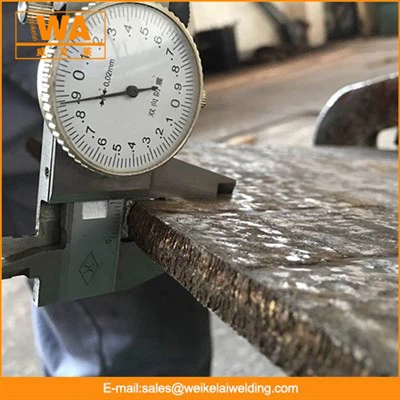
Solid wire welding is a widely used welding process known for its efficiency and versatility in various industrial applications. As a solid wire welding supplier, I often receive inquiries about the minimum thickness of metal that can be welded using this method. In this blog post, I'll delve into the factors influencing the minimum weldable thickness and provide some insights based on industry knowledge and experience.
Understanding Solid Wire Welding
Solid wire welding, also known as Gas Metal Arc Welding (GMAW), involves using a continuous solid wire electrode that is fed through a welding gun. An electric arc is established between the wire and the workpiece, melting both the wire and the base metal to form a weld joint. A shielding gas is used to protect the weld pool from atmospheric contamination, ensuring a high - quality weld.
Factors Affecting the Minimum Weldable Thickness
1. Welding Equipment and Parameters
The type and capacity of the welding machine play a crucial role in determining the minimum thickness of metal that can be welded. Modern welding machines offer a wide range of settings for voltage, current, and wire feed speed. For thinner metals, lower current and voltage settings are required to prevent excessive heat input, which can cause burn - through.
The wire diameter also matters. Smaller diameter solid wires (e.g., 0.023 - 0.030 inches) are generally more suitable for welding thin metals as they allow for better control of the heat input and the weld bead size.
2. Metal Type and Properties
Different metals have different thermal conductivity, melting points, and mechanical properties, which affect their weldability. For example, aluminum has a high thermal conductivity, which means it dissipates heat quickly. As a result, welding thin aluminum sheets requires a precise control of the heat input to avoid under - fusion or burn - through.
Stainless steel, on the other hand, has a relatively lower thermal conductivity compared to aluminum. It can be welded at lower heat inputs, making it possible to weld thinner stainless steel sheets.
3. Joint Design
The joint design can significantly impact the minimum weldable thickness. Lap joints and butt joints are commonly used in welding. Lap joints are generally more forgiving when welding thin metals as they provide more surface area for the weld to bond. Butt joints, however, require more precise alignment and control of the heat input, especially for thin materials.
General Guidelines for Minimum Weldable Thickness
In general, with proper equipment setup and welding techniques, solid wire welding can be used to weld metals as thin as 0.020 inches (0.5 mm). However, this is a rough estimate, and the actual minimum thickness may vary depending on the factors mentioned above.
For mild steel, a common material in welding applications, it is possible to achieve good welds on sheets as thin as 0.030 inches (0.76 mm) using a small - diameter solid wire (e.g., 0.023 inches) and appropriate welding parameters.


When welding aluminum, the minimum thickness is typically around 0.040 inches (1.0 mm) due to its high thermal conductivity. Specialized equipment and techniques may be required to weld thinner aluminum sheets.
Applications and Considerations for Thin - Metal Welding
1. Automotive Industry
In the automotive industry, solid wire welding is used to join thin - gauge steel and aluminum sheets for body panels, frames, and other components. Welding thin metals in this context requires high precision to ensure the structural integrity and aesthetics of the vehicle.
2. Electronics Industry
The electronics industry often uses solid wire welding for joining thin metal components in printed circuit boards and electronic enclosures. The ability to weld thin metals without causing damage to adjacent components is crucial in this application.
3. Flux - Cored Alternatives
In some cases where welding extremely thin metals is challenging with solid wire welding, Flux Cored Arc Welding can be considered. Flux - cored wires, such as Flux Cored ArcIron Flux Cored Welding Wire and Stainless Steel Mig Flux Cored Wire, can provide better control of the weld pool and reduce the risk of burn - through. However, they also have their own set of advantages and limitations.
Tips for Welding Thin Metals with Solid Wire
- Pre - cleaning: Thoroughly clean the metal surface to remove any dirt, oil, or oxide layers. This ensures good electrical contact and a clean weld.
- Proper grounding: Ensure a good ground connection to the workpiece to maintain a stable arc.
- Short welds: Make short, intermittent welds to control the heat input and prevent overheating.
- Practice and experimentation: Welding thin metals requires practice. Experiment with different welding parameters on scrap pieces of the same material to find the optimal settings.
Conclusion
As a solid wire welding supplier, I understand the importance of providing high - quality products and technical support to our customers. While the minimum thickness of metal that can be welded using solid wire welding depends on multiple factors, with the right equipment, techniques, and materials, it is possible to achieve satisfactory welds on relatively thin metals.
If you are involved in thin - metal welding projects and are looking for the right solid wire welding products, we are here to help. Our team of experts can provide you with detailed product information, technical advice, and support to ensure the success of your welding applications. Whether you are in the automotive, electronics, or any other industry, we can offer solutions tailored to your specific needs. Contact us to start a discussion about your welding requirements and explore how our solid wire welding products can meet your expectations.
References
- AWS Welding Handbook, American Welding Society
- "Welding Metallurgy" by John C. Lippold and David L. Kotecki
- Industry research reports on welding technologies and applications