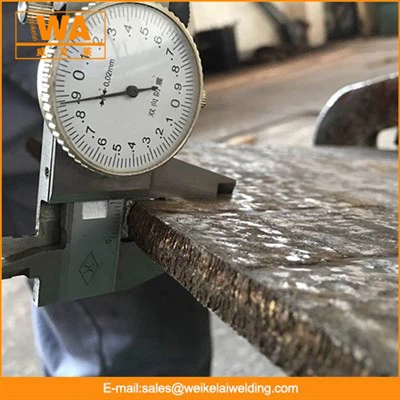
Open arc welding wire is a popular choice in the welding industry due to its versatility and ease of use. As a leading supplier of open arc welding wire, we often receive inquiries about the hardness of the welds produced by our products. In this blog post, we will explore the factors that influence the hardness of welds made by open arc welding wire and discuss how our high - quality products can meet your specific welding needs.
Understanding Weld Hardness
Weld hardness is a crucial property that determines the performance and durability of a welded joint. Hardness refers to the material's resistance to indentation, scratching, or deformation. In welding, the hardness of the weld is affected by several factors, including the chemical composition of the welding wire, the base metal, the welding process parameters, and the post - welding heat treatment.
Chemical Composition of Open Arc Welding Wire
The chemical composition of the open arc welding wire plays a significant role in determining the hardness of the weld. Different types of welding wires are designed with specific alloying elements to achieve different mechanical properties. For example, Metal Cored Welding Wire typically contains a combination of iron, carbon, and other alloying elements such as manganese, silicon, and nickel. These alloying elements can increase the strength and hardness of the weld by forming hardening phases during the solidification process.
Carbon is one of the most important elements in determining the hardness of the weld. Higher carbon content in the welding wire generally leads to higher hardness in the weld. However, excessive carbon can also make the weld more brittle, which may reduce its toughness and resistance to cracking. Therefore, it is essential to choose the right welding wire with an appropriate carbon content based on the specific application requirements.
Influence of Base Metal
The base metal being welded also has a significant impact on the hardness of the weld. Different base metals have different chemical compositions and microstructures, which can interact with the welding wire during the welding process. For instance, when welding Mild Steel Mig Welding Wire to a mild steel base metal, the weld hardness will be influenced by the carbon content and other alloying elements in both the welding wire and the base metal.
If the base metal has a high carbon content or contains alloying elements that promote hardening, the weld hardness may be higher. On the other hand, if the base metal is relatively soft, the weld hardness may be lower. It is important to consider the compatibility between the welding wire and the base metal to ensure that the weld has the desired hardness and mechanical properties.
Welding Process Parameters
The welding process parameters, such as welding current, voltage, travel speed, and shielding gas, can also affect the hardness of the weld. These parameters determine the heat input during the welding process, which in turn influences the cooling rate of the weld. A higher heat input generally results in a slower cooling rate, which can lead to a coarser microstructure and lower hardness in the weld. Conversely, a lower heat input leads to a faster cooling rate, which can produce a finer microstructure and higher hardness.


For example, when using open arc welding wire, increasing the welding current will increase the heat input, which may reduce the hardness of the weld. Adjusting the travel speed can also affect the heat input. A faster travel speed will result in less heat being transferred to the weld, potentially increasing the hardness. Therefore, it is crucial to optimize the welding process parameters to achieve the desired weld hardness.
Post - Welding Heat Treatment
Post - welding heat treatment is another important factor that can be used to control the hardness of the weld. Heat treatment processes such as annealing, normalizing, quenching, and tempering can modify the microstructure of the weld and improve its mechanical properties.
Annealing is a process of heating the weld to a specific temperature and then slowly cooling it. This process can reduce the hardness of the weld and improve its ductility. Normalizing involves heating the weld to a higher temperature and then air - cooling it, which can refine the microstructure and increase the hardness to a certain extent. Quenching is a rapid cooling process that can significantly increase the hardness of the weld, but it may also make the weld more brittle. Tempering is often used after quenching to reduce the brittleness and improve the toughness of the weld.
Our Open Arc Welding Wire Products
As a supplier of open arc welding wire, we offer a wide range of products to meet different welding requirements. Our Flux Core Stainless Steel Welding Wire is designed for welding stainless steel, which provides excellent corrosion resistance and high - quality welds. Our mild steel mig welding wire is suitable for general - purpose welding applications, offering good weldability and appropriate hardness for mild steel joints.
We ensure the quality of our welding wires through strict quality control measures. Our products are manufactured using high - quality raw materials and advanced production processes. We also conduct comprehensive testing on our welding wires to ensure that they meet the relevant industry standards and customer requirements.
Meeting Your Welding Needs
Whether you are working on a small - scale DIY project or a large - scale industrial application, we can provide you with the right open arc welding wire to achieve the desired weld hardness. Our technical support team is always ready to assist you in selecting the appropriate welding wire and optimizing the welding process parameters.
If you have any questions about the hardness of welds made by our open arc welding wire or need help in choosing the right product for your project, please feel free to contact us. We are committed to providing you with the best welding solutions and excellent customer service. We look forward to discussing your welding requirements and partnering with you to achieve successful welding results.
References
- AWS Welding Handbook, American Welding Society.
- Welding Metallurgy, John C. Lippold and David K. Miller.
- ASM Handbook Volume 6: Welding, Brazing, and Soldering, ASM International.