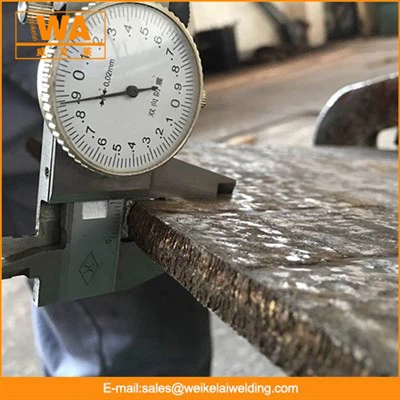
Fatigue strength is a critical parameter when evaluating the quality and performance of welds. As a leading supplier of Open Arc Welding Wire, I often encounter inquiries about the fatigue strength of welds made using our products. In this blog post, I will delve into the concept of fatigue strength in the context of open arc welding wire, exploring its influencing factors, testing methods, and the significance it holds for various applications.
Understanding Fatigue Strength in Welds
Fatigue strength refers to the maximum stress that a material can withstand for a specified number of cycles without failure. In the case of welds, fatigue failure can occur due to repeated loading and unloading, which leads to the initiation and propagation of cracks. The fatigue strength of a weld is influenced by several factors, including the properties of the base metal, the welding process, the quality of the weld, and the operating conditions.
Open arc welding wire is a popular choice for many welding applications due to its versatility and ease of use. It is commonly used in industries such as construction, manufacturing, and automotive. When using open arc welding wire, the fatigue strength of the weld is affected by the composition of the wire, the welding parameters, and the post-weld treatment.
Factors Influencing the Fatigue Strength of Welds Made by Open Arc Welding Wire
1. Composition of the Welding Wire
The composition of the open arc welding wire plays a crucial role in determining the fatigue strength of the weld. Different types of welding wires are designed to provide specific mechanical properties, such as strength, toughness, and corrosion resistance. For example, Flux Cored Mig Wire contains a flux core that provides shielding gas and additional alloying elements, which can improve the weld quality and fatigue strength. Similarly, Flux Core Welding Wire and High Chrome Core Wire are formulated to enhance the performance of the weld in specific applications.
2. Welding Parameters
The welding parameters, such as welding current, voltage, travel speed, and wire feed rate, also have a significant impact on the fatigue strength of the weld. Improper welding parameters can result in defects such as porosity, lack of fusion, and excessive heat input, which can reduce the fatigue strength of the weld. Therefore, it is essential to optimize the welding parameters based on the type of welding wire, the base metal, and the welding position to ensure a high-quality weld with good fatigue resistance.
3. Weld Quality
The quality of the weld, including the weld bead shape, size, and penetration, is another important factor affecting the fatigue strength. A well-formed weld with proper penetration and a smooth bead surface is less likely to develop cracks under cyclic loading. Weld defects, such as cracks, inclusions, and undercutting, can act as stress concentrators and significantly reduce the fatigue strength of the weld. Therefore, it is crucial to follow proper welding procedures and quality control measures to ensure the integrity of the weld.
4. Operating Conditions
The operating conditions, such as the type of loading (e.g., tensile, compressive, or torsional), the frequency of loading, and the environment, can also influence the fatigue strength of the weld. For example, welds subjected to high-frequency cyclic loading or corrosive environments are more prone to fatigue failure. In such cases, additional measures, such as surface treatment or the use of corrosion-resistant welding wires, may be required to improve the fatigue performance of the weld.
Testing Methods for Evaluating Fatigue Strength
To determine the fatigue strength of welds made by open arc welding wire, various testing methods can be employed. The most common method is the fatigue testing, which involves subjecting the welded specimens to cyclic loading until failure. The fatigue life of the weld is then determined by counting the number of cycles required for the specimen to fail.


There are different types of fatigue tests, including axial fatigue tests, bending fatigue tests, and torsional fatigue tests, depending on the type of loading and the application. In addition to fatigue testing, other non-destructive testing methods, such as ultrasonic testing, magnetic particle testing, and radiographic testing, can be used to detect weld defects and assess the quality of the weld.
Significance of Fatigue Strength in Welded Structures
The fatigue strength of welds is of utmost importance in many engineering applications, especially in structures that are subjected to cyclic loading. For example, in the automotive industry, welds in car bodies and chassis components need to have high fatigue strength to ensure the safety and reliability of the vehicle. In the construction industry, welds in bridges, buildings, and offshore structures must be able to withstand the repeated loading caused by wind, traffic, and waves.
By understanding the factors influencing the fatigue strength of welds made by open arc welding wire and using appropriate testing methods, engineers and designers can optimize the welding process and select the right welding wire to ensure the long-term performance and durability of welded structures.
Our Role as an Open Arc Welding Wire Supplier
As a supplier of Open Arc Welding Wire, we are committed to providing our customers with high-quality products that meet their specific requirements. Our extensive range of welding wires, including Flux Cored Mig Wire, Flux Core Welding Wire, and High Chrome Core Wire, is designed to offer excellent fatigue strength and other mechanical properties.
We work closely with our customers to understand their welding needs and provide technical support and advice on welding processes and parameter optimization. Our team of experts can assist in selecting the most suitable welding wire for a particular application and ensure that the welds meet the required quality standards.
Contact Us for Your Welding Wire Needs
If you are looking for high-quality Open Arc Welding Wire with excellent fatigue strength, we invite you to contact us. Our dedicated sales team is ready to assist you in finding the right welding solution for your project. Whether you are a small-scale manufacturer or a large industrial enterprise, we can provide you with the products and support you need to achieve successful welds.
References
- ASME Boiler and Pressure Vessel Code, Section IX - Welding and Brazing Qualifications
- AWS D1.1/D1.1M:2020 Structural Welding Code - Steel
- ASTM E466 - Standard Practice for Conducting Force - Controlled Constant - Amplitude Axial Fatigue Tests of Metallic Materials