Hey there! As a supplier of wear-resistant alloys, I often get asked about the coefficient of friction of these amazing materials. So, I thought I'd take a moment to break it down for you and explain what it means, why it matters, and how it relates to our products.
First off, let's talk about what the coefficient of friction actually is. In simple terms, it's a measure of how much resistance there is between two surfaces when they're in contact and moving relative to each other. Think about trying to push a heavy box across the floor. If the floor is smooth, it'll be easier to push the box because there's less friction between the box and the floor. But if the floor is rough, it'll be harder to push the box because there's more friction.
The coefficient of friction is usually represented by the Greek letter mu (μ), and it can range from 0 (no friction at all) to 1 (maximum friction). The value of μ depends on a few different factors, including the materials of the two surfaces, the roughness of the surfaces, and the amount of force pressing the surfaces together.
Now, let's talk about why the coefficient of friction matters when it comes to wear-resistant alloys. In many applications, wear-resistant alloys are used to reduce friction and wear between moving parts. For example, in a mining operation, wear-resistant alloys might be used to line the inside of a conveyor belt to reduce friction between the belt and the material being transported. This can help to extend the life of the belt and reduce maintenance costs.
In other applications, wear-resistant alloys might be used to increase friction between two surfaces. For example, in a braking system, wear-resistant alloys might be used to create a high-friction surface that can stop a vehicle quickly and safely.
So, what's the coefficient of friction of wear-resistant alloys? Well, it depends on the specific alloy and the application. Different wear-resistant alloys have different coefficients of friction, and the coefficient of friction can also vary depending on the conditions under which the alloy is used.


For example, some wear-resistant alloys are designed to have a low coefficient of friction, which makes them ideal for applications where reducing friction and wear is important. These alloys might be used in bearings, gears, or other moving parts where smooth operation is critical.
On the other hand, some wear-resistant alloys are designed to have a high coefficient of friction, which makes them ideal for applications where increasing friction and grip is important. These alloys might be used in brakes, clutches, or other applications where stopping power is critical.
At our company, we offer a wide range of wear-resistant alloys with different coefficients of friction to meet the needs of our customers. Whether you need an alloy with a low coefficient of friction for a smooth-running application or a high coefficient of friction for a high-performance application, we've got you covered.
One of the products we offer is Bimetallic Wear Resistant Material. This material is made up of two different metals that are bonded together to create a high-performance wear-resistant surface. The bimetallic design allows us to tailor the properties of the material to meet the specific needs of our customers, including the coefficient of friction.
Another product we offer is Wear Resistant Stainless Steel. This material is made from a special type of stainless steel that has been treated to improve its wear resistance and reduce its coefficient of friction. Wear-resistant stainless steel is ideal for applications where corrosion resistance and low friction are important, such as in the food processing industry or in marine environments.
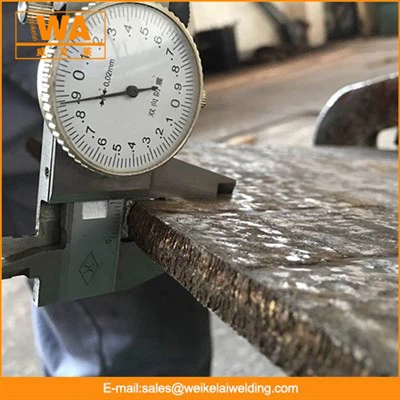
Finally, we also offer Wear Resistant Plate. This material is a thick, heavy-duty plate that is designed to withstand high levels of wear and abrasion. Wear-resistant plate is commonly used in mining, construction, and other industries where heavy equipment is used.
So, if you're in the market for wear-resistant alloys, I encourage you to contact us to learn more about our products and how they can meet your needs. Our team of experts is always available to answer your questions and help you find the right alloy for your application.
In conclusion, the coefficient of friction is an important factor to consider when choosing wear-resistant alloys. Different alloys have different coefficients of friction, and the coefficient of friction can also vary depending on the conditions under which the alloy is used. At our company, we offer a wide range of wear-resistant alloys with different coefficients of friction to meet the needs of our customers. Whether you need an alloy with a low coefficient of friction for a smooth-running application or a high coefficient of friction for a high-performance application, we've got you covered. So, don't hesitate to contact us to learn more about our products and how they can help you improve the performance and reliability of your equipment.
References
- "Friction and Wear of Materials" by William D. Callister Jr.
- "Materials Science and Engineering: An Introduction" by William D. Callister Jr. and David G. Rethwisch