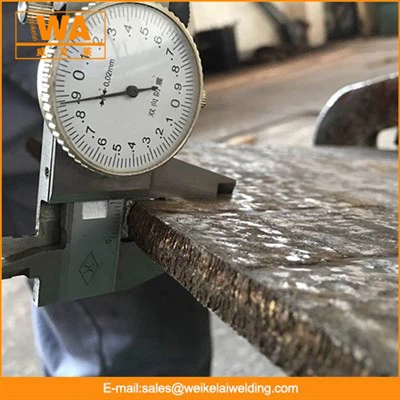
Hey there! As a supplier of Hardox steel plates, I often get asked about the chemical stability of these amazing products. So, I thought I'd take a few minutes to break it down for you.
First off, let's talk about what Hardox steel plate is. Hardox is a brand of wear-resistant steel that's used in a whole bunch of industries, from mining and construction to agriculture and transportation. It's known for its high strength, toughness, and, of course, its excellent wear resistance. But what about its chemical stability?
Chemical stability refers to how well a material can resist chemical reactions, like corrosion or oxidation. When it comes to Hardox steel plate, it has some pretty impressive chemical stability features.
One of the key factors contributing to its chemical stability is its alloy composition. Hardox steel typically contains elements like carbon, manganese, silicon, chromium, and nickel. These elements work together to form a protective layer on the surface of the steel, which helps prevent corrosion. For example, chromium forms a thin, passive oxide layer that acts as a barrier between the steel and the surrounding environment. This layer is self - healing, meaning that if it gets damaged, it can reform itself under the right conditions.
Another important aspect is the heat treatment process that Hardox steel undergoes. The precise heat treatment not only gives the steel its high strength and hardness but also affects its chemical properties. It helps to homogenize the alloy structure, making it more resistant to chemical attacks.
Let's take a closer look at how Hardox steel plate holds up in different environments.
In a Mildly Corrosive Environment
In a mildly corrosive environment, like in a normal industrial setting where there's a bit of humidity and some exposure to common chemicals, Hardox steel plate performs really well. The protective oxide layer on its surface helps to slow down the corrosion process. For instance, in a warehouse where the air might have a slightly higher moisture content, the steel won't rust quickly. This is great for applications where the steel is used in structures or equipment that are exposed to the elements but not in extremely harsh conditions.
In a More Aggressive Chemical Environment
However, in a more aggressive chemical environment, such as one with high concentrations of acids or alkalis, the chemical stability of Hardox steel plate can be challenged. While it still has some resistance, prolonged exposure to strong chemicals can break down the protective layer. For example, if the steel is used in a chemical processing plant where it comes into contact with concentrated sulfuric acid, special precautions need to be taken. In such cases, additional coatings or linings might be required to enhance its chemical stability.
Now, I want to mention some related products that you might be interested in. If you're looking for different types of wear - resistant plates, we also offer Hardfacing Wear Plate. This type of plate is designed to provide extra wear protection through a hardfacing process. It can be a great option if you need even more durability in high - wear applications.
Another option is the Wear Steel Plate. It has similar properties to Hardox steel plate but might be more suitable for certain specific applications. And if you're in an environment where impact resistance is crucial, the Manganese Wear Plate could be the right choice. Manganese gives the plate excellent work - hardening properties, which means it gets harder when it's subjected to impact.
So, why should you choose our Hardox steel plate? Well, apart from its good chemical stability, we offer high - quality products that are manufactured to strict standards. We have a team of experts who can help you select the right grade of Hardox steel for your specific application. Whether you need it for a small - scale project or a large - scale industrial operation, we've got you covered.


If you're in the market for Hardox steel plate or any of our other wear - resistant products, I encourage you to get in touch with us. We can have a detailed discussion about your requirements, and our sales team can provide you with a competitive quote. Understanding the chemical stability of Hardox steel plate is just one part of the equation. We'll work with you to ensure that you get the best product for your needs.
In conclusion, Hardox steel plate has good chemical stability thanks to its alloy composition and heat treatment. But it's important to consider the specific environment in which it will be used. And if you're interested in exploring other wear - resistant options, we have a range of products to choose from. So, don't hesitate to reach out and start a conversation about your procurement needs.
References
- "Steel Metallurgy and Applications" by George E. Totten and Terry L. West.
- "Corrosion Resistance of Metals and Alloys" by Roger Winand.