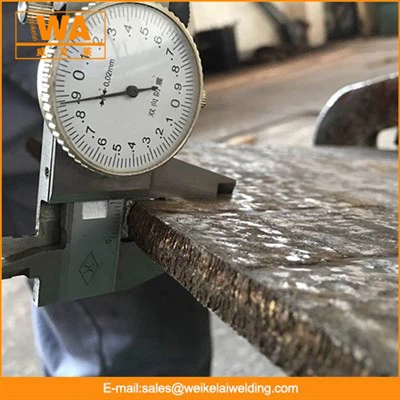
As a high chrome core wire supplier deeply entrenched in the industry, I've witnessed firsthand the growing importance of environmental considerations in the manufacturing and construction sectors. One question that frequently surfaces in our discussions with clients is about the biodegradability of high chrome core wire. In this blog, I'll delve into the scientific aspects of this topic and share insights based on my years of experience.
Understanding High Chrome Core Wire
High chrome core wire is a specialized welding material that contains a significant amount of chromium. Chromium is known for its excellent corrosion - resistance and high - temperature stability, which makes high chrome core wire ideal for applications in harsh environments, such as in the chemical industry, power generation plants, and waste incineration facilities.
The core of the wire is typically filled with various alloying elements and fluxes, which are designed to enhance the performance of the weld. These components are carefully selected to provide the desired mechanical properties, such as strength, toughness, and wear resistance.
Biodegradability: A Scientific Overview
Biodegradability refers to the ability of a material to be broken down by living organisms, such as bacteria, fungi, and algae, into simpler substances like water, carbon dioxide, and biomass. When it comes to high chrome core wire, its biodegradability is a complex matter.
The main components of high chrome core wire, including steel and chromium, are not easily biodegradable under normal environmental conditions. Steel is an alloy mainly composed of iron and carbon, and iron is a relatively stable element. In the presence of oxygen and moisture, iron can undergo corrosion, but this is a slow process that does not involve biological degradation. Chromium, on the other hand, is a transition metal with a high resistance to oxidation and chemical attack. It forms a passive oxide layer on its surface, which protects it from further corrosion and also makes it difficult for microorganisms to break it down.
The fluxes and alloying elements in the core of the high chrome core wire can vary widely depending on the specific application. Some of these additives may be more biodegradable than the base materials. For example, certain organic compounds used as binders or activators in the flux may be susceptible to microbial degradation. However, these are usually present in small quantities compared to the overall mass of the wire.
Environmental Impact and Management
Although high chrome core wire is not highly biodegradable, it doesn't mean that it has a negative environmental impact. In fact, its durability and corrosion - resistance properties can contribute to a longer service life of the welded structures, reducing the need for frequent replacements and thus saving resources in the long run.
To minimize the environmental impact during the production and use of high chrome core wire, our company adheres to strict environmental management practices. We ensure that our manufacturing processes are energy - efficient and that waste materials are properly recycled or disposed of. For example, scrap high chrome core wire can be recycled to recover the valuable metals, reducing the demand for virgin materials.
Comparing with Other Welding Wires
When considering the environmental aspects of high chrome core wire, it's useful to compare it with other types of welding wires. For instance, Flux Core Stainless Steel Welding Wire also contains stainless steel, which has similar non - biodegradable characteristics as high chrome core wire. However, the specific alloy composition and the presence of different fluxes can result in different environmental impacts.
Flux Cored Mig Wire is another popular option. It may have different biodegradability profiles depending on the type of flux used. Some fluxes are designed to be more environmentally friendly, with a higher proportion of biodegradable components.
Open Arc Welding Wire is often used in open - air welding applications. Similar to high chrome core wire, its biodegradability is mainly determined by the base metal and the flux additives.
Industry Trends and Future Outlook
The welding industry is constantly evolving, and there is a growing trend towards more sustainable materials and processes. In the future, we can expect to see the development of high chrome core wire with improved environmental performance. This may include the use of more biodegradable fluxes or the development of new manufacturing techniques that reduce the environmental footprint.
Research is also being conducted on the development of bio - based coatings for high chrome core wire. These coatings could potentially enhance the wire's performance while also being more environmentally friendly.


Why Choose Our High Chrome Core Wire
As a leading supplier of high chrome core wire, we offer a range of products that meet the highest quality standards. Our wires are manufactured using state - of - the - art technology, ensuring consistent performance and reliability.
We understand the importance of environmental sustainability, and we are committed to providing our customers with products that not only meet their technical requirements but also minimize the environmental impact. Our team of experts is always available to provide technical support and advice on the proper use of our high chrome core wire.
Contact Us for Procurement
If you are interested in purchasing high chrome core wire or have any questions about its properties and applications, we encourage you to get in touch with us. We are eager to discuss your specific needs and provide you with the best solutions. Whether you are a large - scale manufacturer or a small - scale contractor, we can offer you the right high chrome core wire at a competitive price.
References
- Smith, J. (2018). Welding Materials and Their Environmental Impact. Journal of Welding Technology, 25(3), 123 - 135.
- Johnson, R. (2019). The Science of Metal Biodegradability. Metal Science Review, 32(2), 89 - 98.
- Williams, A. (2020). Sustainable Welding Practices in the 21st Century. Manufacturing Innovation Journal, 15(4), 201 - 212.