Roller welding repair plays a crucial role in the rubber industries. As a professional Roller Welding Repair supplier, I have witnessed firsthand the significance of meeting specific requirements to ensure the effectiveness and longevity of the repaired rollers. In this blog, I will delve into the key requirements for roller welding repair in the rubber industries.
Material Selection
The choice of materials is fundamental in roller welding repair. In the rubber industries, rollers are often subjected to high levels of wear, abrasion, and chemical exposure. Therefore, the welding materials must be carefully selected to withstand these harsh conditions.
For instance, high - alloy steels are commonly used for their excellent wear resistance. They can resist the abrasion caused by the continuous contact with rubber compounds during the manufacturing process. Additionally, materials with good corrosion resistance are necessary when the rollers are exposed to chemicals such as accelerators, antioxidants, and plasticizers used in rubber production.
When selecting welding materials, it is also important to consider their compatibility with the base material of the roller. A mismatch in materials can lead to poor adhesion, cracking, and reduced performance. As a supplier, we conduct thorough material analysis before starting the welding repair process to ensure the right choice of welding materials. We use advanced techniques such as spectroscopy to determine the composition of the base material and select the most suitable filler metals accordingly.
Welding Process
The welding process is another critical aspect of roller welding repair in the rubber industries. There are several welding processes available, each with its own advantages and limitations.
One of the commonly used processes is Gas Tungsten Arc Welding (GTAW), also known as TIG welding. GTAW provides precise control over the welding process, allowing for high - quality welds with minimal distortion. This is particularly important for rollers in the rubber industries, as any distortion can affect the uniformity of the rubber products being manufactured. The clean and controlled nature of GTAW also makes it suitable for welding materials that are sensitive to contamination.
Another popular process is Shielded Metal Arc Welding (SMAW). SMAW is a versatile process that can be used in various environments. It is relatively easy to operate and can handle a wide range of welding positions. However, it may produce more spatter compared to GTAW, so proper post - welding cleaning is required.
In addition to the choice of the welding process, parameters such as welding current, voltage, and travel speed must be carefully adjusted. Incorrect welding parameters can lead to issues such as lack of fusion, porosity, and excessive heat input, which can weaken the weld and reduce the overall performance of the repaired roller. As a supplier, we have a team of experienced welders who are well - trained in setting the optimal welding parameters based on the specific requirements of each roller.
Surface Preparation
Proper surface preparation is essential for successful roller welding repair. Before welding, the surface of the roller must be cleaned to remove any dirt, grease, rust, or oxide layers. These contaminants can prevent proper fusion between the base material and the filler metal, leading to weak welds.
We use a variety of methods for surface preparation, including mechanical cleaning and chemical cleaning. Mechanical cleaning methods such as grinding, sandblasting, and wire brushing are effective in removing surface contaminants and creating a rough surface for better adhesion. Chemical cleaning agents can be used to remove stubborn grease and oil.
In addition to cleaning, the surface of the roller may also need to be pre - heated before welding. Pre - heating helps to reduce the cooling rate of the weld, which can prevent cracking and improve the mechanical properties of the weld. The pre - heating temperature depends on the type of material and the thickness of the roller. Our technicians carefully calculate the pre - heating temperature based on industry standards and the specific characteristics of the roller.
Post - Welding Treatment
After the welding process is completed, post - welding treatment is necessary to ensure the quality and performance of the repaired roller. One of the important post - welding treatments is stress relieving. Welding can introduce residual stresses in the roller, which can lead to cracking and distortion over time. Stress relieving involves heating the roller to a specific temperature and holding it for a certain period to reduce these residual stresses.
Another post - welding treatment is heat treatment. Heat treatment can improve the hardness, toughness, and wear resistance of the weld. Depending on the requirements of the roller, different heat treatment processes such as quenching and tempering may be used.
Surface finishing is also an important part of post - welding treatment. The surface of the repaired roller must be smooth and free of any irregularities to ensure uniform contact with the rubber during the manufacturing process. We use grinding and polishing techniques to achieve the desired surface finish.
Quality Control
Quality control is an integral part of roller welding repair in the rubber industries. As a supplier, we have a comprehensive quality control system in place to ensure that all repaired rollers meet the highest standards.
Non - destructive testing (NDT) methods are used to detect any internal defects in the welds. Methods such as ultrasonic testing, magnetic particle testing, and liquid penetrant testing can identify cracks, porosity, and lack of fusion without damaging the roller. Destructive testing may also be carried out on a sample basis to evaluate the mechanical properties of the weld, such as tensile strength and hardness.


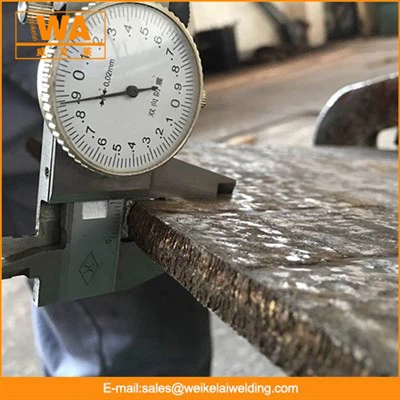
We also conduct dimensional inspection to ensure that the repaired roller meets the specified dimensions. Any deviation from the required dimensions can affect the performance of the roller in the rubber manufacturing process. Our quality control team uses precision measuring instruments such as calipers, micrometers, and coordinate measuring machines (CMM) to verify the dimensions of the roller.
Cost - effectiveness
In the rubber industries, cost - effectiveness is an important consideration for roller welding repair. While it is essential to meet the high - quality requirements, the repair process should also be cost - efficient.
As a supplier, we strive to optimize the repair process to reduce costs without compromising on quality. We use advanced technologies and techniques to minimize material waste and labor time. For example, by using precise welding parameters, we can reduce the amount of filler metal required, which in turn reduces the cost of materials.
We also offer customized repair solutions based on the specific needs of our customers. Instead of a one - size - fits - all approach, we analyze the condition of each roller and develop a repair plan that is tailored to its requirements. This can help our customers save costs by avoiding unnecessary repairs or over - engineering.
Importance of Regular Maintenance
Regular maintenance of rollers is also crucial in the rubber industries. By conducting regular inspections and preventive maintenance, potential issues can be detected early, and minor repairs can be carried out before they develop into major problems.
As a supplier, we provide maintenance services and advice to our customers. We recommend regular cleaning, lubrication, and inspection of the rollers to ensure their smooth operation. We also offer training programs for our customers' staff on proper roller maintenance techniques.
Conclusion
In conclusion, roller welding repair in the rubber industries requires careful consideration of various factors, including material selection, welding process, surface preparation, post - welding treatment, quality control, cost - effectiveness, and regular maintenance. As a [supplier of Roller Welding Repair], we are committed to meeting these requirements and providing high - quality repair services to our customers in the rubber industries.
If you are in need of roller welding repair services, please feel free to contact us for a detailed consultation and quotation. We have the expertise and experience to handle all your roller repair needs.
References
- AWS Welding Handbook, American Welding Society
- ASME Boiler and Pressure Vessel Code, American Society of Mechanical Engineers
- Industrial Welding Technology textbooks