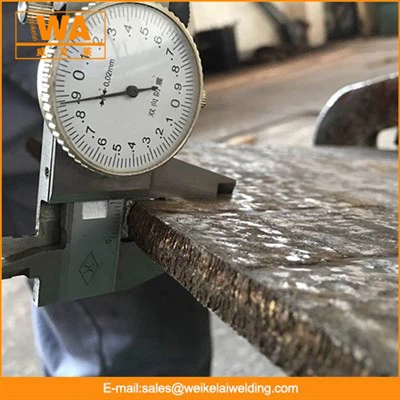
Rollers are critical components in numerous industrial applications, from manufacturing and mining to transportation and construction. They are subjected to high levels of stress, wear, and tear during operation, which can lead to surface damage, dimensional changes, and a decrease in overall performance. Roller welding repair has emerged as a cost - effective and efficient solution to restore damaged rollers and extend their service life. However, a crucial question that often arises is: What are the effects of roller welding repair on roller toughness?
Understanding Roller Toughness
Toughness is a fundamental mechanical property of materials, which represents the ability of a material to absorb energy and deform plastically before fracturing. In the context of rollers, high toughness is essential as it enables the rollers to withstand impact loads, resist cracking, and maintain their structural integrity under harsh operating conditions. Factors such as the material composition, heat treatment, and manufacturing process can significantly influence the toughness of rollers. For example, rollers made of high - strength alloy steels are generally more tough than those made of plain carbon steels due to the presence of alloying elements that enhance the material's mechanical properties.
The Process of Roller Welding Repair
As a Roller Welding Repair supplier, we are well - versed in the intricacies of the repair process. Roller welding repair typically involves several steps. First, the damaged roller surface is thoroughly cleaned to remove any contaminants, such as dirt, grease, and oxides. This is crucial as a clean surface ensures good adhesion between the base material and the filler metal during welding. Next, the damaged areas are machined to create a suitable groove or cavity for the welding operation. The choice of filler metal is then carefully selected based on the composition of the base material of the roller and the specific requirements of the application.
During the welding process, heat is applied to melt the filler metal and a portion of the base material, creating a fusion zone. The welding parameters, such as welding current, voltage, and welding speed, are precisely controlled to ensure a high - quality weld. After welding, the roller may undergo post - weld heat treatment to relieve residual stresses and improve the mechanical properties of the welded area. You can learn more about the welding repair process in detail on our Welding Rebuild On Roller page.
Positive Effects of Roller Welding Repair on Roller Toughness
One of the significant positive effects of roller welding repair is the restoration of the roller's original dimensions and surface integrity. When a roller is damaged, its surface may become uneven, which can lead to stress concentrations and premature failure. By welding and machining the damaged areas, we can restore the roller to its original shape and size, thereby reducing stress concentrations and improving the overall load - bearing capacity of the roller. This, in turn, can enhance the roller's toughness as it is better able to withstand the applied loads without cracking or fracturing.
Moreover, the use of appropriate filler metals and welding techniques can introduce beneficial alloying elements into the welded area. These alloying elements can improve the hardenability and toughness of the material. For example, some filler metals contain elements such as nickel and molybdenum, which can refine the grain structure of the weld metal and enhance its resistance to impact and fatigue. This results in a welded area that is not only strong but also tough, contributing to the overall toughness of the repaired roller.
In addition, post - weld heat treatment can have a positive impact on roller toughness. Heat treatment processes such as tempering can relieve the residual stresses generated during welding. Residual stresses can act as stress raisers and reduce the toughness of the material. By relieving these stresses, the material becomes more ductile and less prone to cracking, thereby increasing the roller's toughness. More information about the benefits of heat treatment in the repair process can be found on our Welding Recondition On Roller page.
Negative Effects of Roller Welding Repair on Roller Toughness
However, roller welding repair is not without its potential drawbacks in terms of toughness. One of the main concerns is the formation of a heat - affected zone (HAZ) adjacent to the weld. During the welding process, the base material near the weld is heated to high temperatures and then rapidly cooled. This thermal cycle can cause significant changes in the microstructure of the HAZ. In some cases, the HAZ may become harder and more brittle due to the formation of martensite or other hard phases. This increase in hardness is often accompanied by a decrease in toughness, making the HAZ more susceptible to cracking under impact or cyclic loading.
Another potential issue is the presence of welding defects, such as porosity, cracks, and lack of fusion. These defects can act as stress concentrators and significantly reduce the toughness of the welded area. Porosity, for example, can reduce the effective cross - sectional area of the weld, leading to a decrease in its load - bearing capacity and toughness. Cracks, whether they are present in the weld metal or the HAZ, can propagate under applied loads and cause premature failure of the roller.


Mitigating the Negative Effects
As a professional Roller Welding Repair supplier, we take several measures to mitigate the negative effects on roller toughness. Firstly, we carefully control the welding parameters to minimize the size and severity of the HAZ. By using lower heat input welding techniques, such as pulsed welding, we can reduce the amount of heat transferred to the base material, thereby minimizing the extent of microstructural changes in the HAZ.
Secondly, we perform strict quality control measures to detect and eliminate welding defects. Non - destructive testing methods, such as ultrasonic testing and magnetic particle testing, are used to inspect the welded area for any signs of defects. If defects are detected, they are immediately repaired using appropriate techniques, such as grinding and rewelding.
Finally, we optimize the post - weld heat treatment process to ensure that the residual stresses are effectively relieved and the microstructure of the welded area is improved. The heat treatment parameters, such as temperature and holding time, are carefully selected based on the material composition and the size of the roller.
Conclusion
In conclusion, roller welding repair can have both positive and negative effects on roller toughness. On the one hand, it can restore the roller's dimensions, introduce beneficial alloying elements, and relieve residual stresses, all of which can enhance the roller's toughness. On the other hand, the formation of the HAZ and the presence of welding defects can reduce the toughness of the repaired roller. However, with proper control of the welding process, strict quality control, and appropriate post - weld heat treatment, we can minimize the negative effects and maximize the positive ones.
If you are facing issues with damaged rollers and are considering roller welding repair, we are here to help. Our team of experienced technicians and engineers is dedicated to providing high - quality roller welding repair services. We have the expertise and equipment to ensure that your repaired rollers meet the highest standards of quality and performance. To learn more about our Roller Welding Repair services, please feel free to contact us for a consultation and discuss your specific requirements.
References
- ASM Handbook Volume 6: Welding, Brazing, and Soldering. ASM International.
- Welding Metallurgy and Weldability of Stainless Steels. John C. Lippold, David J. Kotecki. Wiley.
- Handbook of Engineering Tribology: Materials, Coatings, and Surface Treatments. Bharat Bhushan. CRC Press.