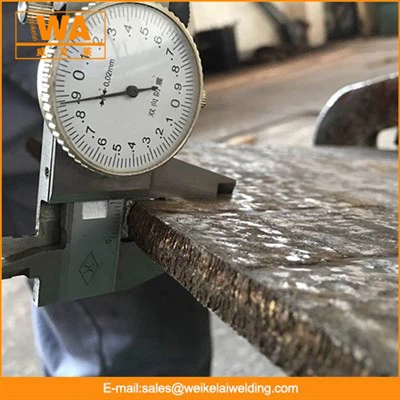
Hey there! As a supplier of Hardox steel plates, I often get asked about how to test the quality of these bad - ass plates. Hardox steel is known for its high - performance and durability, but it's crucial to make sure you're getting the real deal. So, let's dive right in and explore the different ways to test the quality of Hardox steel plates.
Visual Inspection
First off, a simple visual inspection can tell you a lot. When you get your hands on a Hardox steel plate, take a good look at its surface. It should be smooth, without any obvious cracks, pits, or scratches. Any surface defects can be a sign of poor manufacturing or damage during handling.
Check the edges of the plate as well. They should be straight and cleanly cut. If the edges are rough or uneven, it might indicate a problem with the cutting process. And don't forget to look at the color. A proper Hardox steel plate usually has a consistent color across its surface. Any discoloration could suggest issues with heat treatment or exposure to harsh environments.
Hardness Testing
Hardness is one of the key properties of Hardox steel. There are several methods to test the hardness of a steel plate. One of the most common methods is the Brinell hardness test. In this test, a hard ball is pressed into the surface of the steel plate with a specific load. The diameter of the indentation left by the ball is then measured, and from this measurement, the Brinell hardness number (BHN) can be calculated.
Another popular method is the Rockwell hardness test. This test uses a diamond cone or a hardened steel ball indenter. The depth of the indentation made by the indenter is measured, and the Rockwell hardness value is determined. For Hardox steel, you should expect a high hardness value. If the hardness is lower than the specified range, it might mean that the plate is not made of genuine Hardox steel or that there was an issue during the heat - treatment process.


Chemical Composition Analysis
The chemical composition of Hardox steel is carefully designed to give it its unique properties. To test the quality, you can perform a chemical composition analysis. There are a few ways to do this. One method is using a spectrometer. This device can quickly and accurately analyze the elements present in the steel plate.
For Hardox steel, elements like carbon, manganese, silicon, chromium, and nickel are important. The percentage of each element should be within a specific range. If the chemical composition is off, it can affect the plate's strength, hardness, and wear resistance. For example, too much carbon can make the steel brittle, while too little chromium can reduce its corrosion resistance. You can also refer to Abrasion Resistant Steel for more information on the chemical composition requirements of wear - resistant steels.
Impact Resistance Testing
Hardox steel is often used in applications where it will be subjected to high - impact forces. So, testing its impact resistance is essential. One common test for this is the Charpy impact test. In this test, a notched specimen is struck by a pendulum hammer. The energy absorbed by the specimen during the impact is measured.
A high - quality Hardox steel plate should be able to absorb a significant amount of energy without fracturing. If the plate breaks easily during the Charpy impact test, it might not be suitable for high - impact applications. You can also check out Wear Resistant Alloys to understand how different alloys affect the impact resistance of steel plates.
Wear Resistance Testing
Since wear resistance is a major selling point of Hardox steel, it's important to test this property. One way to do this is through a pin - on - disc wear test. In this test, a pin made of a hard material is rubbed against the surface of the steel plate under a specific load and speed. The amount of material worn away from the plate is then measured over a certain period of time.
Another method is the abrasive wear test. In this test, the steel plate is exposed to an abrasive material, like sand or grit. The weight loss of the plate after a set number of cycles is measured. A good Hardox steel plate should have a low wear rate, meaning it loses very little material during the wear test. You can learn more about wear - resistant materials from CCO Wear Plate.
Ultrasonic Testing
Ultrasonic testing is a non - destructive testing method that can detect internal flaws in the steel plate. In this test, high - frequency sound waves are sent into the plate. If there are any internal defects, like cracks or voids, the sound waves will be reflected differently, and these reflections can be detected by a receiver.
This test is especially useful for detecting flaws that are not visible on the surface. A high - quality Hardox steel plate should have few, if any, internal defects. If a large number of defects are detected during ultrasonic testing, it could be a sign of poor manufacturing quality.
Conclusion
Testing the quality of Hardox steel plates is a multi - step process. By performing visual inspections, hardness tests, chemical composition analyses, impact resistance tests, wear resistance tests, and ultrasonic tests, you can ensure that you're getting a high - quality product.
If you're in the market for Hardox steel plates and want to ensure the best quality, don't hesitate to reach out. We're here to provide you with top - notch Hardox steel plates and assist you throughout the testing process. Whether you're using the plates for construction, mining, or any other application, we've got you covered. So, get in touch and let's start a great business relationship!
References
- "Metallurgy for Dummies" by Andrew D. Stevenson
- "Steel: Processing, Structure, and Performance" by George Krauss