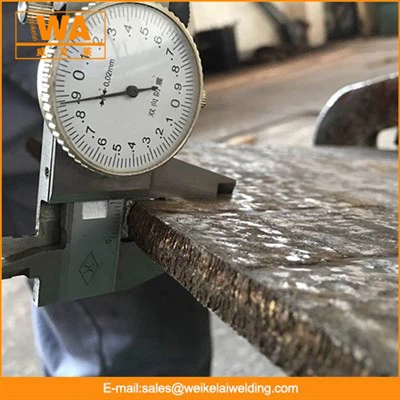
Ensuring the proper fusion of open arc welding wire with the base metal is a critical aspect of achieving high - quality welds. As a supplier of Open Arc Welding Wire, I understand the importance of this process and the factors that influence it. In this blog, I will share some key strategies and considerations to ensure optimal fusion between the welding wire and the base metal.

Understanding the Basics of Open Arc Welding
Open arc welding is a process where an electric arc is used to melt the welding wire and the base metal, creating a joint. The welding wire serves as both a filler metal and an electrode. The arc is established between the tip of the welding wire and the base metal, and the heat generated by the arc melts both the wire and the base metal. As the molten metal cools, it forms a strong bond between the two materials.
Selecting the Right Welding Wire
One of the first steps in ensuring fusion is to select the appropriate welding wire. The choice of wire depends on several factors, including the type of base metal, the welding position, and the desired mechanical properties of the weld.
- Compatibility with Base Metal: The welding wire must be compatible with the base metal. For example, when welding carbon steel, a carbon steel welding wire is typically used. Using an incompatible wire can lead to poor fusion, cracking, and reduced weld strength.
- Wire Diameter: The diameter of the welding wire also plays a crucial role. Thicker wires can carry more current and deposit more metal, but they may require higher amperage settings. Thinner wires are more suitable for thinner base metals and delicate welding operations.
- Flux - Cored Options: There are different types of open arc welding wires, such as Flux Core Welding Wire. Flux - cored wires contain a flux in the center, which provides shielding gas and helps to remove impurities during the welding process. Self Shielded Flux Cored Wire is a type of flux - cored wire that does not require an external shielding gas, making it convenient for outdoor welding. Stainless Flux Cored Welding Wire is used for welding stainless steel, providing excellent corrosion resistance.
Preparing the Base Metal
Proper preparation of the base metal is essential for good fusion.

- Cleaning: The base metal must be clean and free of dirt, rust, oil, and other contaminants. These impurities can prevent the welding wire from fusing properly with the base metal and can also cause porosity in the weld. Cleaning methods may include grinding, wire brushing, or using chemical cleaners.
- Beveling: For thicker base metals, beveling the edges can improve fusion. Beveling creates a larger surface area for the welding wire to melt and bond with the base metal, resulting in a stronger weld.
Setting the Welding Parameters
Correctly setting the welding parameters is crucial for achieving proper fusion.
- Current and Voltage: The welding current and voltage determine the heat input into the weld. Higher current and voltage settings increase the heat, which can improve fusion but may also cause excessive spatter and distortion. Lower settings may result in insufficient fusion. The optimal settings depend on the wire diameter, base metal thickness, and welding position.
- Travel Speed: The travel speed, or the speed at which the welding torch moves along the joint, also affects fusion. A too - fast travel speed may not allow enough time for the welding wire and base metal to melt and fuse properly, while a too - slow speed can cause excessive heat input and distortion.
- Wire Feed Speed: The wire feed speed must be coordinated with the welding current. A proper wire feed speed ensures a continuous and stable arc, which is essential for good fusion.
Maintaining the Welding Technique
A proper welding technique is necessary to ensure fusion.
- Arc Length: Maintaining the correct arc length is important. An arc that is too long can result in poor fusion and excessive spatter, while an arc that is too short can cause the welding wire to stick to the base metal. The ideal arc length depends on the type of welding wire and the welding process.
- Angle of the Welding Torch: The angle of the welding torch relative to the base metal affects the distribution of heat and the direction of the molten metal flow. A correct torch angle helps to ensure that the welding wire and base metal are melted evenly and that the molten metal fills the joint properly.
Monitoring and Quality Control
During the welding process, it is important to monitor the weld for signs of proper fusion.
- Visual Inspection: Regular visual inspection can reveal issues such as lack of fusion, porosity, or cracks. If any problems are detected, adjustments can be made to the welding parameters or technique.
- Non - Destructive Testing: Non - destructive testing methods, such as ultrasonic testing or radiographic testing, can be used to detect internal defects in the weld. These tests can help to ensure the integrity of the weld and the proper fusion of the welding wire with the base metal.
Training and Skill Development
Welders' skills and knowledge are crucial for ensuring fusion. Providing training to welders on the proper use of open arc welding wire, including selection, preparation, and welding techniques, can significantly improve the quality of the welds.

Conclusion
Ensuring the fusion of open arc welding wire with the base metal requires a combination of proper wire selection, base metal preparation, correct welding parameter settings, a good welding technique, and quality control. As a supplier of Open Arc Welding Wire, I am committed to providing high - quality products and technical support to help you achieve the best results in your welding projects. If you are interested in purchasing our open arc welding wire or have any questions about the welding process, please feel free to contact us for further discussion and negotiation.

References
- American Welding Society. (2020). Welding Handbook.
- AWS D1.1/D1.1M:2020, Structural Welding Code - Steel.