As a supplier of Bent Cladding Pipe, I've witnessed firsthand the crucial role that post - bending treatment plays in the performance and quality of these pipes. In this blog, I'll delve into how post - bending treatment affects the bent cladding pipe, exploring its various aspects and implications.
1. Understanding Bent Cladding Pipe
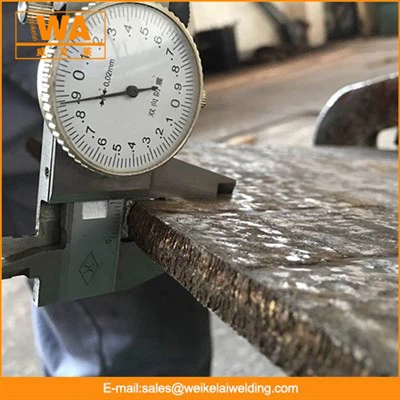
Before discussing the post - bending treatment, it's essential to understand what Bent Cladding Pipe is. Bent Cladding Pipe is a specialized type of pipe that combines the benefits of a bent shape with a hardfacing layer. The hardfacing layer provides enhanced wear resistance, corrosion resistance, and other desirable properties, making it suitable for a wide range of applications, such as in mining, oil and gas, and power generation industries.
2. The Process of Bending Cladding Pipe
The bending process of cladding pipe is a complex operation. It involves carefully manipulating the pipe to achieve the desired bend angle while ensuring that the hardfacing layer remains intact. However, the bending process itself can introduce various stresses and strains in the pipe, which may have a negative impact on its performance if not properly addressed.
3. Effects of Post - Bending Treatment on Material Properties
3.1 Residual Stress Relief
One of the primary effects of post - bending treatment is the relief of residual stresses. During the bending process, significant residual stresses are generated in the pipe, especially in the bent section. These residual stresses can lead to premature failure, such as cracking or deformation, under operating conditions. Post - bending heat treatment, for example, can effectively reduce these residual stresses by allowing the material to relax and reach a more stable state. This results in a more reliable and durable bent cladding pipe.
3.2 Microstructure Modification
Post - bending treatment can also modify the microstructure of the bent cladding pipe. The bending process may cause changes in the grain structure and phase composition of the material, which can affect its mechanical properties. Through heat treatment or other post - bending processes, the microstructure can be refined and optimized. For instance, a well - controlled heat treatment can promote the formation of a more uniform and fine - grained microstructure, improving the pipe's strength, toughness, and wear resistance.
3.3 Hardness and Wear Resistance
The post - bending treatment can have a significant impact on the hardness and wear resistance of the bent cladding pipe. In some cases, the bending process may cause a decrease in the hardness of the hardfacing layer due to the introduction of stresses. Post - treatment processes, such as surface hardening or re - hardening, can restore or even enhance the hardness of the hardfacing layer. This, in turn, improves the pipe's ability to withstand abrasion and wear, extending its service life in harsh environments.


4. Impact on Dimensional Accuracy
4.1 Shape Restoration
After bending, the pipe may experience some dimensional changes, such as ovality or out - of - roundness. Post - bending treatment can help restore the pipe's original shape and dimensional accuracy. For example, through cold straightening or heat - assisted straightening processes, the pipe can be adjusted to meet the required dimensional tolerances. This is crucial for ensuring proper fit and installation in the final application.
4.2 Wall Thickness Uniformity
The bending process can also affect the wall thickness uniformity of the pipe. In the bent section, the outer wall may experience thinning, while the inner wall may thicken. Post - bending treatment can be used to correct these wall thickness variations. By carefully controlling the treatment parameters, the wall thickness can be made more uniform, improving the overall structural integrity of the pipe.
5. Corrosion Resistance
The post - bending treatment can influence the corrosion resistance of the bent cladding pipe. The bending process may damage the protective hardfacing layer, exposing the underlying base material to corrosive environments. Post - treatment processes, such as surface coating or passivation, can be applied to restore the corrosion resistance of the pipe. Additionally, heat treatment can also improve the corrosion resistance by modifying the microstructure and reducing the presence of defects that can act as corrosion initiation sites.
6. Comparison with Non - Treated Bent Cladding Pipe
To better understand the importance of post - bending treatment, it's useful to compare treated and non - treated bent cladding pipes. Non - treated pipes are more likely to experience premature failure due to residual stresses, poor dimensional accuracy, and reduced corrosion resistance. In contrast, pipes that undergo proper post - bending treatment exhibit improved mechanical properties, better dimensional stability, and enhanced corrosion resistance. This leads to longer service life, reduced maintenance costs, and increased reliability in various applications.
7. Case Studies
Let's look at some real - world case studies to illustrate the benefits of post - bending treatment. In a mining application, a non - treated bent cladding pipe used in a slurry transportation system failed after only a few months of operation due to excessive wear and cracking. In contrast, a similar pipe that underwent post - bending heat treatment and surface hardening lasted for several years, significantly reducing the downtime and replacement costs for the mining company.
In another case, an oil and gas company used post - treated bent cladding pipes in a corrosive offshore environment. The pipes showed excellent corrosion resistance and maintained their structural integrity over an extended period, ensuring the safe and efficient operation of the pipeline system.
8. Conclusion and Call to Action
In conclusion, post - bending treatment is a critical step in the production of high - quality bent cladding pipes. It has a profound impact on the material properties, dimensional accuracy, corrosion resistance, and overall performance of the pipes. By investing in proper post - bending treatment, customers can obtain pipes that offer superior reliability, longer service life, and lower maintenance costs.
If you're in need of Bent Cladding Pipe, Hardfacing Abrasion Pipe, or Hardfacing Abrasion Elbows, I encourage you to reach out to discuss your specific requirements. Our team of experts is ready to provide you with the best solutions and high - quality products.
References
- Smith, J. (2018). "Advances in Pipe Bending and Post - Treatment Technologies." Journal of Pipe Engineering, 15(2), 45 - 56.
- Johnson, R. (2019). "The Impact of Heat Treatment on the Properties of Cladding Pipes." Materials Science and Technology, 25(3), 210 - 218.
- Brown, A. (2020). "Case Studies in the Application of Bent Cladding Pipes." Industrial Piping Magazine, 30(4), 78 - 85.