

In the realm of industrial materials, the performance of steel plates under various conditions is of utmost importance. As a dedicated supplier of Hardox steel plates, I've witnessed firsthand the critical role these plates play in diverse applications. One question that frequently arises from our clients is: How does Hardox steel plate perform in high - temperature environments? This blog post aims to explore this topic in detail, providing insights based on scientific research and real - world experience.
Understanding Hardox Steel Plate
Hardox steel is a high - strength wear - resistant steel developed by SSAB. It is renowned for its excellent hardness, toughness, and wear resistance, making it a popular choice in industries such as mining, construction, and transportation. The unique composition of Hardox steel, with a precise balance of carbon, manganese, silicon, and other alloying elements, contributes to its outstanding mechanical properties.
High - Temperature Behavior of Metals
Before delving into the performance of Hardox steel in high - temperature environments, it's essential to understand the general behavior of metals at elevated temperatures. When metals are exposed to high temperatures, several physical and chemical changes occur.
Thermal Expansion
One of the most fundamental changes is thermal expansion. As the temperature rises, the atoms in the metal lattice vibrate more vigorously, causing the material to expand. This expansion can lead to dimensional changes in the steel plate, which may affect its fit and performance in certain applications.
Microstructural Changes
High temperatures can also cause microstructural changes in the metal. For example, at elevated temperatures, the steel may undergo phase transformations. Austenite, a face - centered cubic crystal structure, may form from ferrite and pearlite, which can significantly alter the mechanical properties of the steel. These changes can lead to a decrease in hardness and an increase in ductility.
Oxidation
Another critical factor is oxidation. When steel is exposed to high temperatures in the presence of oxygen, it forms an oxide layer on its surface. This oxide layer can act as a barrier, protecting the underlying steel from further oxidation. However, if the oxide layer is not stable or is damaged, it can lead to rapid corrosion and degradation of the steel.
Performance of Hardox Steel Plate in High - Temperature Environments
Thermal Stability
Hardox steel plates exhibit relatively good thermal stability up to a certain temperature range. The specific temperature limit depends on the grade of Hardox steel. Generally, for lower - grade Hardox steels, they can maintain their mechanical properties up to around 200 - 300°C. At these temperatures, the thermal expansion is within acceptable limits, and the microstructural changes are minimal.
However, as the temperature increases beyond 300°C, the performance of Hardox steel starts to decline. The hardness of the steel begins to decrease due to the onset of phase transformations. The martensitic structure, which is responsible for the high hardness of Hardox steel, starts to decompose, leading to a reduction in strength and wear resistance.
Oxidation Resistance
Hardox steel has a certain level of oxidation resistance at high temperatures. The alloying elements in Hardox steel, such as chromium and nickel, can form a protective oxide layer on the surface. This oxide layer helps to slow down the oxidation process and protects the underlying steel from corrosion.
In relatively low - temperature high - oxygen environments (up to around 300°C), the oxide layer on Hardox steel is stable and provides effective protection. But at higher temperatures, especially above 500°C, the oxidation rate increases significantly. The oxide layer may become thicker and less adherent, leading to spalling and exposing the fresh steel surface to further oxidation.
Impact on Wear Resistance
Wear resistance is one of the key properties of Hardox steel. In high - temperature environments, the wear resistance of Hardox steel is affected by both the decrease in hardness and the formation of the oxide layer. As the hardness decreases with increasing temperature, the ability of the steel to resist abrasive wear is reduced.
Moreover, the oxide layer on the surface can either enhance or reduce wear resistance depending on its properties. If the oxide layer is hard and adherent, it can act as a sacrificial layer and improve wear resistance to some extent. However, if the oxide layer is soft or spalls off easily, it can lead to increased wear.
Comparison with Other Steel Plates
To better understand the performance of Hardox steel in high - temperature environments, it's useful to compare it with other types of steel plates.
Alloy Steel Plate
Alloy steel plates are designed with a variety of alloying elements to enhance specific properties. Some alloy steel plates are specifically formulated for high - temperature applications. Compared to Hardox steel, these alloy steel plates generally have better high - temperature strength and oxidation resistance. They can maintain their mechanical properties at much higher temperatures, often up to 500 - 600°C or even higher. However, they may not have the same level of wear resistance as Hardox steel at lower temperatures.
Tungsten Carbide Plate
Tungsten carbide plates are extremely hard and have excellent wear resistance. They also have good high - temperature performance. Tungsten carbide can maintain its hardness and wear resistance at very high temperatures, often exceeding 800°C. However, tungsten carbide plates are more brittle than Hardox steel and may not be suitable for applications where impact resistance is required.
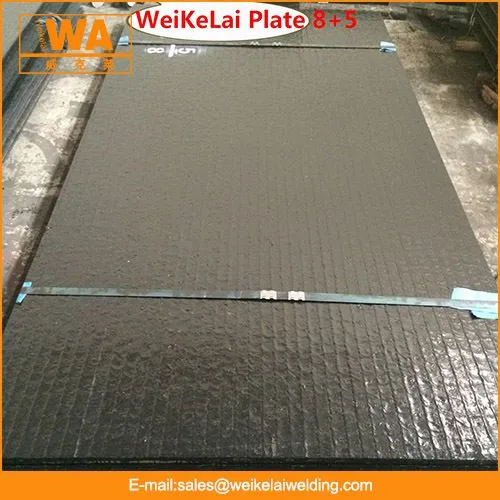
CCO Wear Plate
CCO wear plates are designed for wear - resistant applications. Their high - temperature performance is also different from Hardox steel. CCO wear plates may have better oxidation resistance in some cases, but their overall mechanical properties at high temperatures may vary depending on their specific composition.

Applications in High - Temperature Environments
Despite the limitations in high - temperature performance, Hardox steel plates still find applications in some high - temperature scenarios.
In industries such as mining and construction, Hardox steel plates can be used in equipment that is exposed to relatively low - temperature high - wear environments. For example, in conveyor systems where the temperature may reach up to 200 - 300°C, Hardox steel plates can provide good wear resistance and durability.
In the transportation industry, Hardox steel plates can be used in the construction of trucks and trailers. Although the engine and exhaust systems generate high temperatures, the parts made of Hardox steel are usually located at a certain distance from these heat sources, so they can still perform well within their temperature limits.
Mitigating High - Temperature Effects
If you need to use Hardox steel plates in high - temperature environments, there are several ways to mitigate the negative effects of high temperatures.
Heat Treatment
Proper heat treatment can improve the high - temperature performance of Hardox steel. For example, annealing or tempering at specific temperatures can optimize the microstructure of the steel and enhance its thermal stability.
Coating
Applying a high - temperature - resistant coating on the surface of Hardox steel can provide additional protection against oxidation and wear. Ceramic coatings or thermal barrier coatings can be used to reduce the heat transfer to the steel and protect it from the harsh high - temperature environment.
Conclusion
In conclusion, Hardox steel plates have a certain level of performance in high - temperature environments, but their capabilities are limited. Up to around 200 - 300°C, they can maintain relatively good mechanical properties and wear resistance. However, as the temperature increases beyond this range, the performance starts to decline due to thermal expansion, microstructural changes, and oxidation.
Compared to other steel plates such as alloy steel plates, tungsten carbide plates, and CCO wear plates, Hardox steel has its own advantages and disadvantages in high - temperature applications.
If you are considering using Hardox steel plates in high - temperature environments, it's important to carefully evaluate your specific requirements and consider appropriate mitigation measures. As a Hardox steel plate supplier, we are committed to providing you with the best - suited products and technical support. If you have any questions or need to discuss your procurement needs, please feel free to contact us for further details and negotiation.
References
- SSAB Technical Manual on Hardox Steel
- Metals Handbook: Properties and Selection - Irons, Steels, and High - Performance Alloys
- Journal of Materials Science and Engineering research on high - temperature behavior of steels



