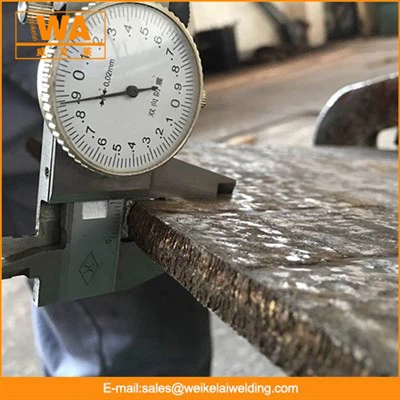
Wear resistance is a critical property for many industrial applications, especially those involving high - stress environments, abrasive materials, or constant friction. As a supplier of Wear Resistant Alloys, I have witnessed firsthand the importance of surface treatments in enhancing the wear resistance of these alloys. In this blog, I will explore how different surface treatments can affect the wear resistance of wear - resistant alloys.
Understanding Wear - Resistant Alloys
Wear - resistant alloys are specifically designed to withstand wear and tear. They are used in a wide range of industries, such as mining, construction, agriculture, and manufacturing. These alloys are engineered to have high hardness, toughness, and resistance to abrasion, erosion, and impact. Some common wear - resistant alloys include those with high chromium, nickel, and molybdenum content. You can learn more about Wear Resistant Alloys on our website.
The Role of Surface Treatments
Surface treatments play a crucial role in improving the wear resistance of alloys. The surface of an alloy is the first line of defense against wear. By modifying the surface properties, we can enhance its ability to resist abrasion, corrosion, and other forms of wear. There are several types of surface treatments available, each with its own advantages and limitations.
Heat Treatment
Heat treatment is one of the most common surface treatments used to improve the wear resistance of alloys. It involves heating the alloy to a specific temperature and then cooling it at a controlled rate. This process can change the microstructure of the alloy, increasing its hardness and strength. For example, quenching and tempering can significantly improve the wear resistance of High Hardness Steel Plate. During quenching, the alloy is rapidly cooled, which forms a hard martensitic structure. Tempering is then performed to relieve internal stresses and improve the toughness of the alloy.
However, heat treatment also has some drawbacks. It can cause distortion and cracking in the alloy, especially if the process is not carefully controlled. Additionally, heat treatment may not be suitable for all types of alloys, as some alloys may not respond well to the high - temperature processing.
Coating
Coating is another effective way to enhance the wear resistance of alloys. A coating can act as a barrier between the alloy surface and the wear - causing agents. There are different types of coatings available, such as ceramic coatings, polymer coatings, and metal coatings.
Ceramic coatings are known for their high hardness and excellent wear resistance. They can provide a smooth and hard surface that reduces friction and wear. Polymer coatings, on the other hand, are often used for their corrosion resistance and low - friction properties. Metal coatings can improve the wear resistance by providing a layer of a more wear - resistant material on the surface of the alloy.


For example, in the case of Hardfacing Processed Plate, a hardfacing alloy is deposited on the surface of the base plate. This hardfacing layer can significantly increase the wear resistance of the plate, making it suitable for applications where high - wear resistance is required.
The advantage of coating is that it can be tailored to specific applications. However, the adhesion of the coating to the alloy surface is crucial. If the coating does not adhere well, it may peel off during use, reducing its effectiveness.
Shot Peening
Shot peening is a mechanical surface treatment that involves bombarding the alloy surface with small spherical particles (shots). This process creates compressive stresses on the surface of the alloy, which can improve its fatigue resistance and wear resistance. The compressive stresses help to prevent the initiation and propagation of cracks on the surface, making the alloy more resistant to wear.
Shot peening can also improve the surface finish of the alloy, reducing friction and wear. However, the effectiveness of shot peening depends on several factors, such as the size and hardness of the shots, the peening intensity, and the material of the alloy.
Case Studies
To better understand the impact of surface treatments on the wear resistance of wear - resistant alloys, let's look at some case studies.
In a mining application, a wear - resistant alloy plate was used to line the inside of a coal - handling chute. The plate was initially not surface - treated, and it showed significant wear after a few months of operation. The wear was mainly due to the abrasion caused by the coal particles. To improve the wear resistance, the plate was heat - treated and then coated with a ceramic coating. After the surface treatments, the wear rate of the plate decreased significantly. The heat treatment increased the hardness of the plate, while the ceramic coating provided an additional layer of protection against abrasion.
In another case, a High Hardness Steel Plate was used in a construction equipment blade. The blade was subject to high - impact and abrasive wear. Shot peening was applied to the blade surface. The shot - peened blade showed better wear resistance compared to the non - shot - peened blade. The compressive stresses created by shot peening helped to resist the formation of cracks and reduce the wear caused by impact and abrasion.
Conclusion
In conclusion, surface treatments have a significant impact on the wear resistance of wear - resistant alloys. Heat treatment, coating, and shot peening are some of the effective surface treatments that can enhance the wear resistance of alloys. Each treatment has its own unique advantages and limitations, and the choice of treatment depends on the specific application requirements, the type of alloy, and the wear conditions.
As a supplier of Wear Resistant Alloys, we offer a range of surface - treated products to meet the diverse needs of our customers. If you are looking for high - quality wear - resistant alloys with enhanced wear resistance, we can provide you with the right solutions. Whether you need Wear Resistant Alloys, High Hardness Steel Plate, or Hardfacing Processed Plate, we have the expertise and products to meet your requirements. Contact us to discuss your specific needs and start a procurement negotiation today.
References
- Callister, W. D., & Rethwisch, D. G. (2011). Materials Science and Engineering: An Introduction. Wiley.
-ASM Handbook Volume 4: Heat Treating. ASM International.
-ASM Handbook Volume 5: Surface Engineering. ASM International.