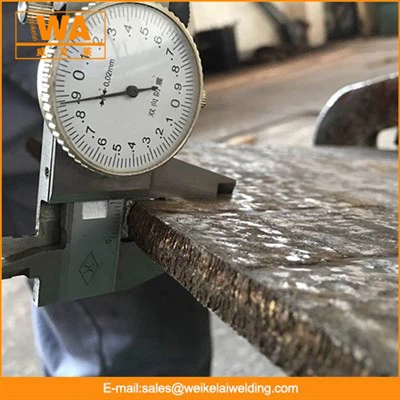
Phase transformations play a crucial role in determining the wear resistance of wear resistant alloys. As a leading supplier of Wear Resistant Alloys, we have witnessed firsthand how these transformations can significantly impact the performance of our products in various industrial applications. In this blog post, we will explore the relationship between phase transformations and wear resistance, and how understanding this relationship can help us select the most suitable alloys for specific wear scenarios.


Understanding Phase Transformations in Wear Resistant Alloys
Phase transformations refer to the changes in the microstructure of an alloy as a result of changes in temperature, pressure, or composition. These transformations can occur during the manufacturing process, heat treatment, or in-service conditions. In wear resistant alloys, the most common phase transformations include martensitic transformation, austenitic transformation, and precipitation hardening.
Martensitic Transformation
Martensitic transformation is a rapid, diffusionless transformation that occurs when an alloy is rapidly cooled from a high temperature to a low temperature. This transformation results in the formation of a hard, brittle phase called martensite, which is characterized by a high density of dislocations and a fine-grained microstructure. Martensitic transformation is commonly used in the heat treatment of wear resistant alloys to increase their hardness and wear resistance.
Austenitic Transformation
Austenitic transformation is a diffusion-controlled transformation that occurs when an alloy is heated to a high temperature and then cooled slowly. This transformation results in the formation of a soft, ductile phase called austenite, which is characterized by a face-centered cubic (FCC) crystal structure. Austenitic transformation is commonly used in the manufacturing of wear resistant alloys to improve their toughness and ductility.
Precipitation Hardening
Precipitation hardening is a heat treatment process that involves the formation of fine, dispersed precipitates in an alloy matrix. These precipitates act as obstacles to dislocation motion, thereby increasing the strength and hardness of the alloy. Precipitation hardening is commonly used in the manufacturing of wear resistant alloys to improve their wear resistance and fatigue resistance.
Effects of Phase Transformations on Wear Resistance
The wear resistance of an alloy is determined by its ability to resist material loss due to mechanical contact with another surface. Phase transformations can significantly affect the wear resistance of an alloy by altering its microstructure, hardness, toughness, and ductility.
Hardness
Hardness is one of the most important factors affecting the wear resistance of an alloy. Generally, the higher the hardness of an alloy, the better its wear resistance. Phase transformations can increase the hardness of an alloy by forming hard phases such as martensite or by precipitating fine, dispersed particles in the alloy matrix. For example, martensitic transformation can increase the hardness of a steel alloy from a few hundred HV to over 1000 HV, resulting in a significant improvement in its wear resistance.
Toughness and Ductility
Toughness and ductility are also important factors affecting the wear resistance of an alloy. An alloy with high toughness and ductility can absorb energy during wear without fracturing, thereby reducing the risk of catastrophic failure. Phase transformations can improve the toughness and ductility of an alloy by forming a soft, ductile phase such as austenite or by reducing the grain size of the alloy matrix. For example, austenitic transformation can improve the toughness and ductility of a stainless steel alloy, making it more resistant to wear and corrosion.
Microstructure
The microstructure of an alloy can also affect its wear resistance. A fine-grained microstructure can provide more grain boundaries, which can act as obstacles to dislocation motion and improve the wear resistance of the alloy. Phase transformations can refine the microstructure of an alloy by promoting the formation of fine, dispersed phases or by reducing the grain size of the alloy matrix. For example, precipitation hardening can refine the microstructure of an aluminum alloy, resulting in a significant improvement in its wear resistance.
Applications of Wear Resistant Alloys
Wear resistant alloys are widely used in various industrial applications where high wear resistance is required. Some of the common applications of wear resistant alloys include:
Mining and Quarrying
In the mining and quarrying industry, wear resistant alloys are used in the manufacturing of crushers, screens, conveyor belts, and other equipment that are exposed to high levels of abrasion and impact. Wear Resistant Plate and High Hardness Steel Plate are commonly used in these applications to improve the wear resistance and durability of the equipment.
Construction
In the construction industry, wear resistant alloys are used in the manufacturing of earthmoving equipment, such as bulldozers, excavators, and loaders. These equipment are exposed to high levels of abrasion and impact during operation, and wear resistant alloys can help to extend their service life and reduce maintenance costs.
Manufacturing
In the manufacturing industry, wear resistant alloys are used in the production of dies, molds, cutting tools, and other equipment that are exposed to high levels of wear and tear. These alloys can help to improve the efficiency and productivity of the manufacturing process by reducing downtime and increasing the lifespan of the equipment.
Selecting the Right Wear Resistant Alloy
Selecting the right wear resistant alloy for a specific application requires a thorough understanding of the wear mechanisms involved and the properties of the available alloys. Some of the factors that should be considered when selecting a wear resistant alloy include:
Wear Mechanism
The wear mechanism involved in a specific application can vary depending on the type of contact, the load, the speed, and the environment. Different wear mechanisms require different types of wear resistant alloys. For example, abrasion wear can be effectively resisted by alloys with high hardness and toughness, while adhesive wear can be reduced by alloys with low friction coefficients.
Operating Conditions
The operating conditions of a specific application, such as temperature, pressure, and humidity, can also affect the performance of a wear resistant alloy. Some alloys may be more suitable for high-temperature applications, while others may be more resistant to corrosion in wet or humid environments.
Cost
The cost of a wear resistant alloy is also an important factor to consider when selecting an alloy for a specific application. While some alloys may offer superior wear resistance, they may also be more expensive than other alloys. It is important to balance the cost of the alloy with its performance and durability to ensure that the selected alloy provides the best value for money.
Conclusion
Phase transformations play a crucial role in determining the wear resistance of wear resistant alloys. By understanding the relationship between phase transformations and wear resistance, we can select the most suitable alloys for specific wear scenarios and improve the performance and durability of our products. As a supplier of Wear Resistant Alloys, we are committed to providing our customers with high-quality alloys that meet their specific requirements. If you are interested in learning more about our wear resistant alloys or would like to discuss your specific application, please contact us for a consultation. We look forward to working with you to find the best solution for your wear resistance needs.
References
1.ASM Handbook Volume 4: Heat Treating. ASM International, 1991.
2.Wear Control Handbook. ASM International, 1980.
3.Materials Science and Engineering: An Introduction. William D. Callister, Jr., David G. Rethwisch, 2016.