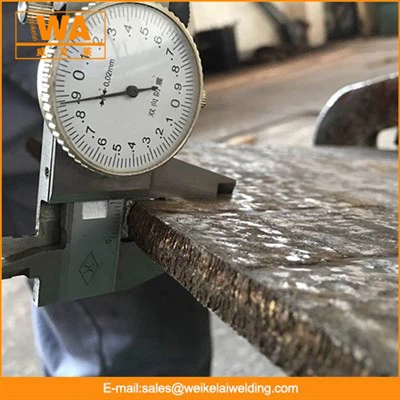
As a supplier of wear resistant alloys, I've spent a good deal of time observing how the mechanical properties of these alloys change over time. It's a topic that's not only fascinating from a scientific perspective but also crucial for our customers who rely on these materials in various industrial applications.
Let's start by understanding what wear resistant alloys are all about. These alloys are specifically designed to withstand the harsh conditions of wear, such as abrasion, erosion, and impact. They're used in a wide range of industries, including mining, construction, and manufacturing. For example, Wear Resistant Steel Plate is commonly used in mining equipment like dump trucks and crushers, where it needs to resist the constant rubbing and scraping of rocks and minerals.
When a wear resistant alloy is first put into use, its mechanical properties are at their peak. The alloy has a high hardness, which is essential for resisting abrasion. Hardness is basically a measure of how resistant a material is to being scratched or indented. A higher hardness means that the alloy can better withstand the wear forces it encounters. Additionally, the alloy has good toughness, which allows it to absorb energy without cracking or breaking under impact.
However, as time goes on, the mechanical properties of the wear resistant alloy start to change. One of the main factors that affects these properties is the wear itself. As the alloy is exposed to abrasive materials, its surface gradually wears away. This wear can lead to a decrease in hardness. The constant rubbing and scraping can cause the grains in the alloy to deform and break down, which in turn reduces the overall hardness of the material.
Another factor that can impact the mechanical properties over time is the environment. If the alloy is used in a corrosive environment, such as in the presence of acids or salts, it can undergo corrosion. Corrosion can weaken the alloy by eating away at its surface and creating pits and cracks. This not only reduces the alloy's hardness but also its toughness. A corroded alloy is more likely to crack or break under stress, which can be a serious problem in applications where reliability is crucial.


Temperature also plays a significant role in the long - term performance of wear resistant alloys. High temperatures can cause the alloy to soften. When the alloy is heated, the atoms in the material start to move more freely, which can lead to a change in the crystal structure of the alloy. This change in structure can result in a decrease in hardness. On the other hand, low temperatures can make the alloy more brittle. At low temperatures, the alloy loses its ability to deform plastically, and it becomes more prone to cracking under impact.
Let's take a closer look at some specific types of wear resistant alloys. Overlay Wear Plate is a type of wear resistant material that consists of a base plate with a wear - resistant overlay welded onto it. Over time, the overlay may start to delaminate from the base plate. This can happen due to the difference in the thermal expansion coefficients between the overlay and the base plate. When the plate is exposed to temperature changes, the overlay and the base plate expand and contract at different rates, which can create stresses at the interface between the two layers. If these stresses are high enough, the overlay can peel off, which obviously affects the wear - resistant performance of the plate.
Clad Wear Plate is another popular option. It's made by bonding a wear - resistant layer to a base metal. Similar to the overlay wear plate, the clad layer can experience wear and degradation over time. The bond between the clad layer and the base metal can also be affected by factors such as temperature, corrosion, and mechanical stress. If the bond weakens, the clad layer may start to separate from the base metal, reducing the overall effectiveness of the wear - resistant plate.
To mitigate these changes in mechanical properties over time, proper maintenance and monitoring are essential. Regular inspections can help detect early signs of wear, corrosion, or other forms of degradation. For example, non - destructive testing methods like ultrasonic testing can be used to check for internal cracks in the alloy. If any issues are detected, appropriate measures can be taken, such as replacing the worn - out parts or applying protective coatings.
In addition to maintenance, choosing the right wear resistant alloy for a specific application is crucial. Different alloys have different properties and are suitable for different types of wear and environmental conditions. For instance, if the application involves high - impact wear, an alloy with high toughness may be more appropriate. On the other hand, if the main concern is abrasion, an alloy with high hardness would be a better choice.
As a wear resistant alloy supplier, we understand the importance of providing our customers with alloys that can maintain their mechanical properties over time. We offer a wide range of wear resistant alloys, including Wear Resistant Steel Plate, Overlay Wear Plate, and Clad Wear Plate. Our team of experts can help you select the right alloy for your specific application, taking into account factors such as the type of wear, the environment, and the expected service life.
If you're in the market for wear resistant alloys and want to ensure that your equipment has the best possible performance over time, we're here to help. Whether you need advice on alloy selection, want to learn more about the long - term performance of our products, or are ready to place an order, we encourage you to reach out to us. We're committed to providing high - quality wear resistant alloys and excellent customer service.
In conclusion, the mechanical properties of wear resistant alloys do change over time due to factors like wear, corrosion, temperature, and environmental conditions. However, with proper selection, maintenance, and monitoring, these changes can be managed to ensure the long - term reliability and performance of the alloys in various industrial applications.
References
- ASM Handbook Volume 3: Alloy Phase Diagrams. ASM International.
- Wear Control Handbook. Edited by M. B. Peterson and W. O. Winer. Marcel Dekker, Inc.
- Corrosion: Fundamentals, Testing, and Protection. Edited by R. Winston Revie. ASM International.