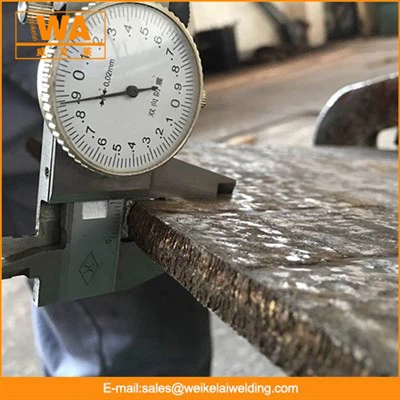
Rolling contact wear is a common and challenging issue in many industrial applications, such as mining, construction, and manufacturing. Overlay wear plates have emerged as an effective solution to protect against this type of wear. As a supplier of overlay wear plates, I am well - versed in their functionality and benefits in combating rolling contact wear. In this blog, I will delve into how overlay wear plates protect against wear from rolling contact.
Understanding Rolling Contact Wear
Rolling contact wear occurs when two surfaces are in contact and one or both are in rolling motion. This type of wear is characterized by the progressive loss of material from the contacting surfaces due to factors like friction, adhesion, and fatigue. In industrial settings, rolling contact can be found in conveyor rollers, bearings, and gears. The wear can lead to reduced equipment efficiency, increased maintenance costs, and even premature failure of components.
How Overlay Wear Plates Work
Material Composition
Overlay wear plates are typically composed of a base metal and a hard - facing layer. The base metal provides the structural integrity and mechanical properties necessary to withstand the applied loads. It is often a high - strength steel that can support the overlay and the overall component. The hard - facing layer, on the other hand, is designed to resist wear. This layer can be made from various materials, such as Abrasion Resistant Metals, which are specifically engineered to have high hardness and wear resistance.
The combination of the base metal and the hard - facing layer allows the overlay wear plate to perform effectively under rolling contact conditions. The base metal absorbs the majority of the load, while the hard - facing layer takes on the brunt of the wear. For example, in a conveyor system, the overlay wear plate on the rollers can prevent the steel surface from being worn away by the continuous rolling of the conveyed materials.
Surface Hardness
One of the key factors in protecting against rolling contact wear is the surface hardness of the overlay wear plate. The hard - facing layer has a much higher hardness compared to the base metal and the materials in contact. This high hardness makes it more difficult for the abrasive particles or the mating surface to remove material from the wear plate.
When a rolling object comes into contact with the overlay wear plate, the hard surface resists deformation and abrasion. For instance, in a mining application where large rocks are being transported on a conveyor belt with overlay - coated rollers, the high - hardness surface of the overlay wear plate can withstand the impact and abrasion caused by the rocks, reducing the wear rate significantly.
Wear Mechanisms
Overlay wear plates can mitigate different wear mechanisms associated with rolling contact.
- Abrasive Wear: Abrasive wear occurs when hard particles are present between the rolling surfaces. The hard - facing layer of the overlay wear plate acts as a barrier, preventing these particles from scratching and removing material from the base metal. For example, in a construction site, where sand and gravel are being handled, the overlay wear plate on the conveyor rollers can protect against the abrasive action of these materials.
- Adhesive Wear: Adhesive wear happens when the surfaces in contact stick together and material is transferred from one surface to another. The unique composition of the overlay wear plate reduces the tendency for adhesion. The hard - facing layer has a smooth and wear - resistant surface that minimizes the contact area and the bonding between the surfaces, thus reducing adhesive wear.
- Fatigue Wear: Fatigue wear is caused by repeated loading and unloading cycles during rolling contact. The overlay wear plate can improve the fatigue resistance of the component. The hard - facing layer distributes the stress more evenly across the surface, reducing the concentration of stress points that can lead to crack initiation and propagation. This is particularly important in applications such as gears, where the teeth are subjected to high - frequency loading during operation.
Benefits of Using Overlay Wear Plates in Rolling Contact Applications
Extended Service Life
By effectively protecting against wear from rolling contact, overlay wear plates can significantly extend the service life of industrial components. Components such as conveyor rollers, which are constantly in rolling contact with materials, can last much longer when equipped with overlay wear plates. This reduces the frequency of component replacement, saving both time and money in the long run.
Reduced Maintenance Costs
With less wear on the components, the need for frequent maintenance and repairs is also reduced. For example, in a manufacturing plant, if the bearings are protected with overlay wear plates, the lubrication intervals can be extended, and the risk of bearing failure due to wear is minimized. This leads to lower maintenance costs and increased equipment uptime.
Improved Equipment Performance
Overlay wear plates can enhance the performance of equipment in rolling contact applications. In a conveyor system, for instance, the smooth operation of the rollers with overlay wear plates ensures a more consistent and efficient material transfer. This can improve the overall productivity of the production line.


Specific Types of Overlay Wear Plates for Rolling Contact
CCO Wear Plate
CCO wear plates are a type of overlay wear plate that is well - suited for rolling contact applications. These plates have a unique chemical composition that provides excellent wear resistance and toughness. The hard - facing layer of CCO wear plates contains carbides, which are extremely hard and can effectively resist abrasion.
In a rolling mill, where steel sheets are being rolled, CCO wear plates can be used on the rolls to protect against the high - pressure and high - friction rolling process. The carbides in the hard - facing layer prevent the surface of the rolls from being worn away, ensuring high - quality steel production.
High Wear Resistant Steel
High wear resistant steel overlay wear plates are another option for protecting against rolling contact wear. These plates are made from a special type of steel that has been alloyed to enhance its wear resistance. The high - strength and high - hardness properties of this steel make it ideal for applications where the rolling contact involves heavy loads and high - speed operation.
For example, in a railway system, the wheels and rails are in constant rolling contact. High wear resistant steel overlay wear plates can be used on the rails to reduce the wear caused by the passing trains, improving the safety and durability of the railway infrastructure.
Case Studies
Let's look at a few real - world examples of how overlay wear plates have protected against rolling contact wear.
In a large - scale mining operation, the conveyor system was experiencing significant wear on the rollers. The company decided to install overlay wear plates on the rollers. After a period of operation, it was found that the wear rate of the rollers was reduced by more than 50%. This not only extended the service life of the rollers but also improved the efficiency of the conveyor system, as there were fewer interruptions due to roller replacement.
In a manufacturing plant that produces automotive parts, the gears in the production machinery were wearing out quickly due to the high - frequency rolling contact. By using overlay wear plates on the gear teeth, the plant was able to reduce the wear and increase the gear's service life by 30%. This led to a significant reduction in production downtime and maintenance costs.
Conclusion
Overlay wear plates are an effective solution for protecting against wear from rolling contact in a wide range of industrial applications. Their unique material composition, high surface hardness, and ability to mitigate different wear mechanisms make them a reliable choice for extending the service life of components, reducing maintenance costs, and improving equipment performance.
If you are facing challenges with rolling contact wear in your industrial operations, I encourage you to consider using our overlay wear plates. Our team of experts can provide you with the right solution tailored to your specific needs. Contact us to start a discussion about how our overlay wear plates can benefit your business and improve the efficiency of your equipment.
References
- ASTM International. "Standard Test Methods for Wear Testing with a Pin - on - Disk Apparatus." ASTM G99 - 17.
- Callister, W. D., & Rethwisch, D. G. (2017). Materials Science and Engineering: An Introduction. Wiley.
- Hutchings, I. M. (1992). Tribology: Friction and Wear of Engineering Materials. CRC Press.