

Hey there! As a supplier of wear-resistant alloys, I often get asked whether these alloys can be used in high-speed applications. Well, let's dive right into it and explore this topic together.
First off, let's understand what high-speed applications entail. High-speed applications typically involve machinery or components that operate at extremely fast rotational or linear speeds. Think about things like high-speed cutting tools, aerospace turbine engines, high-speed trains, and even some industrial manufacturing equipment. In these scenarios, the materials used need to withstand a whole bunch of challenges, such as high temperatures, intense friction, and rapid wear.
Now, wear-resistant alloys are specifically designed to resist wear and tear. They're made up of a combination of different metals and elements that work together to create a tough and durable material. Some common types of wear-resistant alloys include tungsten carbide, chromium carbide, and bimetallic wear-resistant materials.
Let's start with tungsten carbide. Tungsten carbide is a super-hard material that's known for its excellent wear resistance. It's made by combining tungsten and carbon, and it has a very high melting point. This makes it ideal for high-speed applications where there's a lot of heat generated. For example, in high-speed cutting tools, tungsten carbide can maintain its sharpness even at high cutting speeds, which means it can cut through materials more efficiently and with less wear. You can check out more about Tungsten Carbide Plate on our website.
Chromium carbide is another great option for high-speed applications. It has a high hardness and good corrosion resistance, which makes it suitable for environments where there's a lot of abrasion and chemical exposure. Chromium carbide overlay is often used in applications like mining equipment, where the components are constantly in contact with rough and abrasive materials. The overlay provides an extra layer of protection against wear, which helps to extend the lifespan of the equipment. To learn more about Chromium Carbide Overlay, just click the link.
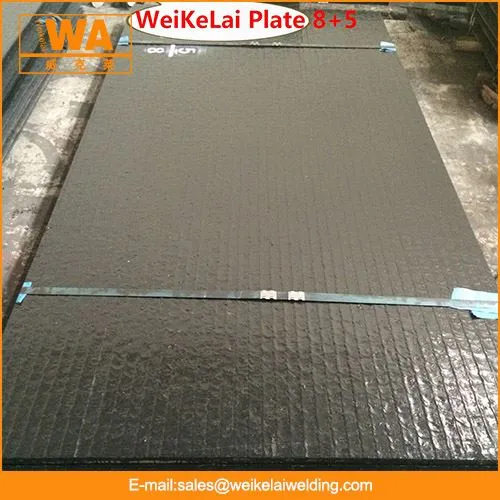
Bimetallic wear-resistant materials are also worth mentioning. These materials combine the properties of two different metals to create a material that has the best of both worlds. For example, one layer might be made of a hard and wear-resistant metal, while the other layer is made of a more ductile and tough metal. This allows the material to withstand both wear and impact forces, which is crucial in high-speed applications. You can find more information about Bimetallic Wear Resistant Material on our site.
But can these wear-resistant alloys really handle high-speed applications? The answer is yes, but there are a few things to consider. First of all, the design of the component is crucial. The alloy needs to be properly integrated into the design to ensure that it can withstand the forces and stresses that come with high-speed operation. For example, in a high-speed turbine engine, the blades need to be designed in such a way that the wear-resistant alloy can effectively protect them from erosion and corrosion.
Secondly, the operating conditions play a big role. High-speed applications often come with high temperatures, and the alloy needs to be able to maintain its properties at these elevated temperatures. Some wear-resistant alloys might start to lose their hardness or strength at very high temperatures, which can lead to premature wear. So, it's important to choose an alloy that's suitable for the specific temperature range of the application.

Another factor to consider is the lubrication. In high-speed applications, proper lubrication is essential to reduce friction and wear. The wear-resistant alloy needs to be compatible with the lubricant being used, otherwise, it might not perform as expected. For example, some alloys might react with certain lubricants, which can cause corrosion or other problems.
In addition to these technical considerations, cost is also an important factor. Wear-resistant alloys can be more expensive than traditional materials, so it's important to weigh the benefits against the cost. In some cases, the increased lifespan and performance of the wear-resistant alloy might justify the higher cost, especially in high-speed applications where downtime can be very costly.
So, to sum it up, wear-resistant alloys can definitely be used in high-speed applications, but it's important to choose the right alloy for the specific application and to consider all the factors involved. As a supplier of wear-resistant alloys, we have a lot of experience in helping our customers find the best solutions for their high-speed applications. Whether you're in the aerospace, automotive, or industrial manufacturing industry, we can provide you with the right wear-resistant alloy to meet your needs.
If you're interested in learning more about our wear-resistant alloys or if you have a specific high-speed application that you need help with, don't hesitate to get in touch. We're always happy to have a chat and discuss how we can work together to solve your wear problems. Just reach out to us, and we'll be more than happy to assist you.
References
- "Materials Science and Engineering: An Introduction" by William D. Callister Jr. and David G. Rethwisch
- "Handbook of Wear - Resistant Materials" edited by R. S. Mishra and S. K. Mishra
