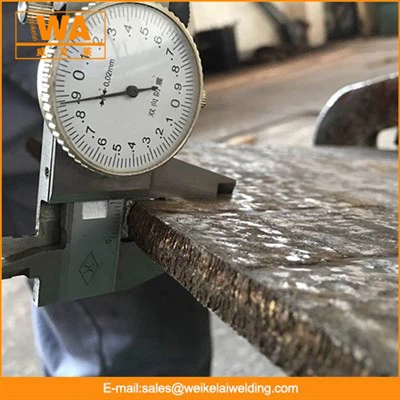
Flux cored MIG (Metal Inert Gas) wire is a popular choice in the welding industry due to its versatility and efficiency. As a leading supplier of flux cored MIG wire, we often receive inquiries about its suitability for welding nickel - based alloys. In this blog post, we will delve into the topic to determine whether flux cored MIG wire can be used for nickel - based alloy welding.
Understanding Nickel - Based Alloys
Nickel - based alloys are highly regarded for their excellent corrosion resistance, high - temperature strength, and good mechanical properties. These alloys are commonly used in a wide range of industries, including aerospace, chemical processing, and power generation. Some well - known nickel - based alloys are Inconel, Hastelloy, and Monel. Each of these alloys has unique chemical compositions and properties, which pose specific challenges during the welding process.
Characteristics of Flux Cored MIG Wire
Flux cored MIG wire consists of a tubular metal sheath filled with flux. This flux plays a crucial role during the welding process. It can provide shielding gas to protect the weld pool from atmospheric contamination, deoxidize the molten metal, and add alloying elements to the weld. There are two main types of flux cored MIG wire: gas - shielded and self - shielded. Self Shielded Flux Cored Wire is particularly useful in outdoor or poorly ventilated areas where it is difficult to use external shielding gas.
Advantages of Using Flux Cored MIG Wire for Welding
One of the significant advantages of flux cored MIG wire is its high deposition rate. This means that more filler metal can be added to the weld joint in a shorter period, increasing productivity. Additionally, flux cored MIG wire can produce high - quality welds with good bead appearance and mechanical properties. It also has better penetration compared to some other welding wires, which is beneficial for welding thicker materials.
Challenges in Welding Nickel - Based Alloys
Welding nickel - based alloys is not without its challenges. These alloys have a high coefficient of thermal expansion, which can lead to significant residual stresses and distortion during the welding process. Moreover, nickel - based alloys are prone to hot cracking, especially when the welding parameters are not properly controlled. The presence of impurities such as sulfur and phosphorus can also exacerbate hot cracking.
Can Flux Cored MIG Wire Be Used for Nickel - Based Alloy Welding?
The answer is yes, flux cored MIG wire can be used for nickel - based alloy welding, but with certain considerations. When selecting a flux cored MIG wire for nickel - based alloy welding, it is essential to choose a wire that has a compatible chemical composition with the base metal. The wire should be able to provide the necessary alloying elements to ensure that the weld metal has similar properties to the base metal.
For example, if you are welding an Inconel alloy, you need to select a flux cored MIG wire that contains a high percentage of nickel, chromium, and other alloying elements present in Inconel. This will help to maintain the corrosion resistance and high - temperature strength of the weld.
Welding Parameters
Proper welding parameters are crucial when using flux cored MIG wire to weld nickel - based alloys. The welding current, voltage, and travel speed need to be carefully adjusted to avoid overheating the weld pool, which can lead to hot cracking. A lower welding current and slower travel speed are generally recommended to ensure good fusion and minimize the risk of cracking.
Shielding Gas
If you are using a gas - shielded flux cored MIG wire, the choice of shielding gas is also important. For nickel - based alloy welding, a mixture of argon and helium is often used. This shielding gas mixture can provide better protection for the weld pool and improve the quality of the weld.
Comparison with Other Welding Methods
When compared to other welding methods such as Solid Wire Welding, flux cored MIG wire has some unique advantages for nickel - based alloy welding. Solid wire welding may require more precise control of the welding parameters and is often more suitable for thinner materials. Flux cored MIG wire, on the other hand, can handle thicker materials more easily and has a higher deposition rate.


Quality Control
Quality control is essential when welding nickel - based alloys with flux cored MIG wire. Non - destructive testing methods such as ultrasonic testing and radiographic testing can be used to detect any internal defects in the weld. Visual inspection should also be carried out to check the bead appearance and ensure that there are no surface cracks.
Applications in Different Industries
In the aerospace industry, flux cored MIG wire can be used to weld nickel - based alloy components such as turbine blades and engine casings. The high - quality welds produced by flux cored MIG wire can ensure the reliability and performance of these critical components.
In the chemical processing industry, nickel - based alloys are often used to construct equipment that is resistant to corrosion. Flux cored MIG wire can be used to weld these alloys to fabricate tanks, pipes, and other equipment.
Our Role as a Flux Cored MIG Wire Supplier
As a trusted supplier of flux cored MIG wire, we offer a wide range of products suitable for nickel - based alloy welding. Our wires are manufactured using high - quality materials and advanced production processes to ensure consistent quality and performance. We also provide technical support to our customers, helping them to select the right wire and welding parameters for their specific applications.
Future Trends
The demand for nickel - based alloys is expected to continue to grow in the future, especially in industries such as renewable energy and high - performance engineering. As a result, the need for reliable welding methods and high - quality welding wires will also increase. We are constantly researching and developing new flux cored MIG wire products to meet the evolving needs of our customers.
Conclusion
In conclusion, flux cored MIG wire can be a viable option for nickel - based alloy welding. However, it requires careful selection of the wire, proper control of welding parameters, and strict quality control measures. If you are considering using flux cored MIG wire for your nickel - based alloy welding projects, we encourage you to contact us. Our team of experts can provide you with detailed information and guidance to ensure the success of your welding operations. Whether you are in the aerospace, chemical processing, or any other industry that uses nickel - based alloys, we have the right flux cored MIG wire solution for you. Reach out to us to start a discussion about your specific requirements and explore the possibilities of using our products in your welding applications.
References
- Welding Handbook, American Welding Society
- Nickel and Nickel Alloys: Welding and Joining, ASM International
- Technical papers on flux cored MIG welding of nickel - based alloys from industry research institutions