Are wear plates suitable for high - temperature environments?
As a wear plate supplier, I often encounter inquiries from customers regarding the suitability of wear plates in high - temperature environments. This is a crucial question, as many industrial applications, such as steel manufacturing, cement production, and power generation, involve high - temperature conditions where wear and tear are also significant concerns. In this blog, I will delve into the factors that determine whether wear plates are suitable for high - temperature environments and introduce some of our high - temperature - resistant wear plate products.
Understanding High - Temperature Environments and Wear
High - temperature environments typically refer to those where the operating temperature exceeds 300°C, and in some extreme industrial scenarios, temperatures can reach over 1000°C. In such conditions, materials are subjected to not only mechanical wear but also thermal stress, oxidation, and corrosion. Mechanical wear occurs due to the friction between the wear plate and other objects, such as abrasive particles or moving parts. Thermal stress is caused by the expansion and contraction of materials as the temperature changes, which can lead to cracking and deformation. Oxidation happens when the metal in the wear plate reacts with oxygen in the air at high temperatures, forming oxides that can weaken the material. Corrosion may also occur due to the presence of corrosive gases or liquids in the environment.
Factors Affecting the Suitability of Wear Plates in High - Temperature Environments
Material Composition
The material composition of wear plates plays a vital role in their performance in high - temperature environments. Some metals, such as stainless steel, nickel - based alloys, and chromium - based alloys, have better high - temperature resistance than others. Stainless steel contains chromium, which forms a protective oxide layer on the surface, preventing further oxidation. Nickel - based alloys have excellent heat resistance, strength, and corrosion resistance at high temperatures. Chromium - based alloys, especially those with high chromium content, are also known for their high - temperature wear resistance and oxidation resistance.
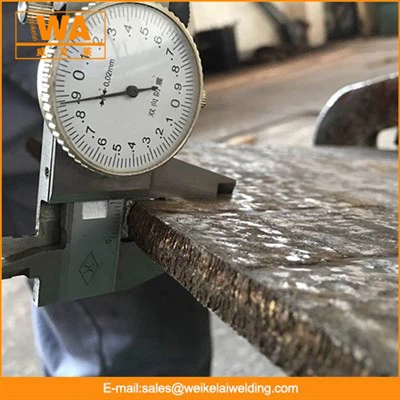
For example, our Chromium Carbide Wear Plate is a high - performance wear plate designed for high - temperature and abrasive environments. It consists of a hard chromium carbide phase embedded in a tough steel matrix. The chromium carbide provides excellent wear resistance, while the steel matrix ensures good toughness and impact resistance. This combination makes it suitable for applications where high - temperature wear is a major concern, such as in coal - fired power plants and cement kilns.
Coating Technology
Coating technology can significantly enhance the high - temperature performance of wear plates. A well - designed coating can provide a barrier between the wear plate and the high - temperature environment, protecting it from oxidation, corrosion, and wear. One of the most effective coating materials for high - temperature applications is chromium carbide. Our Chromium Carbide Coating is applied to the surface of wear plates using advanced thermal spray techniques. This coating has a high hardness and excellent wear resistance, even at elevated temperatures. It also has good adhesion to the substrate, ensuring long - term performance.
Microstructure
The microstructure of wear plates also affects their high - temperature performance. A fine - grained microstructure generally provides better mechanical properties and high - temperature stability than a coarse - grained one. Heat treatment processes can be used to control the microstructure of wear plates, improving their strength, toughness, and high - temperature resistance. For example, quenching and tempering can refine the grain size and increase the hardness of the wear plate, while annealing can relieve internal stress and improve the ductility.
Applications of Wear Plates in High - Temperature Environments
Steel Industry
In the steel industry, wear plates are widely used in various high - temperature applications, such as in blast furnaces, converters, and continuous casting machines. In blast furnaces, wear plates are used to line the walls of the furnace to protect them from the abrasive action of the hot iron ore and coke. In converters, wear plates are used to prevent the erosion of the refractory lining caused by the high - temperature molten steel. Continuous casting machines also require wear plates to ensure the smooth flow of molten steel and prevent the adhesion of steel to the mold.
Cement Industry
The cement industry also relies on wear plates in high - temperature environments. Cement kilns operate at temperatures up to 1450°C, and wear plates are used to line the kiln walls, pre - heaters, and coolers. These wear plates need to withstand the abrasive action of the cement raw materials and the high - temperature gases. Our Chromium Carbide Plate is an ideal choice for these applications due to its excellent wear resistance and high - temperature stability.
Power Generation Industry
In the power generation industry, especially in coal - fired power plants, wear plates are used in coal handling systems, boilers, and ash handling systems. Coal handling systems involve the transportation of coal, which can cause significant wear to the equipment. Wear plates are used to protect the chutes, hoppers, and conveyors from abrasion. Boilers operate at high temperatures, and wear plates are used to line the furnace walls and tubes to prevent erosion and corrosion. Ash handling systems also require wear plates to handle the abrasive fly ash and bottom ash.
Conclusion
In conclusion, wear plates can be suitable for high - temperature environments, provided that they are made of the right materials, have appropriate coatings, and a well - designed microstructure. Our company offers a range of high - temperature - resistant wear plates, such as the Chromium Carbide Wear Plate, Chromium Carbide Coating, and Chromium Carbide Plate, which are designed to meet the specific requirements of different high - temperature applications.


If you are looking for wear plates for high - temperature environments, please feel free to contact us for more information and to discuss your specific needs. We are committed to providing high - quality wear plate solutions that can help you improve the efficiency and reliability of your equipment.
References
- ASM Handbook Volume 13C: Corrosion: Environments and Industries. ASM International.
- Wear Control Handbook. Edited by M. B. Peterson and W. O. Winer. ASM International.
- High - Temperature Materials and Coatings. Edited by R. A. Miller and G. N. Morscher. Wiley - VCH.