


Problems Solved by Welding Reconditioning
1. Repair of worn or failed equipment components
In industrial production, core components of heavy machinery and chemical equipment are subject to long-term friction and corrosion, making them prone to wear and cracking, which can lead to equipment downtime and production stoppages. Welding reconditioning uses precise welding techniques to fill and reshape damaged areas via weld deposition, restoring dimensional accuracy and mechanical properties. Compared to replacing parts with new ones, this method significantly reduces procurement costs and downtime, enabling aging equipment to meet production load requirements once again.
2. Remediation of cracks in structural components
Large structural components-such as steel building frameworks, bridge trusses, and ship hulls-are prone to developing micro-cracks due to long-term use or external forces. If left untreated, these cracks can propagate and lead to safety incidents. Welding reconditioning allows for the selection of appropriate welding methods based on crack depth and orientation. By following standardized procedures-including preheating, welding, and controlled cooling-the cracked areas are fully fused and repaired, restoring the component's overall strength and stability, eliminating safety hazards, and extending its service life
3. Repair of components made from special materials
Traditional repair methods for components made of special materials-such as stainless steel, high-temperature alloys, and titanium alloys-often result in degraded material properties or poor repair outcomes. Welding reconditioning utilizes welding materials and process parameters specifically tailored to these materials. This maximizes the retention of the base metal's inherent characteristics (such as corrosion and heat resistance) while precisely repairing damage, thereby meeting the rigorous performance standards required in sectors like aerospace and high-end manufacturing.
4. Refurbishment and repair of mold surface damage
Over extended periods of use, injection molds and stamping dies often develop surface damage such as scratches, pits, and wear, leading to reduced precision in molded products and higher defect rates. Welding reconditioning employs precision welding technology to meticulously repair and polish damaged areas, restoring surface flatness and molding accuracy. This eliminates the need to manufacture new molds, effectively shortening repair cycles, reducing production costs, and ensuring consistent product quality.
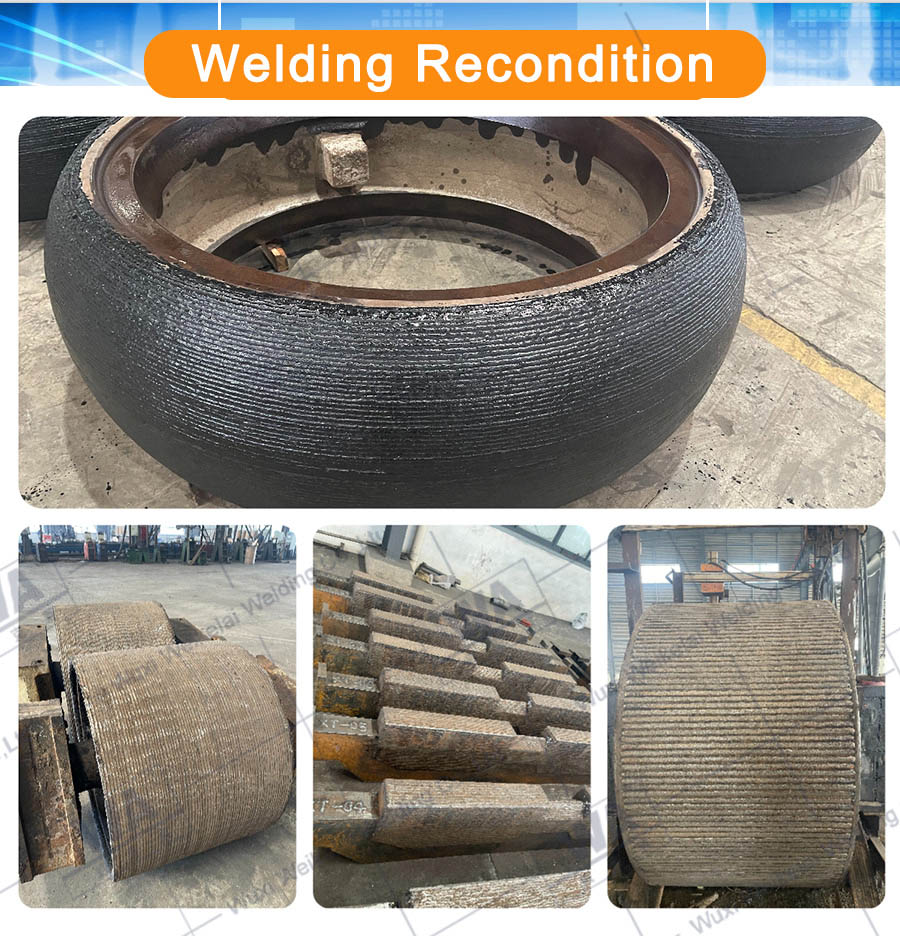
If you are keenly interested in welding reconditioning services and wish to obtain more detailed information, we warmly invite you to contact Wuxi Weikelai Welding for a comprehensive consultation. Our highly professional team is standing by, ready to listen attentively to your specific requirements.


