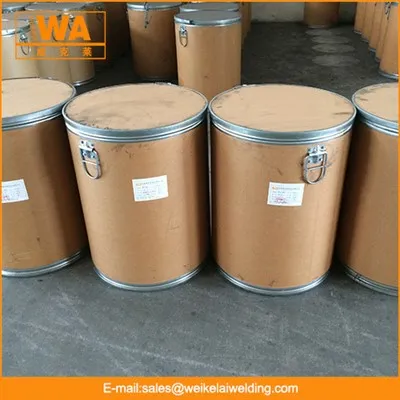
Mig welding, also known as Gas Metal Arc Welding (GMAW), is a widely used welding process that offers high productivity and good quality welds. The centerpiece of this process is the Mig welding wire, and its chemistry plays a crucial role in determining the properties of the resulting weld. As a leading Mig welding wire supplier, understanding these chemical interactions is essential to our business, as it directly impacts the performance of our products and how well they meet our customers' needs.


The Basics of Mig Welding Wire Chemistry
Mig welding wire is typically made up of a combination of base metals and alloying elements. The base metal, often steel or stainless steel, forms the foundation of the wire, while the alloying elements are added to enhance specific properties of the weld. These alloying elements can include nickel, chromium, manganese, silicon, and others, each serving a unique purpose.
For example, in Mild Steel Mig Welding Wire, carbon is a fundamental alloying element. A small increase in carbon content can significantly improve the strength of the weld. However, too much carbon can lead to increased hardness and a decrease in weld ductility, making the weld more susceptible to cracking. Manganese, on the other hand, helps to deoxidize the weld pool, improving the quality of the weld and reducing the likelihood of porosity. It also enhances the strength and toughness of the weld.
Impact on Weld Strength
The strength of a weld is one of the most critical properties. The alloying elements in Mig welding wire can have a profound impact on weld strength. In Stainless Steel Mig Flux Cored Wire, elements like chromium and nickel are prominent. Chromium is responsible for forming a passive oxide layer on the surface of the weld, which provides corrosion resistance. Additionally, it contributes to the strength of the weld by forming carbide compounds within the steel matrix.
Nickel, when combined with chromium in stainless steel welding, enhances the toughness and ductility of the weld. It also helps to stabilize the austenitic structure, which is essential for maintaining good corrosion resistance and mechanical properties. A balanced ratio of chromium to nickel is crucial for achieving the desired strength and corrosion resistance in a stainless steel weld.
Influence on Weld Ductility
Ductility is the ability of a material to deform under tensile stress without fracturing. In Mig welding, achieving the right level of ductility is essential to ensure that the weld can withstand forces and stresses during its service life.
Silicon is an important alloying element in Mig welding wire that affects ductility. It acts as a deoxidizer and also helps to improve the fluidity of the weld pool. A proper amount of silicon in the welding wire can result in a more uniform and defect - free weld, which is more ductile. However, excessive silicon can lead to the formation of brittle intermetallic compounds, reducing the ductility of the weld.
Corrosion Resistance
Corrosion resistance is a key property for many welding applications, especially in industries such as marine, automotive, and construction. The chemistry of Mig welding wire plays a vital role in determining the corrosion resistance of the weld.
Stainless Flux Cored Welding Wire contains high levels of chromium and nickel, which are well - known for their corrosion - resistant properties. Chromium forms a thin, protective oxide layer on the surface of the weld, preventing further oxidation and corrosion. Nickel enhances the stability of this oxide layer and also provides additional resistance to pitting and crevice corrosion.
In some cases, other elements such as molybdenum may be added to the welding wire to further improve corrosion resistance. Molybdenum increases the resistance of the weld to chloride - induced corrosion, making it suitable for applications in harsh environments, such as offshore structures.
Weldability
Weldability refers to the ease with which a material can be welded to form a sound joint. The chemistry of Mig welding wire directly affects weldability. For instance, the presence of sulfur and phosphorus in the welding wire can be detrimental to weldability. These elements tend to form low - melting - point compounds that can cause hot cracking in the weld.
As a Mig welding wire supplier, we carefully control the sulfur and phosphorus content in our wires to ensure good weldability. Additionally, the addition of elements like titanium and zirconium can improve the weldability of some wires. These elements act as grain refiners, reducing the size of the grains in the weld and improving its overall quality and resistance to cracking.
Different Types of Mig Welding Wires and Their Chemistry - Based Advantages
- Flux Cored Arc Welding (Flux Cored Arc Welding): Flux cored wires have a tubular design filled with flux. The flux contains various ingredients such as slag - forming agents, deoxidizers, and alloying elements. This type of wire offers high deposition rates and good penetration. The slag formed during welding protects the weld pool from atmospheric contamination. Additionally, the alloying elements in the flux can be tailored to provide specific properties, such as high strength or good corrosion resistance.
- Metal Cored Welding Wire (Metal Cored Welding Wire): Metal cored wires are similar to solid wires but have a powdered metal core. They offer a combination of the advantages of solid and flux - cored wires. The core can contain alloying elements that enhance the properties of the weld, such as improved strength, ductility, or corrosion resistance. Metal cored wires also provide high deposition rates and good arc stability.
Selecting the Right Mig Welding Wire Based on Chemistry
As a Mig welding wire supplier, we understand that selecting the right wire is crucial for achieving the desired weld properties. Customers need to consider several factors based on the chemistry of the wire.
- Base Metal: The type of base metal being welded is the first consideration. Different base metals require different welding wire chemistries to ensure a good match. For example, welding stainless steel requires a welding wire with a similar composition to prevent dilution and ensure good corrosion resistance.
- Weld Application: The intended application of the weld also plays a significant role. If the weld will be exposed to a corrosive environment, a wire with high corrosion - resistant elements should be chosen. For applications that require high strength, a wire with appropriate alloying elements for strength enhancement is needed.
Connecting Chemistry to Real - World Results
In real - world welding applications, the chemistry of the Mig welding wire can make or break a project. For instance, in the construction of bridges, welds need to have high strength and good ductility to withstand dynamic loads. Our Mild Steel Mig Welding Wire, with its carefully balanced chemistry, provides the necessary strength and ductility for such applications.
In the automotive industry, where corrosion resistance is a top priority, our Stainless Steel Mig Flux Cored Wire ensures that exhaust systems and body panels remain free from rust and corrosion for an extended period.
Contact Us for Your Mig Welding Wire Needs
At our company, we take pride in our ability to provide high - quality Mig welding wires with precisely controlled chemistries. Our team of experts is always ready to assist you in selecting the right wire for your specific welding requirements. Whether you are working on a small DIY project or a large - scale industrial application, we have the perfect solution for you.
If you are interested in learning more about our Mig welding wires or are ready to place an order, we encourage you to contact us. We would be delighted to discuss your needs and provide you with detailed information about our products and services. Let us help you achieve the best possible weld results with our top - notch Mig welding wires.